

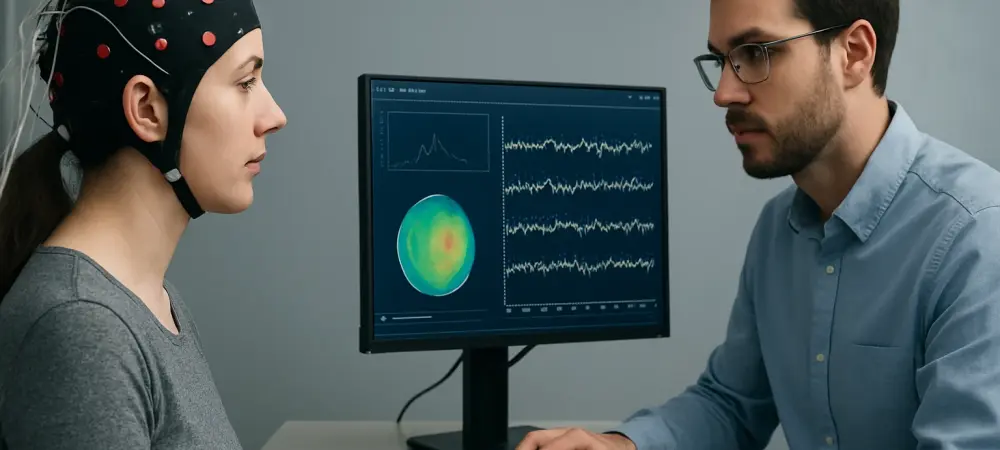
The inherent differences in brainwave patterns across different individuals present a persistent obstacle for the development of universal brain-computer interface systems. This phenomenon, often referred to as inter-subject variability, means that a machine learning model trained on one person’s neural data frequently fails when applied to another, necessitating tedious daily calibration sessions. Researchers have long sought a “plug-and-play” solution that can navigate these unique neurological signatures without sacrificing accuracy or speed. Recent breakthroughs in deep learning are finally addressing this gap by moving away from rigid, static architectures toward dynamic systems that can quantify and adapt to individual differences in real time. By leveraging advanced signal processing and sophisticated neural network routing, the latest computational frameworks are demonstrating that the dream of a truly seamless interface between the human mind and digital devices is becoming a practical reality for clinical use.
Engineering Adaptability: The Architecture of SQ_EMoE
Dynamic Routing and Subject Identification
The core innovation of the SQ_EMoE framework is its dynamic trial-by-trial routing mechanism, which marks a departure from traditional “one-size-fits-all” decoders. At its heart lies a subject-identification network designed to analyze the unique features of incoming electroencephalography (EEG) data. When a user interacts with a brain-computer interface, the system does not simply apply a generic template; instead, it evaluates how closely the current signal aligns with known individual patterns. If the network identifies the trial as belonging to a specific person with a high degree of confidence, it directs the data to a specialized subject-specific expert model. This expert has been fine-tuned to recognize the idiosyncratic nuances of that person’s P300 response. By prioritizing specialized knowledge when available, the system achieves a level of precision that general models often lack, effectively turning the hurdle of variability into a functional advantage.
Uncertainty Management Through General Experts
Conversely, the framework is engineered to handle ambiguity through a secondary pathway involving a general expert model. If the subject-identification network cannot confidently match the incoming EEG data to a specific profile, it reroutes the trial to a model trained on pooled data from a diverse group of participants. This dual-pathway approach acts as a crucial safety net, ensuring that the system remains operational even when neural signals are noisy or when the user is entirely new to the interface. This conservative routing strategy balances the need for specialized decoding with the requirement for broad generalization. Rather than forcing a poor match that would lead to errors, the system recognizes its own uncertainty and falls back on a more robust, collective intelligence. Such a mechanism is vital for real-world applications where biological signals can fluctuate due to fatigue or environment, providing a stability that was previously unattainable in earlier systems.
Validating Performance: Comparative Analysis and Results
Benchmarking Against Traditional Architectures
To evaluate the effectiveness of this innovative approach, researchers conducted extensive testing using established public datasets such as the BNCI Horizon 2020 and P300-LINI. In controlled experiments involving eight randomly selected participants from each group, the SQ_EMoE system delivered exceptional performance metrics. It achieved mean Receiver Operating Characteristic Area Under the Curve (ROC-AUC) values of 0.86 and 0.89, respectively. These figures represent a significant improvement over traditional baseline models like the pooled EEGNet and the P300MCNN architecture. The ability of the mixture-of-experts system to outperform these industry standards highlights the value of its modular design. While standard models often struggle to find a middle ground between broad applicability and specific accuracy, this framework proves that segmenting the decoding task into specialized sub-units creates a more resilient system. The consistency of these results across datasets suggests a high level of reliability.
Scalability and Strategic Implementation
The successful implementation of uncertainty-aware routing established a new paradigm for neurorehabilitation and assistive communication technologies. Industry leaders concluded that prioritizing the integration of modular expert systems allowed for dynamic switching between generalized and specialized modes. In recent months, the focus shifted toward optimizing these networks for mobile and wearable BCI hardware to ensure that high ROC-AUC values translated into real-world mobility for patients. The transition toward systems that required zero-calibration involved expanding the diversity of training datasets to encompass a wider range of neurological conditions. By adopting this hierarchical approach to signal decoding, the industry moved past the limitations of static models and opened the door for more inclusive medical devices. The focus remained on refining the interaction between the identification network and the experts to minimize latency, ensuring that the next generation of neural interfaces functioned naturally.