

Introduction
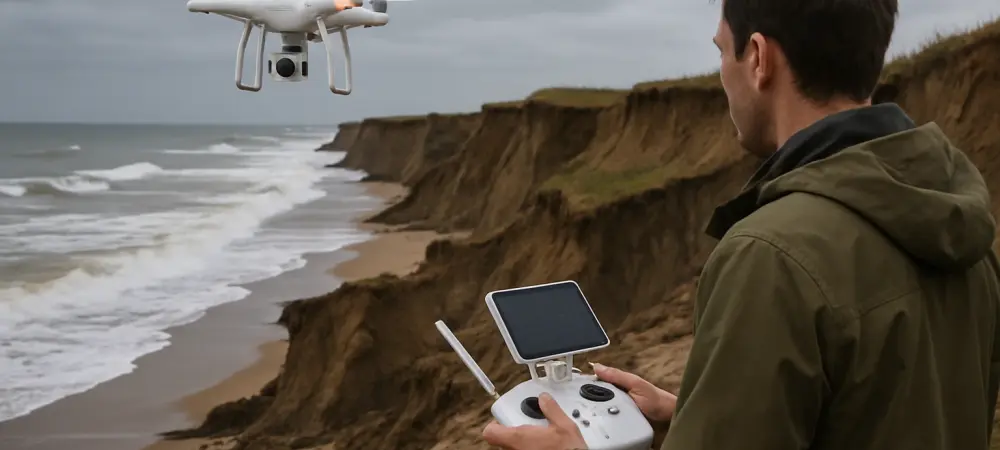
The relentless advance of rising sea levels and intensifying storms poses an existential threat to coastal communities worldwide, where a significant portion of the global population resides. This constant pressure from environmental change demands more than just traditional defenses; it requires innovative, forward-thinking strategies that can adapt to an unpredictable future. The challenges are not merely about restoration but about creating proactive support systems that can bolster the natural resilience of these vital areas. This article explores the powerful combination of hands-on ecological intervention and advanced artificial intelligence as a promising path forward. It delves into the key questions surrounding coastal resilience, examining how nature-based solutions are being implemented and how AI is amplifying their effectiveness. Readers can expect to gain a clear understanding of both the tangible restoration efforts and the sophisticated technology enabling a new era of coastal management.
Key Questions or Key Topics Section
What Is Coastal Resilience and Why Does It Matter
Coastal resilience refers to the capacity of coastal communities, ecosystems, and infrastructure to withstand, adapt to, and thrive amidst environmental challenges like severe storms, rising sea levels, and persistent erosion. Its importance is underscored by two critical factors. First, the historical trend of human settlement near waterways means a vast and growing percentage of the global population is directly in the path of climate-related threats. Without proactive measures, many coastal cities face the near certainty of regular inundation, displacing millions and causing catastrophic economic damage.
Moreover, the ecological health of these regions is paramount for global biodiversity. Coastal zones are not just beautiful landscapes; they are critical hubs of life that play an integral role in regulating global weather patterns and sea cycles. The degradation of these ecosystems has far-reaching consequences that extend well beyond the shoreline, impacting everything from global food supplies to climate stability. Consequently, building resilience is about protecting both human life and the planet’s delicate environmental balance.
How Can Nature Based Solutions Restore Coastlines
Nature-based solutions move beyond concrete seawalls and engineered barriers, focusing instead on restoring and enhancing natural ecosystems to provide protection. A prime example of this approach is the work being done in the Boston area, which showcases a sophisticated, evidence-based methodology rooted in fostering diversity at all ecological levels. This collaborative effort involves strategically cultivating specific strains of seaweed that are engineered to be climate-resistant and tolerant of urbanized aquatic environments, thereby improving water quality and overall sustainability.
At a larger scale, the project introduces “ecosystem engineers”—various burrowing creatures that actively and positively alter the chemical composition of their local environment. The most ambitious component involves recreating entire lost habitats. This is not a simple re-planting effort but a research-driven process that includes engineering supportive breakwaters and carefully selecting species to ensure long-term survival and ecological balance. The success of these interventions is quantifiable, with projects having successfully arranged habitats for 150 different species, achieved a 300% increase in local biodiversity, and developed eleven distinct habitat designs for marine life.
What Role Does Artificial Intelligence Play
While nature-based solutions provide the physical foundation for restoration, artificial intelligence serves as a powerful analytical and predictive tool that optimizes these efforts. The primary function of AI in this context is to process immense volumes of environmental data and forecast the potential outcomes of various interventions before they are physically implemented. This allows scientists and stakeholders to make more effective, efficient, and resource-conscious decisions. Researchers can leverage AI to create “digital twins” of coastal systems, which are complex virtual models that simulate real-world conditions. By running scenarios within these digital environments, teams can test the effectiveness of different habitat designs or restoration strategies under various climate projections. This predictive capability is crucial for planning long-term resilience, as it helps identify the most promising approaches and avoid costly trial-and-error in the field. AI effectively transforms raw data into actionable intelligence, amplifying the impact of on-the-ground ecological work.
How Is AI Being Used in Practice Today
Federal entities like the National Oceanic and Atmospheric Administration (NOAA) are at the forefront of applying AI to real-world coastal challenges. The modern problem is not a lack of information—NOAA collects enormous volumes of data from a vast network of satellites, vessels, and monitoring systems—but rather the inability to analyze it at the necessary speed and scale. AI provides the “automated cognitive capabilities” required to sift through this big data and extract invaluable insights, enhancing national climate resilience.
The practical applications are diverse and impactful. For public safety, AI algorithms are used for the real-time detection of dangerous rip currents, allowing for faster warnings to beachgoers. In ecological monitoring, AI analyzes imagery and other data to accurately measure coral resilience and predict bleaching events before they become severe. Furthermore, AI plays a vital role in protecting human health by monitoring for paralytic shellfish toxins along the coast. These toxins can cause severe illness, and by processing environmental data, AI helps predict toxic algal blooms, enabling authorities to take proactive measures to safeguard the public.
Summary or Recap
The future of coastal protection lies in the synergy between hands-on ecological science and the sophisticated analytical power of AI. The core challenge is multifaceted, involving both the restoration of natural ecosystems and the development of predictive tools to guide those efforts effectively. This unified approach demonstrates that technology and nature are not opposing forces but complementary partners in the effort to build lasting resilience.
Nature-based solutions, as demonstrated by the work in Boston, provide tangible, evidence-based methods for rebuilding biodiversity and strengthening natural defenses. In parallel, AI, as championed by organizations like NOAA, provides the essential capability to analyze complex data, model future scenarios, and optimize interventions for maximum impact. Together, these strategies present a clear, effective, and technologically advanced framework for protecting invaluable coastal regions against mounting environmental pressures.
Conclusion or Final Thoughts
The formidable challenges facing the world’s coastlines once seemed insurmountable, but the fusion of ecological ingenuity and artificial intelligence opened a new frontier in conservation and environmental management. This integrated strategy marked a significant shift from purely reactive defenses toward a proactive, predictive model of stewardship. By harnessing advanced technology to support and guide nature-based solutions, humanity developed a more nuanced and powerful approach to protecting its most vulnerable ecosystems. This collaborative spirit between science and technology demonstrated that innovation, when thoughtfully applied, could indeed help restore and preserve the delicate balance of the natural world.