

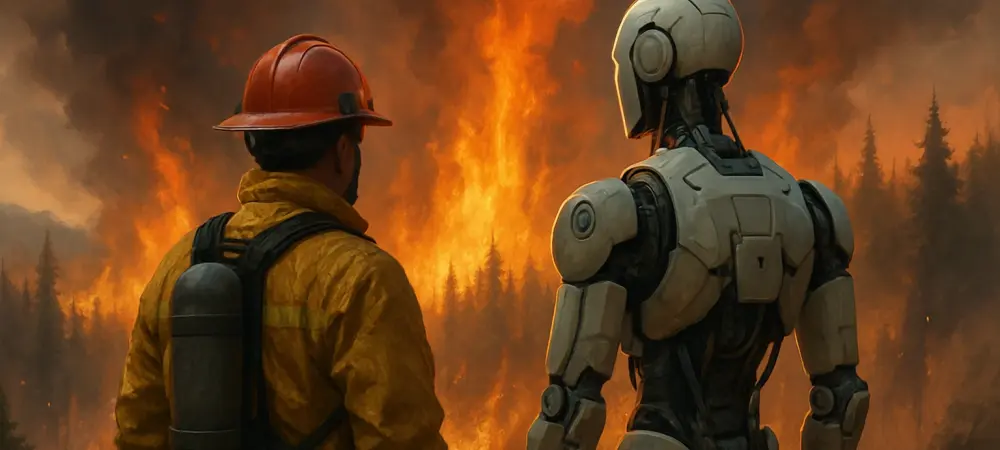
I’m thrilled to sit down with Dominic Jainy, an IT professional whose expertise in artificial intelligence, machine learning, and blockchain has positioned him as a leading voice in cutting-edge disaster response technologies. Today, we’re diving into the groundbreaking world of AI-driven wildfire management, with a focus on innovative systems like those recently tested by FireDome. Our conversation explores how AI is transforming the fight against wildfires, the unique advantages it offers over traditional methods, the challenges of real-world deployment, and the ethical considerations of autonomous decision-making in emergencies.
How did you first become interested in applying AI to challenges like wildfire detection and suppression?
I’ve always been fascinated by how technology can solve real-world problems, especially in high-stakes scenarios like natural disasters. My background in AI and machine learning naturally led me to explore how these tools could be used to predict and manage crises. Wildfires, in particular, caught my attention because of their increasing frequency and devastating impact. I saw an opportunity to leverage data-driven insights and real-time response systems to save lives and property, which is incredibly motivating.
Can you walk us through the recent field test conducted by FireDome in October 2025 and what made it a significant moment for wildfire technology?
Absolutely. The FireDome test was a game-changer because it showcased an AI system that doesn’t just detect fires but actively suppresses them. The demonstration involved a setup of thermal cameras and sensors that identified small flames within seconds. Once detected, the AI triggered precision-launched capsules filled with water or eco-friendly retardant to douse the fire before it could spread. The biggest takeaway was the speed—acting long before human crews could even be alerted. It’s a proof of concept that AI can intervene at the earliest stages of a wildfire.
What sets AI systems like FireDome’s apart from traditional wildfire detection tools such as satellites or drones?
The key difference is the shift from passive detection to active response. Satellites and drones are fantastic for spotting fires over large areas, but they often lag in real-time action due to data processing delays or the need for human intervention. FireDome’s system, with its thermal cameras and machine-learning algorithms, operates on the spot. It doesn’t just alert; it acts by deploying suppression units instantly. This integration of detection and response in a single autonomous loop is what makes it stand out.
I’ve heard the term ‘Wildfire Resilience-as-a-Service’ mentioned in connection with this technology. Can you explain what that means for communities at risk?
Sure, it’s a forward-thinking concept. Essentially, it’s about offering communities a subscription-based or managed service where automated AI systems are deployed to protect high-risk areas. Think of it as a protective shield that’s always on guard—sensors and suppression units are installed around homes or businesses, ready to respond the moment a threat is detected. For residents, it could mean peace of mind and potentially lower insurance costs, while for businesses, it’s a way to safeguard assets without constant human oversight.
There are natural concerns about how reliable AI can be in the unpredictable conditions of a real wildfire. What challenges do you see in deploying this tech outside controlled test environments?
You’re right to point out the unpredictability. Real-world conditions like shifting winds, rugged terrain, or sudden weather changes can throw off even the best algorithms. For instance, a thermal camera might misread a heat signature if dust or smoke obscures the view. The challenge is ensuring the AI can adapt to these variables on the fly. Testing in diverse, uncontrolled environments is crucial, as is building redundancy into the system so it doesn’t fail when conditions aren’t ideal. It’s about rigorous validation before widespread rollout.
How does an AI system like this learn from each incident to improve its performance over time?
It’s all about closed-loop learning, a process where the system observes, acts, and then refines itself based on the outcome. After each fire event, the AI analyzes data like wind patterns, heat intensity, and the effectiveness of its suppression response. This feedback gets fed back into the model, tweaking its decision-making for the next time. Over time, it gets smarter at predicting how a fire might spread or where to aim retardant for maximum impact. It’s like teaching a machine to think like a seasoned firefighter, but with the ability to process vast amounts of data instantly.
Speed is a huge factor with these systems. Can you describe how that rapid response capability supports firefighters on the ground?
Speed is everything in wildfire scenarios. When an AI system detects and suppresses a fire within seconds, it buys critical time for firefighters. Instead of arriving to a full-blown blaze, they might face a contained or smaller fire, which is easier to manage. This early intervention can prevent evacuations, save resources, and reduce risk to human life. Importantly, it’s not about replacing firefighters but giving them a head start—acting as a first line of defense while crews mobilize.
With AI making split-second decisions in emergencies, safety and accountability are big concerns. How can we ensure these systems operate responsibly?
That’s a critical issue. Safety starts with transparency in how the AI makes decisions—its algorithms need to be explainable, so we understand why it acted a certain way. There also need to be strict oversight mechanisms, like human-in-the-loop protocols for high-risk scenarios, ensuring a person can override if needed. Accountability means clear guidelines on who’s responsible if something goes wrong, whether it’s the developer or the deploying agency. Building trust requires rigorous testing, certification standards, and constant dialogue with firefighting communities to align the tech with their needs.
Looking ahead, what’s your forecast for the role of AI in wildfire management and climate adaptation over the next decade?
I’m optimistic but cautious. Over the next ten years, I see AI becoming an integral part of not just wildfire management but broader climate resilience—think flood response, heatwave monitoring, and protecting infrastructure. We’ll likely see more autonomous systems working alongside human teams, with improved accuracy as data sets grow. However, the challenge will be balancing innovation with regulation. If we can establish trust through proven results and clear policies, AI could redefine how we adapt to a changing climate, making disasters less devastating and communities more prepared.