

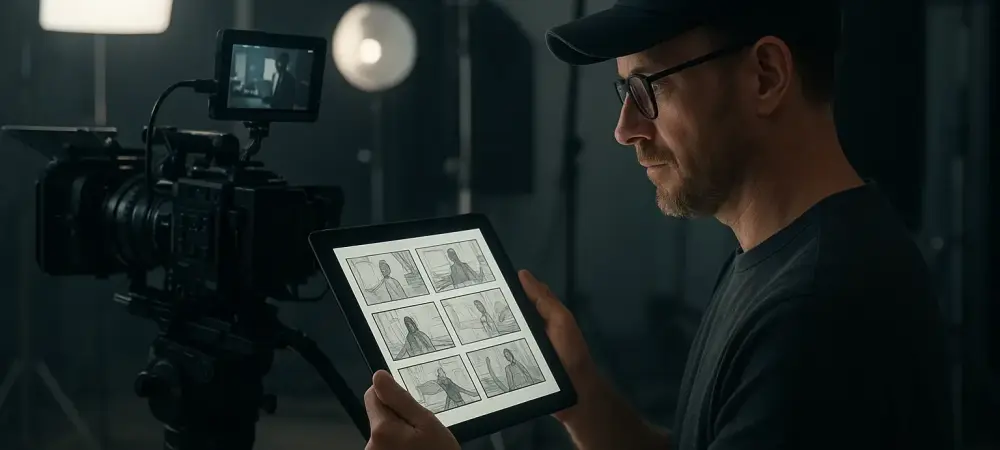
While some view artificial intelligence as a revolutionary tool for social justice, labor advocates warn that replacing human crew members with digital counterparts poses an existential threat. This tension recently boiled over during a high-profile broadcast of the daytime talk show The View, where co-host and author Sunny Hostin defended her decision to partner with AI firm Fountain 0. Her move serves as a microcosm for a global industry at a crossroads, where the promise of creative liberation clashes with the reality of professional displacement. As 2026 unfolds, creators are actively deciding whether to embrace software as a collaborator or resist it as a predator. This fundamental shift challenges the traditional structures of Hollywood, forcing a reexamination of who holds the power to tell stories and who gets paid to bring those narratives to life in a digital world where the lines between human effort and machine synthesis are increasingly blurred.
Digital Democratization and the End of Gatekeeping
For proponents like Sunny Hostin, generative AI represents a necessary response to the systemic gatekeeping that has long characterized the American studio system. Hostin’s personal experience highlights a recurring theme for marginalized voices: despite being a best-selling author with a successful literary trilogy, she spent six years unable to secure a traditional film or television adaptation. The barriers to entry for Black and Brown creative content often involve a labyrinth of executive approvals and financial skepticism that can stifle diverse storytelling before it begins. By treating AI as a “new art form,” creators aim to dismantle these hurdles. The technology provides a way to generate high-quality visual content without the “permission” of established industry power brokers. This bypass is viewed as a radical act of social justice that ensures stories relevant to diverse communities are produced regardless of corporate interests or existing studio biases.
The practical implementation of this democratization often centers on licensing names and likenesses to specialized firms like Fountain 0. This approach allows creators to build proofs-of-concept or even full-scale cinematic products with significantly lower overhead costs. In the traditional model, a project requires millions in upfront capital, a vast human crew, and the favor of streaming giants to move beyond the script stage. However, by utilizing sophisticated AI tools, an author can now present a polished, finished product to platforms for licensing, shifting the power dynamic from seeker to supplier. This evolution suggests that the future of media may lie in independent, software-augmented production that levels the playing field for those previously excluded. While critics remain wary, the ability to control one’s own narrative from inception to distribution offers a level of agency that was once reserved for the industry’s most elite and well-funded insiders.
Labor Protectionism and the Ethics of Likeness
Conversely, labor advocates and industry veterans like Joy Behar argue that the widespread adoption of digital counterparts presents an unacceptable risk to human employment. The central critique is that every AI-generated background actor, set designer, or script editor replaces a professional whose livelihood depends on those specific roles. Replacing human crews with algorithms is seen as a net negative that prioritizes efficiency and cost-cutting over the survival of the creative workforce. This perspective emphasizes that the entertainment industry is more than a source of content; it is a vital economic ecosystem that supports thousands of families. By automating these positions, the industry risks hollowing out the middle class of Hollywood. The fear is that machine-led production will consolidate wealth within tech companies and studio boardrooms while permanently displacing the very individuals whose labor built the foundations of modern cinema.
The mechanics of generative AI also raise thorny ethical questions regarding the erosion of intellectual property and the extractive nature of data training. AI models do not create in a vacuum; they are trained by analyzing existing bodies of human work, often without the explicit consent or compensation of the original creators. This has led to accusations that the technology is fundamentally parasitic, profiting from the lifetime of effort and unique styles developed by human artists. Critics point out that the current lack of a robust residual framework for AI-generated content creates an economy where creators are stripped of long-term financial stability. In a world where a software model can simulate an actor’s performance or a writer’s prose based on their previous portfolio, the concept of ownership becomes increasingly fluid. Without clear legal protections, the very work that defines a creator’s career could be used to facilitate their professional replacement.
Building a Sustainable Framework for the Future
As the debate intensified, the consensus emerged that the integration of artificial intelligence into the creative arts became an irreversible reality. The metaphor of the “AI train leaving the station” accurately captured the industry’s acknowledgment that total resistance was no longer a viable strategy. Instead, the focus shifted toward the urgent need for a regulatory framework that balanced innovation with human rights. Policymakers and industry guilds recognized that protecting the workforce required more than just skepticism; it demanded new contract language that specifically addressed AI training data and digital likeness ownership. The initial excitement over democratization was tempered by a realization that without strict oversight, the technology could exacerbate existing inequalities. This led to a push for collective bargaining agreements that ensured human creators remained at the center of the production process, even when using generative tools.
In the wake of these discussions, several actionable steps were identified to safeguard the future of the entertainment ecosystem. Industry leaders prioritized the establishment of transparent licensing standards that required explicit, opt-in consent for any use of a professional’s likeness in AI training. Furthermore, the development of “human-in-the-loop” production models ensured that software served as a supplement to, rather than a replacement for, human expertise. Looking forward, the industry began to explore hybrid roles that blended traditional artistry with technical proficiency in AI management, creating new career paths for the next generation of creators. By fostering a culture of ethical collaboration, the entertainment world aimed to harness the power of artificial intelligence to amplify marginalized voices while maintaining the economic integrity of its human workforce. The goal became the creation of a environment where technology empowered creators without compromising artistry.