

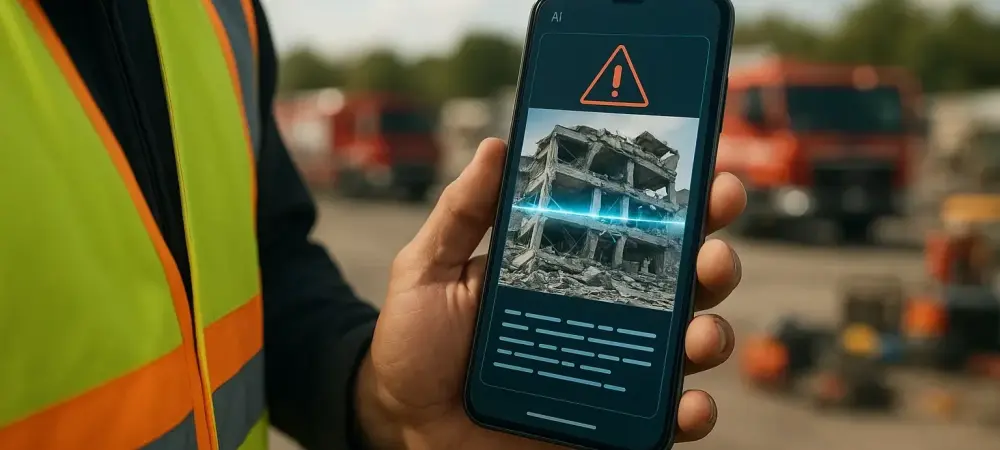
Structural damage, rescue personnel, and infrastructure status can be identified by convolutional neural networks trained on photographs from disaster zones. In the immediate aftermath of a massive seismic event, the digital landscape is often as fractured and chaotic as the physical one, yet it contains the most vital clues for survival. During the critical timeframe known as the “golden hours,” social media platforms like X become indispensable communication hubs where survivors broadcast real-time accounts, pleas for assistance, and visual evidence of destruction. However, the sheer volume of this data frequently overwhelms humanitarian agencies, as essential reports are buried under a deluge of memes, irrelevant chatter, and conflicting updates. To address this crisis of information management, a team of researchers at the Jordan University of Science and Technology has introduced a specialized deep learning framework designed to sift through this digital noise. By integrating the analysis of both text and images, the system achieves a degree of precision previously unattainable, allowing for the rapid identification of actionable intelligence with an 88 percent accuracy rate in real-world scenarios. This advancement represents a fundamental shift in how digital footprints are utilized to direct physical rescue operations on the ground, transforming a chaotic stream of data into a life-saving tool.
Parallel Processing: The Role of Dual-Branch Architectures
The technical sophistication of this AI framework stems from its dual-branch architecture, which processes diverse data streams simultaneously to ensure no critical detail is overlooked. The first branch is dedicated entirely to textual analysis, utilizing Long Short-Term Memory (LSTM) networks to interpret the nuance and context of short, often frantic, social media posts. Unlike simpler models that only scan for keywords, the LSTM approach considers the sequence and relationship between words, allowing the system to differentiate between a user reporting a building collapse and someone merely sharing a news headline from a safe distance. This distinction is vital because emergency services cannot afford to waste resources on secondary reports that lack immediate operational value. By focusing on the underlying intent and the linguistic structure of the message, the textual branch provides a foundational layer of understanding that helps filter out the vast majority of irrelevant social media traffic before it ever reaches a human dispatcher. Complementing this linguistic analysis is the visual branch, which employs deep convolutional neural networks (CNNs) to evaluate the photographic evidence attached to tweets. These networks are specifically trained to identify visual markers of disaster, such as concrete rubble, twisted metal, and the presence of emergency vehicles or medical personnel. By translating raw pixel data into high-level features, the AI can independently verify the severity of a situation regardless of the accompanying text. For instance, a post might contain very little written information, but the visual branch can detect a catastrophic structural failure that warrants an immediate response. This capability is particularly useful in international contexts where language barriers or regional dialects might otherwise hinder the effectiveness of text-only analysis. By treating the image as a primary source of data rather than a secondary supplement, the framework ensures that visual evidence of damage is prioritized and categorized with high fidelity.
Synthesis and Integration: The Mechanics of Data Fusion
The most critical innovation of this research lies in the fusion stage, where the disparate insights from both the textual and visual branches are merged into a single, unified representation. Rather than simply comparing the results of two independent scans, the model creates a discriminative joint representation that allows the data types to interact and support one another. This fusion process is designed to overcome the inherent limitations of using either text or images in isolation. For example, a high-resolution photo of a cracked wall might be visually significant, but without text providing a location or a timestamp, its utility is limited. Conversely, a text post stating “the roof just gave way” is far more impactful when paired with visual confirmation of the specific building. By synthesizing these inputs into a single mathematical vector, the AI can make a much more informed decision about the relevance and urgency of a post, effectively mitigating the ambiguities that often plague disaster-related communications.
This collaborative synergy between data streams allows the framework to navigate the extremely noisy environment of social media during a crisis with unprecedented efficiency. During an earthquake, users often post low-quality or blurry images in their haste, or they may use vague language that is difficult for traditional algorithms to parse. The fusion model compensates for these weaknesses; if a photograph is obscured by dust or poor lighting, the textual branch can provide the necessary context to maintain accuracy. If the text is cryptic or heavily laden with slang, the visual features can ground the analysis in physical reality. This balanced approach significantly reduces the rate of false positives, ensuring that humanitarian organizations are not led astray by misleading posts or old photographs recirculated for attention. By creating a more holistic view of each social media interaction, the system provides a reliable filter that translates digital noise into a coherent map of human needs.
Empirical Validation: Analyzing Seismic Data Patterns
To ensure the framework was robust enough for real-world deployment, the research team utilized the CrisisMMD dataset, which contains a vast repository of social media posts from significant historical events such as the 2017 Mexico and Iraq-Iran earthquakes. By testing the AI on actual disaster data rather than laboratory-simulated scenarios, the researchers were able to observe how the model handled the unpredictability of human behavior during a crisis. The study focused on a rigorous analysis of 2,743 specific samples, testing the system’s ability to categorize information across different cultural and geographical contexts. This diversity in the training data is essential for creating a tool that can be deployed globally, as the visual and textual signatures of a disaster can vary significantly depending on local architecture, language, and social media habits. The results demonstrated that the AI could maintain its high performance levels regardless of the specific event, suggesting it had successfully learned the general characteristics of earthquake distress.
The evaluation process utilized standard industry metrics including precision, recall, and the F1-score to provide a comprehensive view of the model’s performance. Furthermore, the team implemented K-fold cross-validation, a method that involves training and testing the model on different subsets of the data to ensure that the AI was not simply memorizing specific examples. This rigorous testing confirmed that the system possessed a high degree of generalizability, meaning it could accurately identify critical information in new, unseen disasters. The ability to maintain an 88 percent accuracy rate across different seismic events proves that the combination of convolutional and recurrent features is exceptionally well-suited for the unique challenges of earthquake informatics. This consistency provides the necessary confidence for emergency management agencies to consider integrating such AI tools into their standard operating procedures, knowing the system is backed by verifiable empirical evidence.
Strategic Improvements: Beyond Traditional Disaster Informatics
The development of this multimodal framework represents a significant technological leap over previous generations of disaster response tools. Earlier methods often relied on basic keyword filtering or simple mathematical models that were easily confused by the complexity and irony often found in social media discourse. While more recent “transformer-based” models have shown promise in general natural language processing, they are often computationally intensive and require significant time to process large datasets, which is a luxury rescue teams do not have during a disaster. The Jordanian team’s approach demonstrates that a streamlined fusion of CNN and LSTM architectures can deliver superior performance with greater efficiency. By focusing on a model that is both fast and accurate, the researchers have created a solution that is specifically optimized for the high-pressure, time-sensitive environment that characterizes the immediate aftermath of a major earthquake.
Furthermore, by tailoring the AI specifically to seismic events, the researchers have accounted for the unique “digital signature” that earthquakes leave behind. Unlike floods or wildfires, which may have more predictable visual progressions, earthquake damage is often chaotic, localized, and varied in its presentation. The textual reports are frequently more frantic, reflecting the sudden and unexpected nature of the ground shaking. This specialized focus ensures that the tool is not just a general-purpose filter, but a precision instrument designed to recognize the specific types of structural failure and human distress common in seismic zones. This level of specialization is crucial for minimizing the time between a post being published and help being dispatched. As disaster informatics continues to evolve, this model serves as a blueprint for how specialized AI can be tuned to the specific physical and psychological realities of different types of natural catastrophes.
Practical Deployment: Optimizing Search and Rescue Efforts
The practical implications of this AI framework for automated triage and rapid response are profound. In an era where millions of social media posts can be generated in the minutes following an earthquake, human monitors are physically incapable of reviewing every piece of information. This system can act as an automated first responder, instantly flagging posts that show trapped individuals or significant infrastructure damage and escalating them to human dispatchers. By prioritizing the most critical reports based on both visual and textual evidence, the AI ensures that rescue teams are directed to the locations where they can do the most good in the shortest amount of time. This capability could fundamentally change the dynamics of search and rescue operations, replacing the slow process of manual data mining with a real-time stream of verified, actionable intelligence that saves lives during the most desperate moments.
Beyond immediate rescue efforts, the framework offers significant advantages for long-term damage assessment and humanitarian planning. By extracting and categorizing visual data regarding infrastructure, the system can help agencies visualize the extent of a disaster zone long before aerial surveys or satellite imagery become available. This allows for the rapid creation of damage maps that can guide the distribution of food, water, and medical supplies. Additionally, the AI provides a powerful defense against the spread of misinformation, which often thrives in the confusion following a disaster. By identifying posts where the text and the image do not logically match—a common hallmark of staged photos or reused imagery from previous years—the system helps maintain the integrity of the information ecosystem. This multi-layered utility makes the framework an essential asset for modern emergency management, offering both immediate tactical support and long-term strategic insights.
Future Trajectories: Scaling Intelligence for Global Crises
As the field of disaster informatics progressed through 2026, the focus shifted toward making these AI systems more resilient to the inherent messiness of global communication. The researchers acknowledged that while their model achieved high accuracy, social media remains an incredibly difficult environment characterized by regional slang, sarcasm, and varying levels of digital literacy. To reach the next level of effectiveness, future iterations of this technology must incorporate even larger and more diverse datasets that reflect a wider array of linguistic and cultural nuances. Scaling these systems to handle the massive influx of data seen during catastrophic events, such as the major earthquakes experienced in the Mediterranean and Middle East in recent years, required a concerted effort to improve data labeling and model training protocols. The path forward involves refining the AI’s ability to handle low-resolution images and highly localized dialects, ensuring that no plea for help goes unheard due to technical limitations.
The transparency of this research provided a vital foundation for subsequent developments in the field, as the use of open-source data and clear methodological disclosures allowed other scientists to refine the fusion process. By highlighting the specific obstacles that remained—such as the need for more robust annotated datasets for various disaster types—the study established a clear roadmap for the next generation of emergency response tools. The transition from experimental models to globally deployed systems involved close collaboration between tech developers and international humanitarian organizations. These stakeholders worked to ensure that the AI was not only technically sound but also ethically implemented, respecting user privacy while maximizing public safety. As these systems became more integrated into global disaster response networks, they proved that the strategic application of multimodal AI was a necessary evolution in the ongoing effort to protect vulnerable populations from the unpredictable forces of nature.