

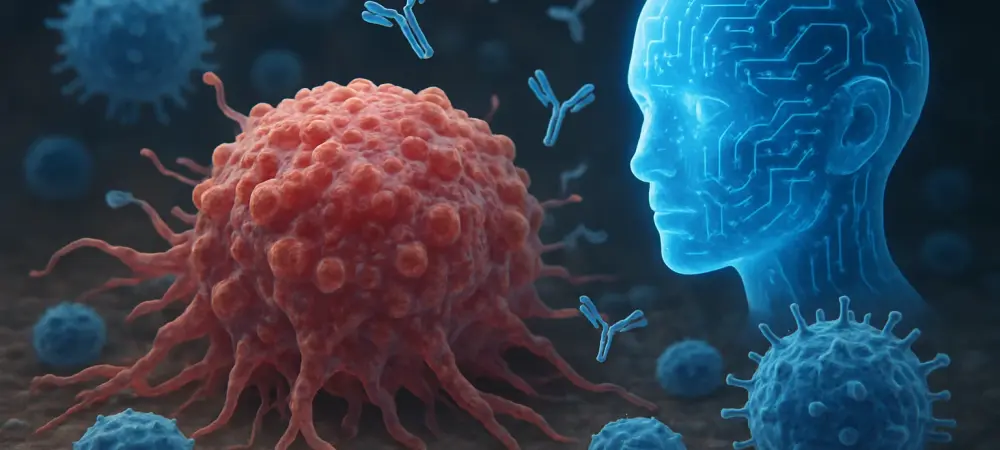
In a world where cancer remains one of the leading causes of death globally, claiming millions of lives each year, a groundbreaking shift is emerging with advances in artificial intelligence (AI) and immunology sparking hope that a cure—or at least a dramatic reduction in mortality—could be within reach. With an aging population increasingly vulnerable to this disease, the urgency for innovative solutions has never been greater. This roundup brings together insights from various experts, researchers, and industry leaders to explore whether these cutting-edge fields can converge to transform cancer care over the next ten years. The purpose is to distill diverse perspectives on how technology and science are reshaping the fight against cancer, offering a comprehensive view of the possibilities and challenges ahead.
Exploring a New Era in Cancer Care
The Historical Battle and Modern Shift
Cancer has long been regarded as a formidable adversary, with traditional treatments like chemotherapy often causing severe side effects while offering limited success. Experts note that for decades, the medical field struggled with late diagnoses and one-size-fits-all approaches that failed many patients. However, a paradigm shift is underway as AI and immunological breakthroughs redefine the landscape, moving toward precision and prevention.
The Urgency for Innovation
With global health systems under strain, particularly as populations age, the stakes are high. Cancer disproportionately impacts older adults, whose declining immune systems heighten susceptibility. Industry leaders emphasize that without bold advancements, the burden on healthcare will only grow. This pressing need drives the focus on integrating technology and biology to outpace the disease’s devastating toll.
Setting the Stage for Hope
The convergence of AI and immunology offers a glimmer of possibility that cancer could be significantly curbed within a decade. Researchers highlight that combining early detection tools with therapies to rejuvenate the body’s defenses might change outcomes dramatically. This section delves into varied opinions on how these fields are aligning to create a future where cancer is no longer a death sentence.
Innovative Pathways to Conquer Cancer
AI’s Transformative Role in Detection and Treatment
AI is often hailed as a game-changer for spotting cancer before symptoms appear. Tools capable of analyzing medical scans with unprecedented accuracy are already in development, with some experts pointing to programs that predict lung cancer risks as a prime example. Many in the tech and medical fields agree that such early intervention could save countless lives by enabling preemptive action.
However, not all perspectives are uniformly optimistic. Some professionals express skepticism about the reliability of AI models, cautioning that false positives could lead to unnecessary stress or procedures. Ethical concerns around data privacy also surface, with debates on how patient information is handled in these systems, underscoring the need for robust safeguards as adoption grows.
A third viewpoint focuses on AI’s potential to tailor treatments. Industry voices predict that within the next five years, algorithms could pinpoint which drugs work best for individual patients, revolutionizing outcomes. This personalization is seen as a cornerstone of future cancer care, though scaling such technology globally remains a significant hurdle.
Aging and Immunity: A Core Vulnerability
Aging is widely recognized as a critical factor in cancer risk, with a consensus that declining immune function leaves older adults more exposed. Researchers stress that after age 60, the body’s natural defenses weaken, making it harder to fight abnormal cells. This link is a focal point for many studies aiming to address root causes rather than just symptoms.
Innovative research into rejuvenating aged immune systems garners significant attention. Some scientists report progress in restoring youthful vigor to immune cells, a development that could lower cancer incidence in the elderly. While specifics vary, the shared optimism is that such interventions might soon become viable through ongoing lab work and trials.
Yet, challenges persist, as highlighted by cautious voices in the field. Potential side effects of immune-boosting therapies are a concern, with unknowns about long-term impacts. Additionally, scaling these solutions to reach diverse populations poses logistical issues, prompting discussions on how to ensure equitable access to such promising advancements.
In Vivo T Cell Engineering: A New Defense Frontier
Immunological strategies like in vivo T cell engineering are gaining traction among experts as a way to enhance the body’s natural fighters. This approach focuses on dendritic cells and T cells, often described as the generals and soldiers of immunity, to target cancer more effectively. Many researchers see this as a revolutionary step applicable across various disease stages.
Emerging trends, such as the use of hyperactivators inspired by the body’s alarm signals, are frequently cited as transformative. These methods aim to supercharge immune responses, offering precise and durable protection. While opinions differ on timelines, there’s agreement that such therapies could address a wide range of cancer types if clinical progress continues at its current pace.
Access disparities, however, remain a sticking point in expert discussions. Some point out that cutting-edge treatments might initially be available only in wealthier regions, exacerbating global health inequities. There’s also a push to challenge outdated notions that immune decline is inevitable, with calls for broader education on how lifestyle and innovation can play a role in prevention.
Immune Health: A Broader Key to Longevity
Beyond cancer, bolstering immune health is viewed by many as a pathway to combat other age-related conditions like heart disease and dementia. Experts often frame immune decline as a central driver of aging’s toll on the body, suggesting that solutions in this area could have sweeping benefits. This perspective broadens the stakes of current research significantly.
Historical comparisons to past medical breakthroughs, such as vaccines for infectious diseases, are often drawn to highlight the potential impact. Some leaders argue that just as those innovations reshaped public health, immune-focused therapies could redefine aging itself. This analogy underscores the transformative scope being discussed in academic and clinical circles.
A nuanced view emerges on balancing cancer-specific goals with overall wellness. While some advocate prioritizing oncology applications, others stress that a holistic approach to immune health could prevent multiple ailments simultaneously. This debate reflects the far-reaching implications of the work, pushing boundaries beyond a single disease focus.
Synthesizing Perspectives on Cancer Solutions
The profound potential of AI and immunology to reshape cancer care is a common thread among diverse opinions. Early diagnosis through advanced algorithms, personalized therapies driven by data, and immune rejuvenation stand out as pillars of progress. Experts largely agree that investment in clinical trials and public awareness of screening tools is essential to accelerate these developments.
Practical steps also feature prominently in discussions. Many professionals urge governments and the private sector to fund research initiatives that bridge lab discoveries to real-world applications. There’s a shared belief that educating communities about AI-driven detection options can empower individuals to take proactive health measures, especially for at-risk groups.
Another recurring insight is the need for global collaboration. Voices from various fields call for policies that address access gaps, ensuring that innovations don’t remain out of reach for underserved populations. This collective push for actionable change highlights a unified goal of turning scientific promise into tangible impact across societies.
Envisioning the Future of Cancer Care
Reflecting on the insights gathered, it becomes clear that the synergy of AI diagnostics and immunological therapies has ignited unprecedented optimism among experts. The discussions underscored how far the field has come in shifting cancer from a fatal diagnosis to a manageable condition. Diverse perspectives converged on the transformative power of early detection and immune system enhancement as critical steps forward.
Looking ahead, the focus turns to actionable next steps that can sustain this momentum. Prioritizing international partnerships to fund and distribute emerging treatments emerges as a vital consideration. Additionally, fostering dialogue between technologists, immunologists, and policymakers is seen as essential to navigate ethical and logistical challenges, ensuring that the benefits of these advancements reach every corner of the globe.