

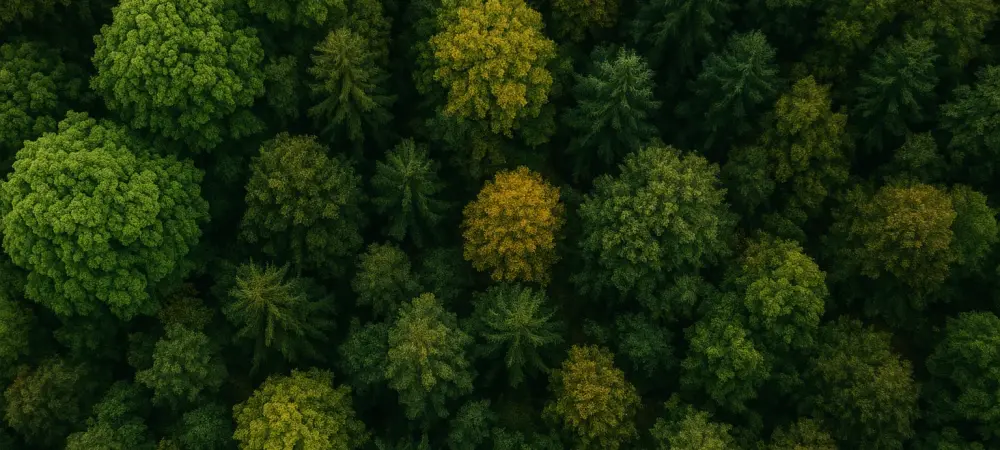
By employing spatial and channel attention mechanisms, the new AI system can refine data quality and accurately identify the precise boundaries of individual trees. This technological leap, spearheaded by researchers from the Chinese Academy of Forestry and Qilian Mountain National Park, addresses a persistent bottleneck in environmental science. Historically, monitoring expansive forest regions required immense human resources and significant funding, making frequent updates nearly impossible. However, the introduction of the SAMFormer framework in 2026 has revolutionized this field by providing a non-destructive and highly scalable method for forest phenotyping. By combining high-resolution drone imagery with three-dimensional structural data, the system allows for a granular, tree-by-tree analysis of ecosystem health. This shift from broad averages to individual management marks a significant milestone in our ability to quantify carbon sequestration and manage biodiversity across previously inaccessible terrains worldwide.
Overcoming the Limitations of Traditional Forestry
Challenges in Modern Ecological Mapping
For decades, foresters relied on manual ground surveys to collect essential metrics such as species type, tree height, and total biomass. While these methods provided high accuracy at a local level, they were fundamentally limited by geography and the sheer physical effort required to traverse dense or mountainous terrain. Even as drone technology became more common, early implementation struggled with the limitations of single-modal data. Standard RGB photography captures vibrant visual details but often fails to distinguish between different tree species that share similar leaf colors or overlapping canopy structures. This lack of spectral nuance meant that researchers could not reliably identify specific species from the air without secondary verification. Furthermore, the inability to update this information frequently meant that rapid changes in forest health due to pests or climate stress often went unnoticed until the damage was extensive and potentially irreversible.
In contrast to visual imagery, Light Detection and Ranging (LiDAR) technology offered a different perspective by providing exceptional three-dimensional structural data. This method allows scientists to see through the canopy to map the vertical structure of a forest, yet it lacks the color and texture information necessary for comprehensive species identification. Until recently, the primary technical hurdle remained the effective integration of these two distinct data streams into a unified, automated system. Data fusion frequently resulted in misalignments or the loss of critical details, preventing the creation of a truly accurate “digital twin” of the forest. The development of SAMFormer has finally overcome these obstacles by using a transformer-based architecture specifically designed for multimodal fusion. This allows for a deeper understanding of how structural form and spectral signatures correlate, providing a much clearer picture of forest dynamics than either technology could achieve independently.
The Architecture of SAMFormer
The core of the SAMFormer system is built upon a dual-stream network that processes 2D visual images and 3D Canopy Height Models simultaneously. One of the most critical innovations within this architecture is the Adaptive Feature Enhancement Module, which utilizes sophisticated spatial and channel attention mechanisms. This module functions by essentially sharpening the focus on the most relevant features of the tree canopy while systematically filtering out distracting background noise. In complex forest environments, shadows, undergrowth, and ground debris frequently confuse standard artificial intelligence models, leading to inaccurate segmentation. By refining the data quality at the input level, the AFEM ensures that the model ignores these irrelevant artifacts. This precision allows the system to isolate individual tree crowns with incredible clarity, even in dense forests where branches often intertwine, ensuring that each organism is treated as a distinct data point for analysis.
Complementing the enhancement module is the Cross-Modal Fusion Module, which acts as a sophisticated bridge between the visual and structural data streams. This component facilitates a constant dialogue between the RGB imagery and the LiDAR-derived structural data, allowing the strengths of one modality to compensate for the weaknesses of the other. For instance, if visual cues are obscured by heavy shadows, the structural data provides the necessary context to define the tree’s boundaries. Conversely, when structural data alone cannot distinguish between two trees of similar height, the spectral signatures from the imagery can provide the definitive identification. This synergy ensures that the model learns complementary features across the entire dataset, leading to a level of instance segmentation that was previously unattainable. By fusing these datasets within a transformer framework, the system captures long-range dependencies and intricate patterns, resulting in a robust map of the entire forest landscape.
Advanced Technical Components and Performance Results
Precision Engineering for Individual Tree Analysis
The empirical performance of SAMFormer has set a new benchmark for the industry, significantly outperforming mainstream models such as Mask R-CNN. During rigorous testing, the model achieved a remarkable F1-score of 86.3% and a mean Average Precision of 88.0%. These figures represent more than just statistical success; they translate into a practical ability to map thousands of individual trees across vast landscapes with pinpoint accuracy. By automating the extraction of vital structural parameters, such as tree height and diameter at breast height, the system provides a comprehensive inventory of forest resources without the need for intensive field labor. This high-fidelity data is crucial for calculating total biomass, which serves as a primary indicator of an ecosystem’s overall productivity and health. The capacity to gather these “vital signs” remotely and rapidly allows for a much more responsive approach to environmental management in an era of fluctuating climate conditions.
Furthermore, the precision of this AI-driven approach enables scientists to monitor the growth trajectories of individual trees over successive drone flights. This longitudinal data provides insights into how specific species respond to local environmental stressors, such as drought or temperature spikes. By observing these changes at the individual level rather than the stand level, managers can identify early warning signs of forest decline that would otherwise be smoothed out in average-based reporting. The integration of high-resolution drone data with deep learning effectively creates a persistent monitoring network that can be deployed whenever weather conditions allow. This flexibility is a significant upgrade over traditional satellite imagery, which is often limited by cloud cover or insufficient spatial resolution. As a result, the SAMFormer framework serves as a vital bridge between ground-level detail and large-scale aerial surveillance, offering a comprehensive solution for modern ecological monitoring.
Ecological Insights into Tree Competition
Beyond the technical advancements in mapping, the implementation of SAMFormer has yielded profound ecological insights into the “secret language” of forest competition. By creating species-specific maps of structural parameters, researchers were able to observe how trees interact with their immediate neighbors in real-time. The study identified a significant negative correlation between tree competition and carbon stock, revealing that when trees are under intense pressure for light and soil nutrients, they prioritize survival over growth. This adaptation results in restricted canopy expansion and reduced biomass accumulation, which directly impacts the forest’s ability to sequester atmospheric carbon. Understanding these competitive dynamics is essential for foresters who seek to optimize the carbon storage potential of a given area. By identifying zones of high competition, managers can now intervene with targeted thinning strategies that reduce stress on the most productive trees.
The data also highlighted the critical importance of forest composition in maximizing carbon efficiency across different ecosystems. The research found that mixed-species forests, particularly those combining conifers and broadleaf trees, often sequestered significantly more carbon than monocultures. This is likely due to “niche complementarity,” where different species utilize resources in diverse ways, reducing overall competition and allowing the forest to reach a higher total biomass. However, the study also cautioned that the specific selection of species is vital, as mixing incompatible species can actually create antagonistic relationships that hinder carbon storage. These findings provide a data-driven foundation for reforestation projects, suggesting that simply planting more trees is not enough. Instead, the focus must shift toward creating complex, biologically diverse ecosystems that are strategically designed to thrive and store carbon most effectively in their specific local environments.
Global Impact and the Future of Conservation
Applications in Climate-Adaptive Management
The implications for climate-adaptive management are far-reaching, especially as the global market for carbon credits continues to expand and mature. There is a critical need for objective and verifiable methods to quantify exactly how much carbon a forest is storing to ensure the integrity of environmental policies. SAMFormer provides a scalable solution for this challenge, offering a transparent way to verify carbon stocks at the individual tree level. This level of accountability is essential for corporate sustainability initiatives and international climate agreements, as it moves the conversation away from theoretical estimates toward physical, measurable reality. By providing a reliable “carbon audit” of the forest, this technology supports the financial and ecological frameworks needed to combat global warming. Additionally, the ability to rapidly assess biomass allows for more accurate predictions of how much carbon will be sequestered in the coming years.
In addition to carbon monitoring, the system offers a powerful new tool for biodiversity conservation and the management of invasive species. By accurately distinguishing between tree species from the air, conservationists can monitor the health of endangered native populations and detect the spread of invasive plants in their early stages. This is particularly valuable in remote or rugged terrains where traditional ground monitoring is physically impossible or prohibitively expensive. The AI can be trained to recognize the specific spectral and structural signatures of invasive species, allowing for rapid intervention before they can dominate an ecosystem. Furthermore, the high-resolution maps produced by SAMFormer can help identify critical habitats for forest-dwelling wildlife, ensuring that conservation efforts are directed toward the areas of highest ecological value. This technology effectively turns drones into a frontline defense for global biodiversity, providing the data needed to protect fragile ecosystems.
Strategic Next Steps for Forestry Science
The successful development and deployment of the SAMFormer framework established a new paradigm for how humanity interacts with and protects the natural world. By fusing complex data streams through advanced neural networks, researchers provided a transformative tool that moved beyond the limitations of the past. The study demonstrated that forest management must transition toward a more individualized, data-centric approach to maximize ecological resilience. Future efforts focused on integrating this AI with autonomous drone swarms to enable continuous, large-scale monitoring without human intervention. This progression suggested that the real-time tracking of global carbon dynamics became a feasible goal for the near future. Ultimately, the ability to read the intricate signals of forest health at scale provided the scientific community with the clarity needed to make informed decisions. The project proved that when technology and ecology aligned, the resulting insights became an indispensable asset in the ongoing effort to sustain the planet’s vital resources.