

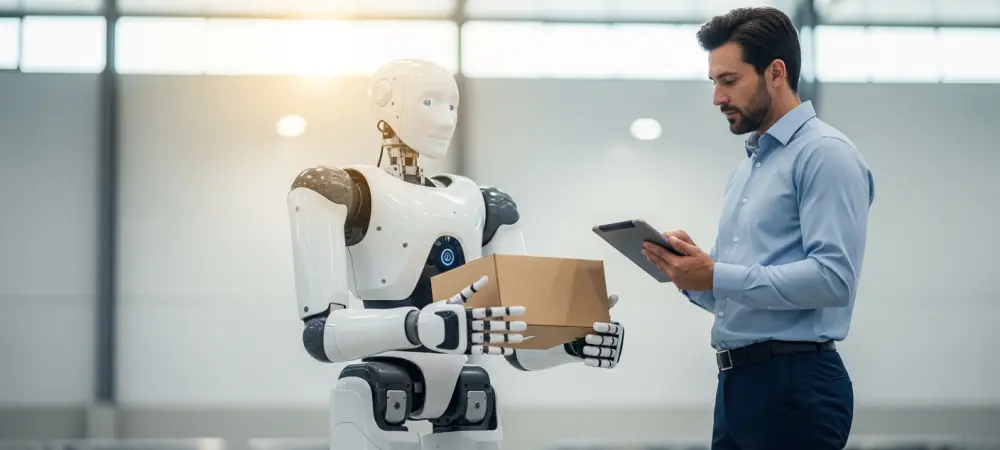
The rhythmic clanking of a robotic arm in a precision electronics factory is no longer the sound of a distant future but the heartbeat of a modern industrial revolution. As the landscape of humanoid robotics shifts away from the speculative and toward the strictly practical, Agibot has emerged as a formidable force in the global business-to-business sector. Founded by visionary engineers, this company recently moved beyond its regional origins to challenge established Western standards. By successfully integrating sophisticated hardware with advanced artificial intelligence, the industry has witnessed a pivot where robots are no longer just tools but are becoming active participants in the global economy. This expansion into markets like the United Kingdom serves as a critical benchmark for how quickly these machines will become ubiquitous in high-stakes environments.
The Global Landscape of Humanoid Robotics and Agibot’s Entry
The current market for humanoid robotics has reached a saturation point where the novelty of a bipedal machine has been replaced by the demand for industrial utility. Agibot has strategically positioned itself at the center of this evolution by focusing on the business-to-business segment rather than the unpredictable consumer market. Through a partnership with high-performance computing leaders like Nvidia, the company has secured the necessary chipsets to drive complex decision-making processes. This collaboration has allowed the firm to move past the laboratory phase and into a reality where robots perform alongside humans in manufacturing hubs and logistics centers, signaling a massive leap for the global adoption of autonomous systems.
Technological Paradigms and the Economics of Automation
Shifting Paradigms in Labor and Autonomous Interaction
The philosophy driving this technological surge is centered on the liberation of the human workforce from tasks that are inherently dangerous, monotonous, or repetitive. Industry leaders argue that workers in roles such as assembly line packing or warehouse sorting often desire to be replaced by machines that can handle the physical strain of long shifts. This shift represents a fundamental change in behavior within the business-to-business world, where companies are moving toward a collaborative model. Instead of replacing people entirely, these robots are designed to take over the low-value labor, allowing the human component of the workforce to transition into creative and high-level decision-making roles that a machine cannot yet replicate.
Measuring the Momentum of the Global Robotics Market
In the period from 2026 to 2028, the growth projections for humanoid robotics suggest a compounding expansion that few sectors have ever experienced. Agibot achieved a significant production milestone of 15,000 units, a figure that indicates the industry has moved into true mass-scale manufacturing. Performance indicators from the electronics sector, particularly the success of the G2 series in Chinese factories, serve as a predictive model for how these machines will perform in European and American industrial settings. As these robots demonstrate their ability to handle delicate components with a precision that rivals human dexterity, the economic argument for their integration becomes undeniable for large-scale operations.
Overcoming the Practical and Psychological Barriers to Adoption
Despite the rapid hardware progress, significant hurdles remain in achieving the level of manipulation and locomotion required for unpredictable environments. While a robot can easily navigate a flat factory floor, traversing diverse terrains or handling complex social interactions presents a different set of challenges. Furthermore, a public trust deficit persists despite the high adoption of digital intelligence in other areas. Many people remain skeptical of robotic presence in social or medical roles, creating a gap between technological capability and consumer acceptance. Managing the anxieties surrounding workforce displacement is also essential, as the industry must prove that robots act as an empowering force rather than a mere tool for cost-cutting and job elimination.
Establishing the Framework for Safe and Compliant Autonomy
The transition into a robot-heavy workforce requires a robust regulatory landscape that ensures machines remain safe and predictable. Existing standards for autonomous systems are being re-evaluated to address the unique risks posed by mobile, bipedal entities in shared public spaces. Agibot adheres to a human-in-the-loop philosophy, ensuring that while the machines process data locally via large language models, they remain under human supervision for critical functions. Data security is another paramount concern, as these robots collect and process massive amounts of interaction data. Establishing clear compliance protocols is the only way to ensure that the autonomy granted to these machines does not compromise the privacy or safety of the humans they serve.
Exploring the Next Frontier of Social and Industrial Robotics
Beyond the heavy industry of manufacturing, the next frontier lies in sensitive social sectors such as education and nursing. Humanoid robots, equipped with the decision-making power of large language models, are being developed to serve as teaching assistants and healthcare aides. Specialized hardware, including the X2 series for social service and the quadrupedal D1 range for rugged navigation, suggests that no sector is entirely off-limits for automation. As these machines evolve from simple tools into proactive entities capable of understanding context, they will likely find permanent roles in construction and entertainment. This trajectory points toward a future where robotic assistance is a standard feature of both professional and social life.
The Verdict on Robotics as a Catalyst for Human Empowerment
The emergence of Agibot’s diversified fleet signaled a transformative moment for global industrial standards. It suggested that the integration of humanoid systems functioned as a necessary bridge between stagnant productivity and the future of human-centric innovation. Industry experts noted that the most successful implementations occurred when the focus remained on augmenting human potential rather than merely reducing headcount. The long-term societal transformation was characterized by a shift toward specialized technical roles, leaving the physical burden of labor to the machines. Ultimately, the adoption of these autonomous systems provided the foundation for a more efficient and creative global workforce, which redefined the very nature of professional accomplishment and economic growth.