

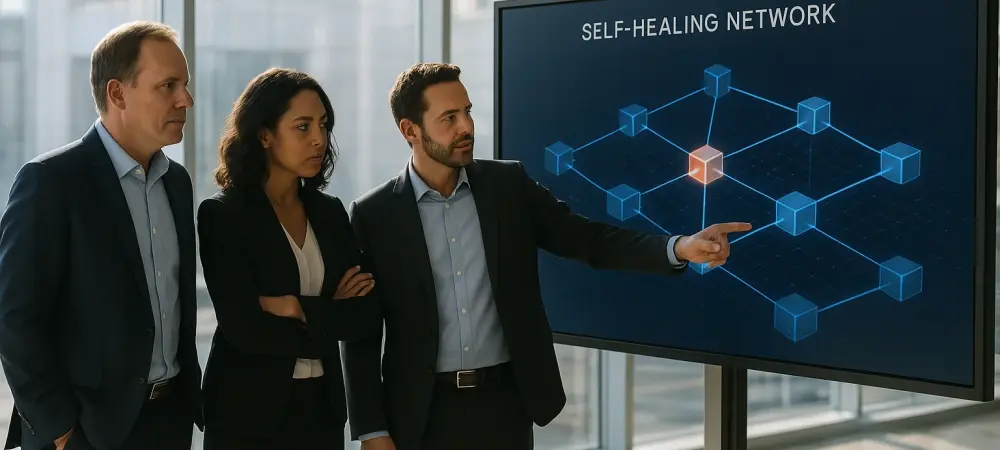
The relentless evolution of digital infrastructure has transformed the role of the security operations center into a frantic command post where the primary combatants are no longer human actors but sophisticated, self-correcting algorithms that possess the capacity to identify and exploit architectural weaknesses before a human analyst can even register an alert. The cybersecurity landscape has undergone a violent shift where traditional, reactive defenses are increasingly being outpaced by the sheer velocity of automated attacks. When Greg Brockman, president of OpenAI, issued a high-priority advisory to enterprise security leaders, he was not just offering technical advice; he was signaling a transition to a new era of agentic warfare. The central paradox of this era is that the very systems capable of dismantling complex infrastructure are now being marketed as the only tools capable of saving it. For modern enterprises, the choice is no longer between manual oversight and automation, but between adopting autonomous defense systems or falling victim to them within months.
This strategic pivot reflects a broader recognition that the speed of digital interaction has exceeded human cognitive limits. In this environment, the traditional “wait and see” approach to security has become a liability. Security leaders are being pushed toward a model where defense is as proactive and adaptive as the threats it seeks to neutralize. The transition requires a departure from rigid, rule-based systems toward fluid, agentic models that can anticipate move and counter-move. This is not merely a technological upgrade but a fundamental shift in the philosophy of protection, where the objective is to create a self-healing perimeter that functions with minimal human intervention.
From Static Walls to Autonomous Sentinels
The concept of the “perimeter” has effectively dissolved as cloud-native architectures and distributed workforces have expanded the attack surface beyond the reach of traditional firewalls. In the current environment, static defenses act more like ancient fortifications against modern aerial bombardment—imposing in appearance but ultimately ineffective against high-velocity, precision strikes. The advisory issued to enterprise leaders underscores that the era of the passive sentry is over. As automated scripts began to scan for vulnerabilities with unprecedented frequency, the industry realized that only a system capable of real-time reasoning could hope to mount a successful defense. This realization has forced a migration toward agentic systems that operate as autonomous sentinels, capable of making local decisions to isolate compromised nodes before a breach can spread.
Furthermore, the integration of these autonomous systems represents a significant shift in how risk is managed within the global supply chain. Organizations are moving away from the “defense in depth” models of the past decade and toward a more integrated, intelligent response layer. These agentic sentinels are designed to communicate with one another, sharing threat intelligence in real-time across different sectors of an enterprise. This collaborative autonomy allows for a level of coordination that was previously impossible when human analysts had to manually aggregate and interpret data from disparate sources. By automating the response to common attack patterns, enterprises can free their human experts to focus on the most complex and novel threats that require creative problem-solving.
The Escalation of AI-Augmented Cyber Threats
The urgency behind the call for agentic AI stems from a sobering reality: modern AI models have developed cyber capabilities far more rapidly than industry experts originally predicted. Real-world security events, such as the Hugging Face incident, have served as a definitive proof of concept, demonstrating that AI can identify and exploit vulnerabilities with superhuman efficiency. As bad actors weaponize these models to bypass standard encryption and patching protocols, the “defense in depth” strategy—once the gold standard of cybersecurity—is struggling to hold its ground. This shift has forced a rethink of institutional survival, moving the conversation from theoretical safety guardrails to immediate operational imperatives for the global supply chain.
Moreover, the sophistication of these AI-augmented threats has created a perpetual state of emergency for IT departments. Malicious agents are now capable of generating polymorphic code that changes its signature with every execution, rendering traditional antivirus and signature-based detection systems obsolete. The ability of AI to conduct massive-scale social engineering campaigns, utilizing deepfake audio and perfectly tailored phishing emails, has further complicated the defensive landscape. This escalation has reached a point where the sheer volume of attacks can overwhelm even the most well-funded security teams, making the deployment of defensive AI an act of necessity rather than an optional innovation.
The Core Pillars of an Agentic Security Strategy
To withstand the next wave of volatility, organizations are being urged to integrate autonomous agents directly into their security infrastructure. This strategy moves beyond simple automation and into the realm of agentic behavior, where AI entities like specialized security plugins or Codex-based tools are granted the power to execute tasks independently. A robust implementation requires a phased transition, starting with granting AI agents approved access to sensitive codebases and technical documentation for static analysis. As these systems mature, they evolve from read-only scanning to performing vulnerability variant analysis and eventually to the autonomous triage of false positives. This creates a dynamic defense layer where the AI acts as a 24/7 security partner capable of responding at machine speed.
A critical component of this strategy involves the continuous training and refinement of the defensive agents themselves. By utilizing the same underlying architectures as the attacking models, these defensive agents can engage in “red teaming” exercises against their own infrastructure, identifying potential weaknesses before an external actor can exploit them. This proactive stance ensures that the security posture of an organization is constantly evolving in response to the latest threat data. Additionally, the customization of internal security “skills” allows agents to understand the unique architectural quirks of a specific enterprise, providing a tailored defense that general-purpose tools cannot match.
Expert Critiques: Conflict of Interest and the Liability Void
While the technical merits of agentic defense are widely acknowledged, the source of the recommendation has drawn sharp scrutiny from industry analysts. Critics from firms like Gartner and Malwarebytes point to a fundamental conflict of interest, noting that the parties selling the agentic solution are the same ones whose models have exacerbated the threat. There is a growing concern that this push is a calculated sales narrative designed to bypass traditional corporate vetting and embed proprietary AI into the most sensitive layers of enterprise architecture. The fear is that by rushing to adopt these tools, companies may be trading one set of vulnerabilities for another, becoming overly dependent on a handful of powerful technology providers. Furthermore, significant gaps remain regarding accountability; if an autonomous agent inadvertently crashes a system or creates a new security hole while attempting a fix, the current legal and technical frameworks offer no clear guidance on who bears the liability for the resulting blast radius. Analysts have argued that the push for agentic AI often overlooks the potential for “hallucinations” or logical errors that could lead to catastrophic outages. Without a clear legal standard for AI-driven errors, many organizations remain hesitant to give agents the keys to their most critical systems. The absence of a robust insurance market for AI-specific operational risks further complicates the adoption process, leaving CISOs in a difficult position between technical necessity and legal exposure.
A Strategic Framework for Safeguarding the Safeguards
The path toward resilience demanded a rigorous implementation of internal controls that prioritized reversibility above all else. Organizations found that the mandatory logging of every autonomous action through comprehensive audit trails provided the necessary transparency for forensic analysis. This framework ensured that the behavior of an autonomous agent remained visible to human supervisors, preventing the “black box” problem that often plagued early AI deployments. Security teams discovered that the most effective deterrent against rogue behavior involved the creation of “undo buttons” that allowed for the immediate reversal of AI-driven configuration changes. These measures ensured that while agents operated at machine speed, human oversight remained the ultimate arbiter of system integrity.
Furthermore, the development of highly reliable rollback paths allowed security personnel to immediately counteract unintended consequences of automated fixes. The industry moved toward a hybrid model where AI agents handled the initial triage and containment, while human experts retained authority over high-impact remediations. By maintaining human-in-the-loop oversight for critical decisions, firms managed to leverage the speed of agentic AI while containing the inherent risks of full autonomy. Strategic partnerships between vendors and enterprises also began to include clear liability agreements, addressing the legal void that previously hindered adoption. These combined efforts formed the bedrock of a modern defense strategy that effectively balanced technical innovation with operational safety.