

The global energy industry is navigating a high-wire act, balancing the urgent demands of decarbonization with the non-negotiable need for grid stability, all while generating more data than ever before in its history. This deluge of information from smart meters, weather sensors, and volatile market exchanges should be a powerful asset, yet for many organizations, it remains a complex and fragmented liability. A recent strategic shift in the data management landscape, marked by the launch of specialized platforms like Snowflake’s Energy Solutions, suggests that the key to unlocking an AI-powered future lies not in generating more data, but in fundamentally unifying it. This initiative aims to address the industry’s most persistent challenge: transforming a chaotic collection of siloed information into a coherent foundation for intelligent, automated decision-making.
The Data Paradox Why Is the Energy Sector Drowning in Data but Starving for Insight
The energy sector is a prime example of the modern data paradox. Every day, power utilities, oil and gas firms, and renewable energy operators produce petabytes of information. This includes real-time operational telemetry from SCADA systems, geospatial data from asset management platforms, financial metrics from enterprise resource planning systems, and granular consumption patterns from millions of IoT-enabled devices. In theory, this data holds the answers to optimizing grid performance, predicting equipment failures, and managing the unpredictable nature of renewable sources like wind and solar.
However, the sheer volume and variety of this data often create more noise than signal. Without a unified framework to process, govern, and analyze these disparate streams, critical insights remain buried. The result is a reactive operational model where decisions are based on historical averages and lagging indicators rather than predictive intelligence. This inability to derive timely insights contributes to operational inefficiencies, increases the risk of outages, and slows the integration of sustainable energy sources, leaving companies data-rich but knowledge-poor at a time when agility is paramount.
The Great Data Divide Understanding the Legacy Barriers to an AI Powered Future
For decades, the industry’s data infrastructure has been characterized by a deep and persistent divide. The primary barrier is the separation between Information Technology (IT) and Operational Technology (OT). IT systems manage business functions like billing, finance, and customer relations, while OT systems control physical operations, such as power generation, transmission, and pipeline monitoring. These two worlds were designed independently, run on different protocols, and are often managed by separate teams, making data sharing a complex and cumbersome process.
This foundational split is compounded by the proliferation of modern IoT data streams and third-party information sources, each with its own format and storage solution. The consequence is a fragmented digital landscape where vital data is locked away in incompatible legacy databases, on-premise servers, and proprietary vendor platforms. This environment makes it nearly impossible to build the comprehensive datasets required to train effective AI and machine learning models, effectively halting an AI revolution before it can even begin.
Architecting the Revolution How a Unified Cloud Platform Works
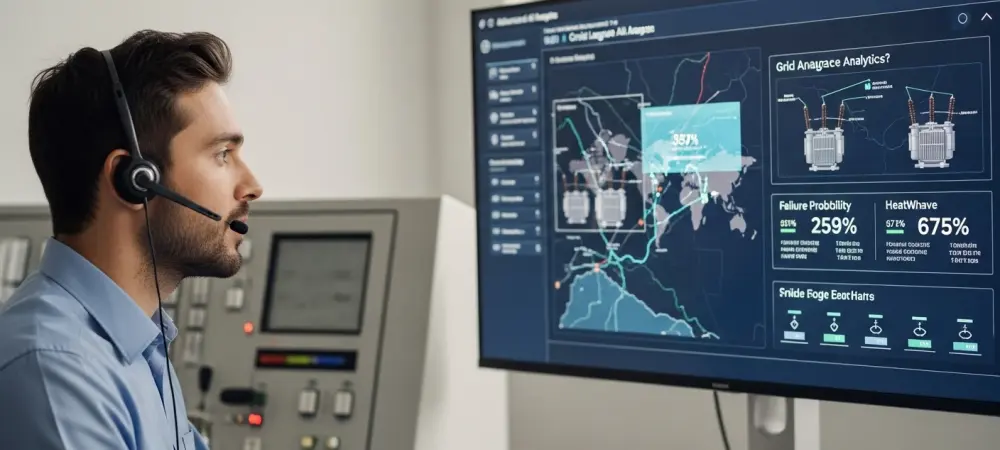
The solution being advanced is a fundamental architectural shift from fragmentation to foundation. A unified AI data cloud acts as a central gravity point, ingesting, governing, and harmonizing IT, OT, and IoT data streams into a single, reliable source of truth. According to Fred Cohagan, Snowflake’s global head of energy, the goal is to break down the barriers that have kept vital operational, engineering, and business data scattered across the enterprise. By creating a consolidated view, energy companies can perform holistic analysis that was previously infeasible, linking asset health data with financial performance or grid load with weather forecasts in a seamless environment. A key innovation within this unified architecture is the democratization of intelligence through tools like natural language query interfaces. These systems allow engineers, grid operators, and business analysts to ask complex questions in plain language—such as “Show me all transformers with a high failure probability during the upcoming heatwave”—and receive immediate, actionable insights. This capability moves analytics beyond the confines of specialized data science teams, empowering frontline workers to make data-driven decisions in real time.
This new architecture is further amplified by a robust ecosystem of partners offering ready-made, sector-specific applications. Instead of building every solution from scratch, energy companies can deploy pre-built tools for specialized tasks. For example, Itron delivers a solution for complex power flow analysis that reduces modeling time from months to hours, while Siemens integrates decentralized asset data for AI analytics. This plug-and-play model significantly reduces customization burdens and accelerates the timeline for achieving tangible business value from AI initiatives.
From Theory to Reality Evidence from the Industrys Front Lines
The practical impact of this unified data approach is already being demonstrated by industry leaders. Pacific Gas and Electric Company (PG&E) is leveraging a consolidated platform to govern sensitive information and deliver timely analytics that directly enhance grid reliability and affordability for its customers. David Leach, the utility’s Chief Data and Analytics Officer, highlighted the platform’s role in breaking down legacy silos to create a more resilient and efficient operational environment.
For other companies, the benefits translate directly into time and resource savings. Expand Energy reported that having a single view of its data saves the company thousands of hours annually, primarily by streamlining the development and deployment of machine learning models. Similarly, Sunrun, a leading residential solar provider, now powers analytics for over 7,500 users on a unified cloud, resulting in significantly reduced latency and more accurate insights for its vast operations.
The transition also enables more sophisticated, AI-driven business strategies. Powerex, a major energy marketer, successfully migrated from its legacy systems to a cloud-native platform, a move that now supports advanced AI-powered forecasting and market analysis using large language models. These cases illustrate a clear trend: when data is unified and accessible, companies can move beyond isolated AI experiments to embed intelligence into their core operational and strategic workflows.
A Strategic Blueprint How to Activate a Data Driven Energy Transformation
For organizations looking to embark on this transformation, the first step is to leverage pre-modeled, industry-specific data to contextualize their own information. By integrating decades of historical energy data covering supply, demand, and market trends, companies can enrich their internal datasets and accelerate the development of models that address critical challenges like decarbonization and market volatility. This foundational data provides the necessary context to make AI models more accurate and relevant from the start.
Adopting a vertical-specific platform is another crucial element for accelerating timelines. A cloud solution designed explicitly for the energy sector comes with pre-built connectors, data models, and partner applications that understand the industry’s unique challenges and regulatory requirements. This approach drastically reduces the need for expensive and time-consuming customization, allowing teams to focus on generating business value rather than building infrastructure.
Finally, a successful transformation required a forward-looking plan for deeper integration with operational systems. While the initial focus may be on consolidating existing IT and IoT data, the ultimate goal should be to incorporate real-time feeds from core OT systems like SCADA. This final step would close the loop between analytics and operations, enabling a future where AI not only provides insights but also actively assists in the automated control and optimization of the energy grid. This forward-thinking strategy laid the groundwork for a truly intelligent and resilient energy future.