

In the relentless pursuit of technological supremacy, the key to America’s future dominance might not be found within the gleaming data farms of Silicon Valley, but instead unearthed from the mineral-rich clay of an ancient, collapsed volcano on the Nevada-Oregon border. This geological anomaly, known as the McDermitt Caldera, holds a resource so vast it could fundamentally reshape the nation’s energy landscape and provide the essential fuel for the burgeoning artificial intelligence revolution. The question is no longer just about writing smarter algorithms, but about securing the raw power needed to bring them to life, and this discovery presents a strategic opportunity of immense proportions.
The Unseen Engine of AI and its Unquenchable Thirst for Power
The rapid proliferation of artificial intelligence is creating an unprecedented surge in national energy consumption. As AI models become more sophisticated, the computational power required to train and operate them is growing exponentially. This new demand places a significant strain on an already challenged power grid, making the stability of the energy supply a critical component of technological progress. The AI boom is, at its core, an energy boom, and its sustainability hinges entirely on the ability to generate and deliver massive amounts of electricity reliably.
At the heart of this demand are hyperscale AI data centers, sprawling facilities that function as the digital brains of the modern world. A single one of these centers can draw more electricity than a small town, operating 24/7 to process the complex calculations behind large language models and other AI applications. However, the true challenge extends beyond sheer kilowatt consumption. For these mission-critical operations, the demand is for an absolutely uninterrupted and stable flow of electricity. Even a momentary fluctuation or power outage can corrupt complex calculations, disrupt services, and result in catastrophic data loss, making grid stability a non-negotiable requirement.
The McDermitt Caldera a Trillion Dollar Lithium Jackpot
The discovery within the McDermitt Caldera represents a monumental shift in the global resource landscape. Geologists have identified an estimated 20 to 40 million metric tons of lithium embedded in vast sheets of clay, a deposit with a potential value of approximately $1.5 trillion. This geological windfall is one of the largest known lithium sources on the planet and positions the United States to transition from a net importer to a potential leader in the production of this critical mineral. This domestic reservoir offers a direct pathway to enhanced national security by reducing the country’s heavy reliance on international supply chains. Currently, the U.S. depends on partners like China and Singapore to meet its lithium demand, creating vulnerabilities in a sector vital to both economic and defense interests. By developing the resources within the caldera, the nation can onshore a crucial part of the technology manufacturing process, insulating its most advanced industries from geopolitical volatility and ensuring a stable supply of the element that powers modern technology.
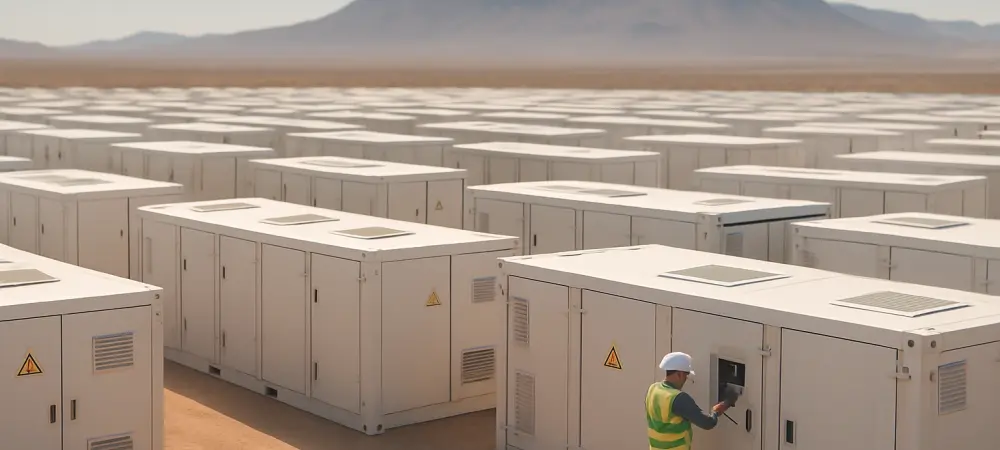
The critical link between this mineral and the AI industry is found in battery energy storage systems (BESS). Lithium is the foundational component of the lithium-ion batteries that comprise these systems. BESS units are indispensable for ensuring the continuous operation of AI data centers by stabilizing the power grid, managing peak demand, and providing seamless backup power during outages. They are the guarantors of the uninterrupted electricity that AI infrastructure requires, making a domestic lithium supply a cornerstone of the entire AI ecosystem. It is important, however, to differentiate this role from a separate geopolitical challenge involving rare earth elements. While China’s dominance of the rare earth magnet supply chain remains a strategic concern for technologies like electric motors, the McDermitt Caldera’s lithium directly addresses the distinct, but equally vital, need for energy storage.
Expert Insights on the Converging Energy and AI Revolutions
Across the technology and energy sectors, there is a clear consensus: the energy appetite of AI is on a steep upward trajectory. As models for generative AI and machine learning increase in size and complexity, their power requirements are projected to skyrocket in the coming years. This forecast is not a distant concern but an immediate reality that infrastructure planners and technology leaders are actively working to address. The growth of AI is inextricably linked to the growth of its energy support systems. This direct correlation is reflected in market analysis, which shows a soaring demand for reliable battery energy storage solutions in tandem with the expansion of the AI sector. The market for BESS is expanding rapidly as data center operators seek to guarantee uptime and grid stability. This trend makes domestic lithium not just a valuable commodity, but a strategic asset whose value will appreciate as the AI industry continues its relentless advance.
From a geopolitical perspective, the ability to source and process lithium domestically serves as a powerful counterweight to existing supply chain vulnerabilities. Experts view the McDermitt Caldera as a strategic asset that provides the United States with greater leverage and autonomy in a world where access to critical minerals is increasingly contested. Securing this supply chain is seen as a foundational step toward ensuring long-term technological leadership and economic resilience in an era defined by digital innovation.
A Strategic Blueprint for an AI Powered Nation
The lithium extracted from the caldera is poised to meet a crucial two-front demand that will define the next phase of technological development. On one front, it will be essential for creating the large-scale BESS units needed to power the massive, centralized data centers that form the core of today’s AI infrastructure. These systems will ensure that the engines of the digital economy have the stable, uninterrupted power they need to operate effectively.
Simultaneously, a paradigm shift toward decentralized AI and edge computing is creating a second, parallel demand. As advanced AI models are integrated into smaller, personal devices such as AI-enhanced eyewear, smartphones, and autonomous vehicles, the need for a vast number of small-form-factor lithium-ion batteries will explode. This trend means the nation’s lithium requirements will grow on two fronts at once: large-scale storage for the cloud and countless smaller batteries for the network of devices at the edge. The caldera’s resource is perfectly timed to supply both arms of this technological pincer movement.
Ultimately, the McDermitt Caldera represented more than just a mineral deposit; it was a foundational asset for securing America’s energy independence and technological future. The discovery provided a strategic blueprint for building a more resilient national infrastructure, one capable of supporting the immense power demands of the AI era. The path forward, illuminated by this geological windfall, became one where the nation’s technological ambitions were securely anchored by its own natural resources. This alignment of geological fortune and technological necessity established a new framework for American innovation in the 21st century.