

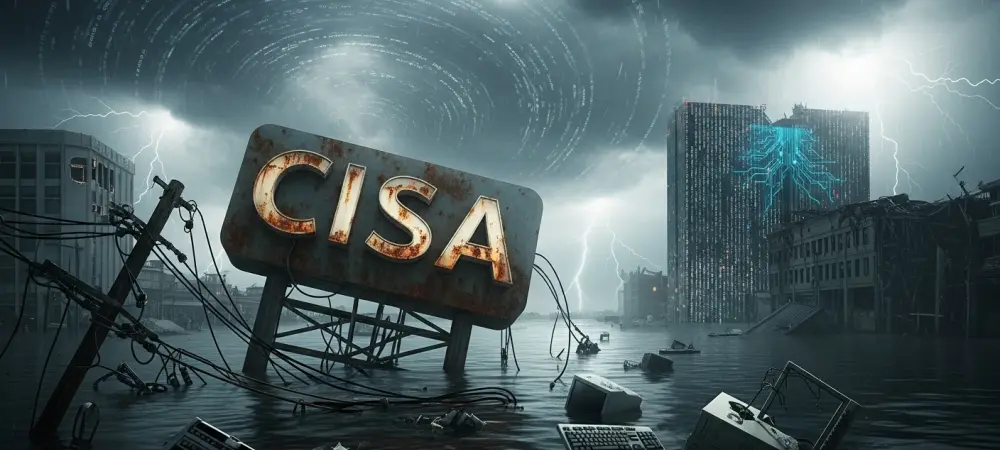
The silent, invisible networks controlling the nation’s water supply and power grids represent the next great battlefield, and the agency tasked with their defense is sounding its own internal alarm. The U.S. Cybersecurity and Infrastructure Security Agency (CISA), the nation’s primary defender against digital threats, is facing a profound internal crisis at the very moment its mission has become most critical. As it grapples with dwindling resources and damaged morale, its leadership is not only reorganizing out of necessity but is also issuing stark warnings to its own staff: prepare for a potential “Katrina-like event with a cyber nexus.” This raises a critical question for national security: can a weakened agency truly fortify the digital levees before they break?
The Warning When Digital Levees Fail
The specter of Hurricane Katrina, a catastrophe defined by the failure of physical infrastructure, is being deliberately invoked within CISA to illustrate the potential devastation of a large-scale cyberattack. The warning signifies a scenario where a coordinated digital assault could cripple essential services, leading to tangible, widespread physical harm. This is not a distant hypothetical but an active concern driving a fundamental shift within the agency, forcing a conversation about what happens when a nation’s cyber defense is fighting with one hand tied behind its back.
This stark analogy serves as the backdrop for the agency’s urgent, top-to-bottom overhaul. The internal message is clear: the threat of a systemic breakdown in critical services is imminent, and business as usual is no longer an option. The agency’s leadership is framing the current challenge as a race against time to prevent a digital disaster with consequences that could rival those of a major natural disaster, fundamentally altering the public’s relationship with and reliance on technology.
An Agency Under Siege and Its Internal Crisis
CISA’s urgent pivot comes from a place of significant distress. The organization has been described internally as a “depleted agency,” strained by a difficult year of layoffs, retirements, and internal turmoil that has severely damaged employee morale. This internal decay has created a precarious foundation upon which the nation’s most critical cybersecurity missions are supposed to be built, leaving the remaining workforce stretched thin and facing an uncertain future. This internal weakness is compounded by an uncompromising directive from executive leadership to accomplish “a lot more work with a lot less people.” This sobering mandate reflects a new reality of fiscal constraint and heightened expectations, forcing a strategic triage of the agency’s functions. Furthermore, the constant threat of a government shutdown looms large, with political gridlock in Washington threatening to furlough staff and halt operations at a moment’s notice. This external pressure complicates an already precarious mission, making long-term planning and consistent execution nearly impossible.
A Radical Plan to Refocus and Rebuild
In response to these immense pressures, CISA’s Cybersecurity Division is undertaking a radical reorganization, making the painful but necessary decision to “turn off” entire programs. This strategic retreat involves discontinuing certain missions to reallocate its limited personnel and resources toward the most pressing national security objectives. The move is a clear acknowledgment that the agency can no longer afford to be everything to everyone and must instead channel its remaining capacity where it matters most for national survival.
The new vision for the division is structured around three core pillars. The first pillar is a commitment to delivering actionable and relevant cyber intelligence to government and private-sector partners. The second focuses on fostering a national defensive posture through enhanced collaborative operations. The final pillar involves marshaling the full weight of government and industry resources to collectively secure the nation’s digital environment. Central to this entire strategy is an unwavering focus on operational technology (OT)—the industrial control systems that manage the lifelines of the nation, from water treatment plants to power grids, which are increasingly in the crosshairs of nation-state adversaries.
Voices from Within the Agency
During a recent internal town hall, CISA leadership laid bare the gravity of the situation. Nick Andersen, the division’s executive assistant director, emphasized that securing OT is “a unique responsibility to the nation,” framing it as the agency’s paramount duty. He painted a grim five-to-ten-year forecast, warning of a potential “cyber incident where your friends and family may be without drinking water.” This stark imagery was designed to underscore the real-world stakes of their mission.
Despite the urgency, there was no sugarcoating the difficulty of the task ahead. Andersen acknowledged that transforming CISA into a premier OT security leader would be a “HUGE lift” for a depleted agency. The fragility of its current state was further highlighted by discussions around shutdown contingencies. A policy allowing essential staff to perform certain non-essential “interstitial activities” between critical duties revealed an organization attempting to maintain momentum even as its fundamental ability to operate remains under constant threat.
The Path Forward and the Odds to Overcome
The success of CISA’s ambitious pivot hinges on its ability to overcome significant, long-term obstacles. The immediate challenge is a race for highly specialized talent. After a period of internal turmoil that damaged its reputation, the agency faces an uphill battle in recruiting the OT security experts needed to lead this charge. Leadership anticipates that building sufficient in-house expertise is not a short-term project but a five-to-ten-year endeavor, a timeline that feels perilously long given the immediacy of the threats.
To formalize this new vision, a comprehensive cyber division strategy document is forthcoming, which will be followed by a detailed implementation blueprint. This 60-day follow-up plan is expected to include concrete timelines and performance metrics designed to measure progress and hold the agency accountable. These documents represent a critical test of whether CISA can translate its survival strategy into a successful operational reality. The challenges faced by CISA reflected a critical juncture for national security. The agency’s ability to rebuild its workforce, restore morale, and execute its laser-focused mission on securing operational technology would determine whether it could avert the very “cyber Katrina” its leaders feared. The path was set, but the outcome remained profoundly uncertain, resting on the resilience of a depleted but determined organization.