

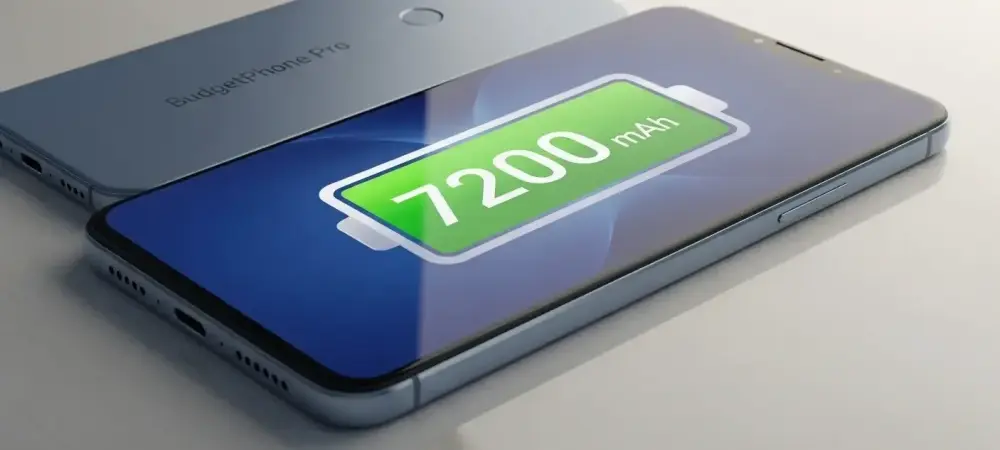
The long-standing compromise for budget-conscious smartphone buyers has often centered on battery life, forcing users to accept daily charging as an unavoidable reality in exchange for an affordable price point. However, the smartphone landscape is continually evolving, and the recent introduction of the Vivo Y500i in China signals a significant disruption to this accepted norm. This new entrant into the Y500 series doesn’t just nudge the boundaries of what an entry-level device can offer; it shatters them by incorporating a colossal 7,200 mAh battery, a capacity that rivals and even surpasses many high-end flagship models. This strategic move directly addresses one of the most persistent pain points for consumers, suggesting that multi-day usage may no longer be a luxury reserved for premium devices. By pairing this massive power source with a modern chipset and a large, high-refresh-rate display, Vivo is making a bold statement about the future of affordable technology, effectively challenging the industry’s definition of a “budget” smartphone.
A New Benchmark in Performance and Endurance
At the core of the Vivo Y500i’s impressive value proposition is a carefully balanced selection of internal components designed to maximize both efficiency and everyday usability. The device is powered by the Snapdragon 4 Gen 2 processor, a modern chipset that brings contemporary performance standards and 5G connectivity to the entry-level market. This choice is particularly strategic, as the processor’s efficiency is crucial for extending the life of the already massive battery. To support this foundation, Vivo offers a range of memory configurations, starting from 8 GB of RAM and 128 GB of internal storage and scaling up to a generous 12 GB of RAM with 512 GB of storage. While the absence of a microSD card slot for expansion is a notable omission, the higher-tier storage option provides ample space for most users. The visual experience is delivered through a large 6.75-inch HD+ LCD panel, which, despite its modest resolution, stands out with a fluid 120 Hz refresh rate and an impressive peak brightness of 1,200 nits, ensuring smooth scrolling and excellent visibility even in bright conditions. This combination of processing power and display technology creates a compelling package that punches well above its weight class.
Redefining Expectations for Affordability
The release of the Vivo Y500i effectively established a new benchmark for what consumers could expect from an affordable smartphone, blending exceptional endurance with a robust feature set. Physically, the device’s design reflected its focus on battery capacity, measuring 8.49 mm in thickness and weighing 219 grams, a tangible trade-off for its multi-day power. Durability was also a key consideration, as evidenced by its IP698/69 water resistance rating and an SGS Gold Label 5-star certification, features typically found on more expensive models. The smartphone’s imaging capabilities were handled by a dual rear camera system led by a capable 50 MP primary sensor, while a 5 MP front-facing camera managed selfies. When it launched in China, its pricing structure underscored its disruptive potential, starting at approximately $215 for the base model and reaching around $315 for the top-tier configuration. This aggressive pricing, combined with its standout battery life and a choice of finishes including phoenix gold, obsidian black, and galaxy silver, positioned the Vivo Y500i as a formidable contender that fundamentally challenged the compromises inherent in the budget smartphone market.