

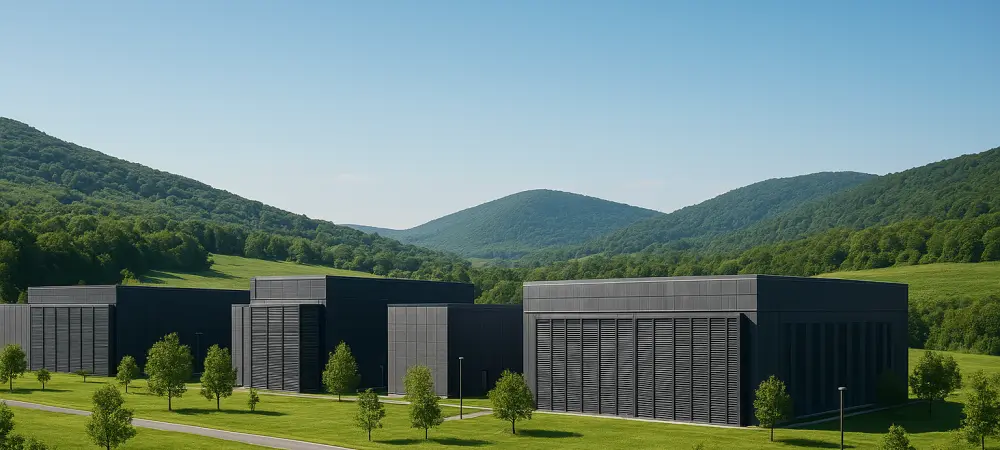
A sprawling thirty-two-acre landscape in High Wycombe that once dreamed of hosting blockbuster movie sets is now transitioning into a vital nerve center for the United Kingdom’s digital economy. The Buckinghamshire Council Strategic Sites Committee recently recommended approval for a 13-hectare data center development located south of Wycombe Air Park. This decision marks a significant departure from the site’s original designation, pivoting from the creative arts toward the industrial backbone of the internet age. As the global thirst for cloud computing intensifies, local planners have embraced this change to ensure the region remains a competitive player in the modern technological landscape.
From Film Sets to Fiber Optics: A Strategic Shift in High Wycombe
High Wycombe is trading the glitz of the film industry for the silent hum of server racks as a prime piece of real estate undergoes a complete identity change. This 13-hectare plot was once earmarked for a major movie production hub, but local authorities have now backed a plan to transform it into a massive data processing facility. The recommendation for approval signals a major transition in how the region utilizes its strategic land, moving away from temporary sets and toward permanent digital infrastructure. This shift reflects a broader regional strategy to prioritize long-term stability over the cyclical nature of entertainment. By repurposing the land south of Wycombe Air Park, the council is positioning High Wycombe as a critical node in the national data network. The move ensures that the area remains relevant in an increasingly digitized world where the demand for local storage and processing power continues to grow.
The Economic Reality: Modern Infrastructure in Focus
While the site was originally destined to house an eight-stage film studio under Stage Fifty, the developer’s 2024 collapse forced a cold reassessment of the location’s commercial viability. In a rapidly shifting funding environment, local authorities determined that a data center represents a more sustainable and resilient use of a strategic employment area than the volatile film sector. This project mirrors a global trend where cloud computing needs are outstripping traditional industries for large-scale real estate.
Moreover, the council views this facility as essential digital infrastructure that serves as a foundation for the wider national economy. By securing this development, the region attracts specialized investment that is less susceptible to the whims of the creative markets. This economic pivot ensures that the land remains productive, contributing to the country’s technological sovereignty while providing a stable anchor for the local business ecosystem.
Project Scope: The Employment Equation
The proposed facility is an industrial-scale undertaking designed to meet the growing demands of the UK’s digital landscape through a massive physical footprint. Plans include six expansive data halls, dedicated office spaces, and specialized support facilities tailored for high-density server environments. From a construction standpoint, the project is a massive boon, expected to generate approximately 2,200 temporary jobs that will provide a significant short-term stimulus to the local building trades.
Long-term employment projections have sparked some debate, as the developer’s initial estimates suggested upwards of 1,000 permanent roles. However, council analysts provided a more conservative estimate of 300 full-time positions once the facility becomes fully operational. Regardless of the final headcount, the strategic digital value of the center remains a primary driver for the recommendation, as it provides the necessary groundwork for future technological growth.
Balancing Industrial Growth: Environmental Integrity
The recommendation for approval comes with a complex set of conditions designed to protect the surrounding community and the aesthetic of the Chilterns National Landscape. Due to the scale and massing of the data halls, the committee mandated strict regulations on light, noise, and air quality to prevent any degradation of the nearby natural character. These safeguards ensure that the industrial growth does not come at the expense of the region’s environmental health. To mitigate the influx of traffic and maintain highway safety, the developer must enter a legal agreement involving speed limit reductions and managed travel plans. Detailed assessments also confirmed that the facility’s operations will not interfere with the flight paths of the neighboring Wycombe Air Park. These logistical safeguards were essential for maintaining harmony between the new digital hub and the existing aviation and residential communities.
Navigating the Final Milestones: Regulatory Frameworks
For the project to break ground, Wycombe Park Ltd focused on satisfying several specific legal frameworks outlined by the Strategic Sites Committee. The final authority rested with the Service Director of Planning and Environment, who moved to grant formal permission once all financial and logistical contingencies were met. This process ensured that the promised infrastructure improvements and environmental mitigations became legally binding obligations rather than mere suggestions. Authorities implemented ongoing monitoring strategies to ensure the facility adhered to strict operational limits regarding noise and emission levels throughout its lifecycle. The council prioritized a transparent compliance framework that allowed for regular audits of the site’s environmental impact. By establishing these rigorous benchmarks, the region secured a future where technological advancement and community well-being existed in a carefully managed balance.