

A Strategic Leap: India’s Digital Infrastructure
The sudden convergence of massive telecommunications reach and liquid-cooled computational power marks a defining moment for the subcontinent’s technological autonomy and global digital standing. During the India Mobile Congress 2026, Bharat Sanchar Nigam Limited and the Spanish innovator Submer finalized a strategic partnership to develop a nationwide network of sovereign AI data centers. This collaboration, managed through BSNL Tower Corporation Limited, focuses on deploying high-density compute capabilities across thousands of existing nodes. By integrating state-of-the-art cooling and modular infrastructure, the initiative aims to provide the necessary hardware for a truly self-reliant digital economy.
Connectivity Evolution: The Demand for Localized Compute
For many years, the regional telecommunications landscape relied on centralized hubs that often struggled with the latency demands of modern intelligence applications. BSNL’s vast portfolio of fiber and towers provides an ideal foundation for shifting toward a decentralized model. Historically, infrastructure focused on simple signal transmission, but the rise of generative models and real-time processing requires data to be handled at the Edge. This transformation is essential for reducing operational overhead and ensuring that digital services reach the most remote regions without compromising performance.
Operational Strategy: Orchestrating Infrastructure and Services
Technical Innovation: Immersion Cooling and Edge Design
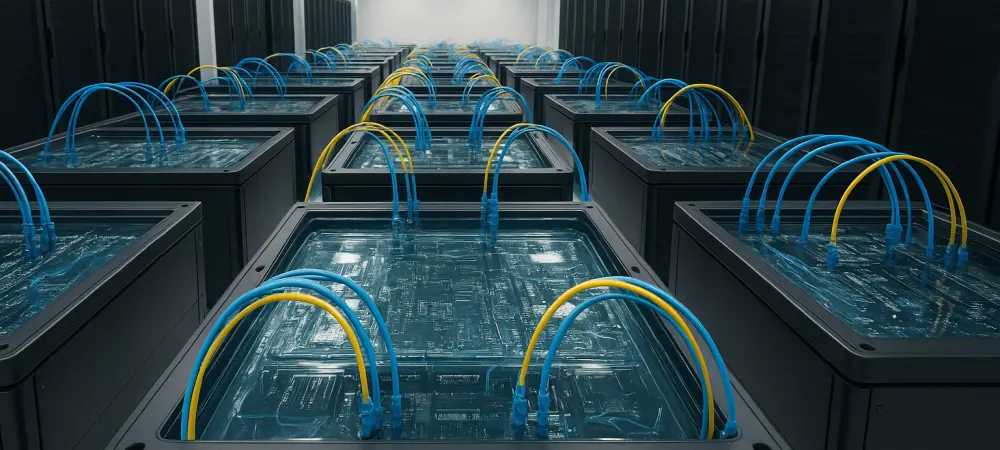
A fundamental component of this strategy involves retrofitting legacy facilities with modular “Corenix” infrastructure. Conventional air-cooling systems are frequently insufficient for the intense heat generated by high-performance AI racks. Submer’s liquid immersion technology addresses this challenge by allowing for much higher power density in smaller footprints. Consequently, underutilized BSNL buildings can be rapidly converted into efficient micro data centers that operate with a significantly reduced carbon footprint compared to traditional facilities.
Market Expansion: GPU-as-a-Service and Sovereign AI Clouds
The partnership also addresses the critical shortage of high-performance processing power available to local developers and startups. By incorporating specialized GPU services, the entities are launching a sovereign AI cloud that keeps sensitive data within national borders. This model provides the raw computational power needed for localized machine learning without the high upfront costs of hardware acquisition. Such a focus on data residency is becoming a vital requirement for compliance with emerging national protection regulations and industrial security standards.
Large-Scale Growth: The Path to Mega-Scale Projects
While the immediate rollout prioritizes distributed Edge computing, the long-term roadmap includes massive facilities exceeding 20MW in capacity. This multi-tiered approach allows the market to serve everything from low-latency autonomous vehicle networks to massive training clusters for foundational models. Current projects in regions like Madhya Pradesh, which target gigawatt-scale capacity, serve as a blueprint for this ambition. This scalability ensures that the infrastructure can grow alongside the nation’s increasing appetite for advanced digital services.
Sector Projections: Anticipating the Indian AI Ecosystem
The synergy between national connectivity and liquid-cooled hardware is expected to trigger a significant shift in how enterprises manage their digital assets. As 5G and 6G networks expand from 2026 to 2028, the proximity of compute power will likely lead to breakthroughs in industrial automation and telemedicine. Industry leaders anticipate that data sovereignty will transition from a regulatory hurdle to a primary competitive advantage. This environment will encourage a wave of innovation where high-speed processing becomes as accessible as a basic mobile signal.
Actionable Strategies: Navigating the New Data Landscape
For organizations looking to capitalize on this shift, prioritizing an “Edge-first” architecture is a recommended best practice. Businesses should audit their residency requirements and explore flexible GPU models to scale their AI initiatives efficiently. Professionals in the technical sector must focus on gaining expertise in distributed architectures and liquid cooling as these become the industry standard. Adapting to this localized infrastructure will be essential for maintaining low latency and optimizing costs in an increasingly data-centric market.
Final Reflections: India’s Path to AI Sovereignty
The collaboration between BSNL and Submer represented a pivotal moment in the nation’s journey toward technological self-sufficiency. By leveraging a legacy of connectivity to host modern immersion-cooled hardware, the partnership created a foundation for a resilient digital economy. The significance of this move lay in its ability to solve the twin challenges of latency and energy efficiency at an unprecedented scale. As the build-out of these AI-ready centers progressed, they became the primary engine driving national innovation and sustainable economic growth.