

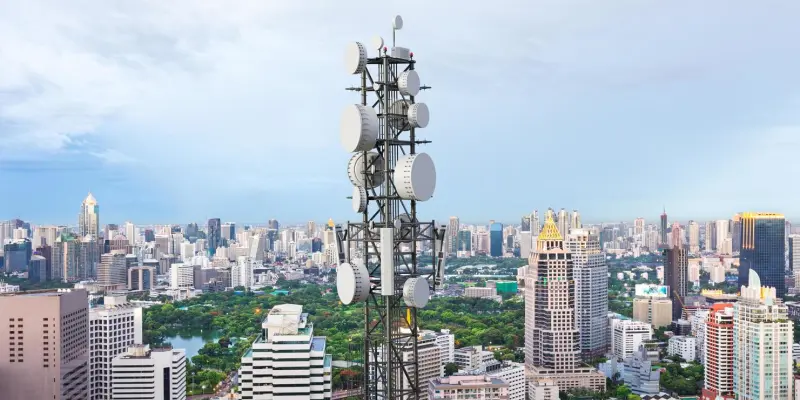
Bharat Sanchar Nigam Limited (BSNL) and Echelon Edge have announced their collaborative initiative to deploy a private 5G network at the Amlohri Open Cast Coal Mines in Madhya Pradesh, India. This project aims to address several challenging aspects within the coal mining sector by leveraging the spectrum allocated exclusively to BSNL. Besides enhancing operational efficiency, this move marks a significant leap for India’s technological landscape, particularly in pioneering 5G solutions in critical industries like mining.
Advanced Monitoring Solutions
Video Surveillance and Asset Tracking
One of the primary uses of the private 5G network in the Amlohri mines will be video surveillance and asset tracking. Through high-speed, reliable, and low-latency connectivity, the system will enable real-time monitoring of various areas within the mining site. This technological advancement is anticipated to significantly enhance safety measures, allowing for immediate response to any anomalies or safety threats that may occur. Additionally, asset tracking will streamline operations by providing precise data on the location and status of critical equipment and resources, ensuring that the mines function smoothly and efficiently.
With robust video surveillance, managing a vast area such as a coal mine becomes more manageable. The integration of video analytics and AI will usher in a new era of smart mining, providing miners and management with valuable insights into their operations. For instance, predictive maintenance can be boosted with real-time data on equipment conditions, reducing downtime caused by unforeseen breakdowns. Furthermore, the implementation of asset tracking will reduce the costs associated with misplaced or misused tools and machinery. By ensuring that all assets are accounted for, mining operations can avoid unnecessary delays and maintain steady productivity levels.
IoT-Based Environmental Monitoring
Another critical application of the private 5G network is Internet of Things (IoT)-based environmental monitoring. In the coal mining industry, maintaining a safe and healthy environment is paramount. The deployment of IoT sensors across the mining site will facilitate continuous monitoring of air quality, temperature, humidity, and other vital environmental parameters. This will ensure miners are working under safe conditions, and any deviation from set standards can be immediately addressed. Real-time data collection and analysis provided by IoT will make management highly capable of preempting potential risks to both personnel and equipment.
Deploying IoT-based environmental monitoring systems in coal mines is a game-changer, as it provides accurate and timely information about potential hazards such as gas leaks, temperature surges, and equipment malfunctions. These sensors, connected via the 5G network, will empower the safety management team to act swiftly, thereby minimizing the risk of accidents and ensuring compliance with environmental regulations. By digitally transforming the way environmental data is collected and analyzed, the mining industry can set new benchmarks in occupational safety and sustainability. This represents the convergence of technology and industry, driving exponential improvements in operational standards.
Technological Innovations
Drone-Assisted Remote Monitoring
Drone technology, coupled with the high-speed 5G network, will also play a pivotal role in the monitoring operations at Amlohri mines. These drones will be able to perform comprehensive inspections of the mining site, including hard-to-reach areas, enhancing the thoroughness and timeliness of monitoring processes. Equipped with high-resolution cameras and various sensors, drones will provide detailed aerial views and real-time data directly to the control centers. This will allow for better-informed decisions and quicker response times to potential issues, thereby enhancing overall safety and operational efficiency in the mining process.
The integration of drone-assisted remote monitoring into the mining operations allows for a level of oversight previously unattainable with traditional methods. The advancements in drone technology mean that they can now cover large areas swiftly, creating virtual maps and 3D models of the landscape. These models can then be used to identify the topography, assess risks, and plan future excavation routes. Beyond surveillance, drones can also aid in measuring stockpiles, monitoring equipment health, and even delivering supplies to miners. Ultimately, the synergy between drone technology and 5G connectivity is set to revolutionize mining operations.
Virtual Reality and Digital Twin Technology
Another significant component of the 5G deployment is its support for advanced applications, such as virtual reality (VR) models and digital twin technology for mining operations. By creating precise digital replicas of the mine, these technologies allow for enhanced planning, training, and operational strategies. VR can offer immersive training environments for miners, enabling them to experience realistic scenarios without real-world risks. Meanwhile, digital twin technology continuously updates the virtual model based on real-time data from the mine, providing unprecedented insights into the operational status of the mining site.
Digital twin technology holds immense potential for optimizing mining operations. By accurately simulating the physical mine in real time, operators can identify inefficiencies, predict maintenance needs, and simulate various operational scenarios without disrupting actual activities. This proactive approach to mine management ensures that decisions are data-driven, reducing unexpected downtimes and increasing overall productivity. Furthermore, as both augmented and virtual reality technologies advance, their integration within the mining sector can significantly improve the training and preparedness of the workforce, leading to a safer and more efficient mining environment.
Future Directions
AI-Driven Traffic Management
The project also incorporates AI-driven solutions to enhance traffic management within the mining site, particularly in optimizing haul-road crossings. By leveraging the capabilities of 5G connectivity, AI systems can analyze traffic patterns, vehicle telemetry, and road conditions in real time. This will enable the efficient coordination of vehicles and equipment, reducing congestion and the likelihood of accidents. Effective management of haul roads is crucial, as it directly affects the productivity and safety of mining operations. Implementing AI-driven solutions will result in a more streamlined and safe transportation process within the mining environment.
AI-driven traffic management systems can significantly improve the logistics within a mining site. By continually analyzing and learning from the traffic data, these systems can fine-tune the scheduling and routing of vehicles, avoiding unnecessary delays and ensuring smoother operations. Moreover, AI algorithms can predict potential traffic bottlenecks and suggest alternative routes or timing adjustments to mitigate them. Enhanced coordination between vehicles not only improves operational efficiency but also minimizes wear and tear on the haul roads and reduces fuel consumption. These cumulative benefits directly contribute to the overall sustainability and profitability of mining operations.
Collaboration and Future Plans
Bharat Sanchar Nigam Limited (BSNL) and Echelon Edge have joined forces to introduce a private 5G network at the Amlohri Open Cast Coal Mines in Madhya Pradesh, India. This collaboration aims to tackle numerous challenges within the coal mining industry by utilizing the spectrum allocated specifically to BSNL. The deployment of this 5G network is set to greatly enhance operational efficiency and safety standards within the mines, leading to smoother operations and better outcomes.
Furthermore, this initiative represents a major milestone for India’s technological advancements, particularly in applying cutting-edge 5G solutions to critical industries like mining. By implementing this private 5G network, BSNL and Echelon Edge are setting a precedent in the global mining sector, demonstrating how technology can revolutionize traditional industries. This project also underscores India’s commitment to advancing its digital infrastructure and harnessing the potential of next-generation telecommunications for industrial innovation.