

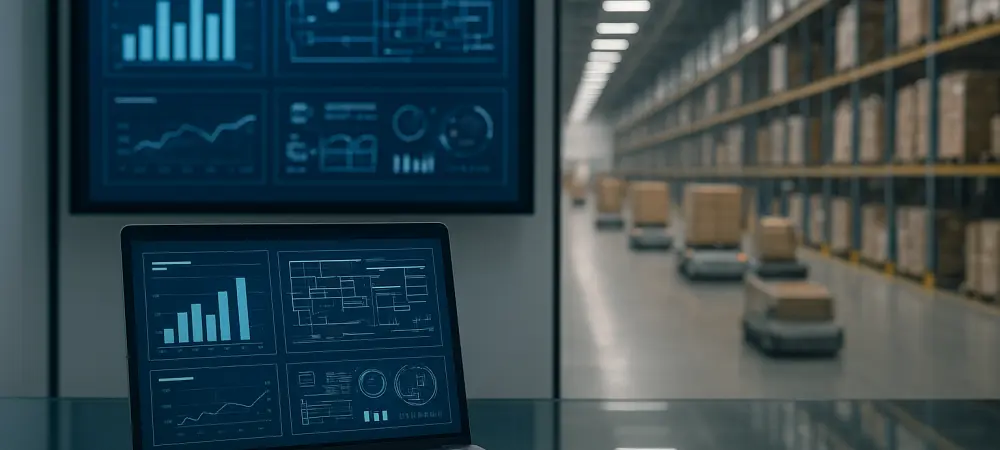
The transition from a manual warehouse to an automated powerhouse often stumbles not on the mechanical reliability of a robot but on the digital infrastructure that remains tethered to the past. Many organizations invest heavily in autonomous hardware only to find that their primary business software acts as an anchor rather than an engine. This disconnect occurs because high-level systems of record often lack the agility required for split-second robotic coordination and machine movement.
When robotics are deployed without a cohesive software strategy, the return on investment begins to erode almost immediately. The gap between top-down warehouse management and live machine movement creates a bottleneck that limits the potential of even the most expensive equipment. Bridging this digital divide is now a prerequisite for operational success.
The Hidden Friction in the Automated Warehouse
Tight labor markets and relentless order volumes drive the current push toward sophisticated automation across the supply chain. While hardware vendors promise seamless integration, the reality on the floor often reveals a jarring lack of synchronization. The mechanical components arrive ready to work, but the legacy software often fails to translate high-level orders into efficient robotic tasks.
This friction is not a hardware failure but a structural misalignment between data and action. Organizations frequently discover that their existing workflows were optimized for human flexibility, leaving rigid digital systems struggling to keep pace with autonomous agents. Without addressing this fundamental gap in logic, the expected efficiency gains remain elusive.
Why Your ERP Was Never Designed to Run a Robot
Most enterprise platforms function as systems of record, meticulously tracking inventory data and historical transactions. However, robots require real-time orchestration, a demand that far exceeds the capabilities of a traditional database. The conflict between slow-moving records and high-speed machine movement creates a “seam” where data drift and errors occur. The automation market is currently undergoing an explosive expansion, with projections showing a climb from 2026 toward $65 billion by 2031. This growth implies that competitive parity now depends on how well a company manages the digital seam between systems. Relying on fragmented point solutions for execution and transport only deepens the integration headache for warehouse managers.
Critical Points of Failure in Modern Automation Projects
One of the most pervasive issues involves the directory dilemma, where the ERP loses visibility of the floor and cannot effectively direct equipment tasks. If the software cannot “see” where the robot is in real time, the entire workflow grinds to a halt. This lack of transparency leads to inventory inaccuracies that ripple through the entire fulfillment process.
Furthermore, dropping advanced robotics into a facility designed for manual labor often results in an operational readiness trap. Robots do not navigate human-centric obstacles efficiently, and forcing them to mimic manual processes leads to chronic underperformance. Achieving a single source of truth requires a software layer that operates at the same speed as the hardware.
Expert Perspectives on System Integration
Analysts at Interact Analysis highlight the scale of this shift, estimating that 4.2 million mobile robots will join the workforce by 2030. This influx demands a move away from vendor fragmentation and toward a unified execution layer. Platforms like the IntraOne philosophy advocate for merging warehouse execution and control systems into a single, cohesive interface.
Learning the hard way often involves signing purchase orders before vetting software compatibility. Experts observe that the most successful projects prioritize the software stack alongside the physical hardware. A unified platform eliminates the need to stitch together disparate tools, reducing the overall complexity and maintenance of the warehouse ecosystem.
A Strategic Framework for Successful Implementation
Success begins with Step 1: Map the Operational Reality. This involves a cold evaluation of current layouts and labor models against long-term automation goals. Only after the physical and digital workflows are aligned should the focus shift toward specific hardware selection. Moving toward Step 2: Design for Autonomy, ensures that facility processes complement robotic strengths rather than human ones.
This is followed by Step 3: Select a Unified Execution Layer, to bridge the gap between static ERP data and dynamic robotic environments. Finally, Step 4: Establish a Real-Time Feedback Loop, prevents synchronization errors by ensuring every system operates from a live, shared data set. This structured approach transforms automation from a gamble into a reliable operational asset.
The journey toward warehouse autonomy required more than just buying robots; it demanded a fundamental shift in how software interacted with the physical world. Companies that succeeded were the ones that recognized the limitations of their legacy systems early in the process. By prioritizing a unified execution layer, these organizations ensured that their digital infrastructure supported, rather than hindered, their robotic workforce. The transition focused on creating a seamless flow of data that allowed machines to perform at peak efficiency. Future-proofing the supply chain became a matter of integrating real-time intelligence into the core of the business strategy.