

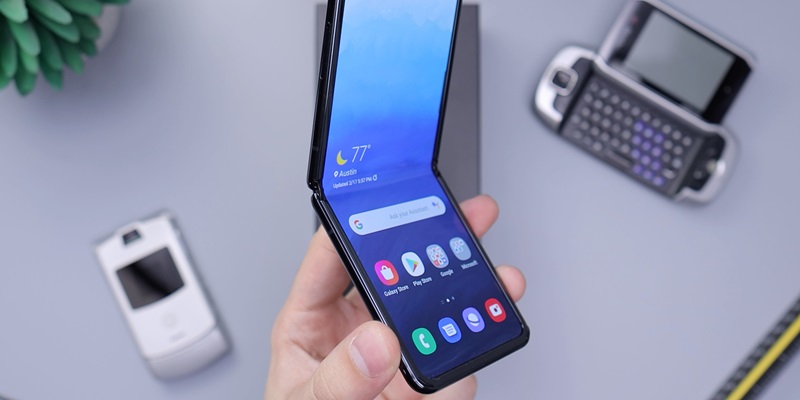
Samsung has officially launched a highly anticipated limited edition phone, the Galaxy Z Flip 5 Retro. This special edition device draws inspiration from the iconic SGH-E700 from 2003, offering users a nostalgic experience combined with modern technology. With a striking dark navy blue cover panel and an exclusive UI mode, this unique device captures the essence of Samsung’s early flip phone designs.
Features and Design
The Galaxy Z Flip 5 Retro comes with a range of features that pay homage to its predecessor while incorporating contemporary advancements. One standout element is the transparent Flipsuit case, which not only protects the device but also allows users to showcase its retro design. The inclusion of cover cards featuring older Samsung logos adds an extra touch of nostalgia. These cards can be interchanged, enabling users to personalize their device with different vintage Samsung branding.
To further enhance the collectible appeal, each Galaxy Z Flip 5 Retro unit comes with a specially designed collector card. This card showcases the device’s unique production number, adding authenticity and exclusivity to the limited edition release. Additionally, Samsung has included a set of Samsung-themed stickers, allowing users to customize their device in a way that reflects their personal style.
Availability
The Galaxy Z Flip 5 Retro will be exclusively available for online purchase in select countries. Samsung enthusiasts in Australia, Korea, France, Germany, and Spain will have the opportunity to own this extraordinary limited edition phone. The official release date for most regions is set for November 1st, with the exception of France, where it will be available the day after.
Development efforts
Samsung has invested significant effort and resources in the development of the Galaxy Z Flip 5 Retro. With countless labor hours and substantial financial investment, the company has spared no expense in delivering a device that brings together past design elements with cutting-edge technology. The launch of this limited edition not only showcases Samsung’s commitment to pushing the boundaries of innovation, but also highlights the significance of the Galaxy Z Flip 5 as a milestone in its product lineup.
Inspired by the SGH-E700
The design direction for the Galaxy Z Flip 5 Retro was inspired by Samsung’s iconic SGH-E700. Launched in 2003, the SGH-E700 was Samsung’s first traditional flip phone to feature an embedded antenna, a departure from the external antennas of previous models. In paying homage to this groundbreaking device, the Galaxy Z Flip 5 Retro features a cover panel color that takes cues from the E700’s dark navy blue stripe on its exterior. This color choice adds a touch of sophistication and nostalgia to the overall design.
Package contents
Purchasers of the Galaxy Z Flip 5 Retro will find a carefully curated package of accessories. The transparent Flipsuit case not only protects the device but also allows users to showcase its retro charm. Additionally, the package includes three cover cards featuring Samsung’s older triple-star logomarks, enabling users to further personalize their phone’s appearance. The collector card, with its unique production number printed on it, adds a collectible element to this limited edition release. Lastly, the inclusion of Samsung-themed stickers provides users with a playful way to express their individuality and make their device truly their own.
Release dates
The eagerly anticipated Galaxy Z Flip 5 Retro will be available for purchase starting November 1st in most regions. However, for Samsung enthusiasts in France, the phone will be available to purchase on the following day. As of now, Samsung has not provided any details regarding a planned release in the United States. This may leave eager buyers in the US with the choice of either patiently waiting for an official release or exploring the option of importing the device.
Samsung’s launch of the Galaxy Z Flip 5 Retro, a limited edition phone inspired by the iconic SGH-E700, strikes a harmonious balance between nostalgia and innovation. With its dark navy blue cover panel, exclusive UI mode, and carefully curated package contents, this device is set to captivate fans of both classic and modern Samsung designs. While availability is limited to select countries, buyers in Australia, Korea, France, Germany, and Spain can look forward to experiencing the perfect blend of past and present in this remarkable limited-edition smartphone.