

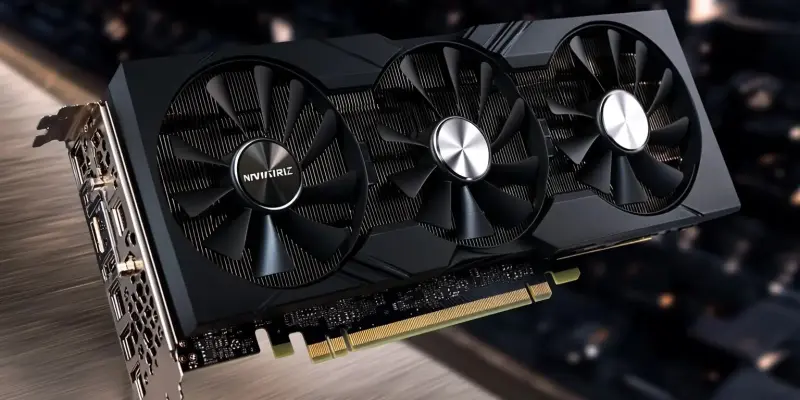
The notion of purchasing a new GPU has always excited tech enthusiasts, promising enhanced performance and cutting-edge graphics. However, amidst this excitement, the emergence of a purportedly fake NVIDIA GeForce RTX 4010 GPU on Chinese marketplaces has raised significant concerns. This GPU, despite not being officially recognized by NVIDIA, has been repackaged and modified by Shenzen Bitland, a known ODM firm renowned for repackaging and manufacturing hardware. What makes this situation even more alarming is the realization that this “GeForce RTX 4010” is, in fact, an older NVIDIA RTX A400 GPU repurposed and branded as a new model to captivate unsuspecting consumers. These repackaged GPUs have become increasingly accessible on various online platforms, particularly in China, and the ingenuity of Chinese modders who repurpose GPUs for new use cases is nothing short of impressive.
The Allure and Risks of Modified GPUs
The GeForce RTX 4010, despite its dubious origins, is presented as a single-slot GPU with a blower-style fan, aiming to address low-profile workloads with its 4 GB of GDDR6 memory and 96 GB/s bandwidth. These specifications are acceptable, considering the GPU’s intended low-end use. The device manages to operate seamlessly out of the box, even offering driver support without any immediate issues. Tests conducted by Budget-Builds Official provide a glimpse into the GPU’s performance, revealing that it manages to deliver tolerable results. Synthetic benchmarks and various gaming titles yielded average frame rates between 20 and 30 FPS, which, while not stellar, indicate that the GPU is functional. The device’s specifications closely resemble those of the legitimate NVIDIA RTX A400 Ampere workstation GPU, albeit with enhanced clock speeds boosted by 200 MHz to eke out additional performance.
However, the apparent value offered by this GPU is shrouded in uncertainty and potential pitfalls. The fact that the GPU is a modified and repackaged version of an older model introduces inherent risks. Consumers might be tempted by the low price point, which hovers around £80, but the consensus among experts highlights the importance of caution. Unofficial items like the GeForce RTX 4010, despite their appealing attributes, often come with hidden dangers. The crucial lesson here is to remain vigilant and prioritize purchasing official NVIDIA GPUs to avoid potential complications associated with modded hardware. Adhering to well-established, authentic products can mitigate the risks posed by these repackaged models, ensuring reliability and peace of mind.
Performance and Consumer Perception
Despite being labeled as a “bogus” GPU, the GeForce RTX 4010’s ability to function out of the box poses a fundamental question about user expectations and industry standards. Budget-Builds Official’s examination sheds light on the GPU’s performance, demonstrating that it operates within acceptable ranges for its segment. Achieving 20-30 FPS in synthetic benchmarks and gaming titles places the GPU in a functional realm, especially for users in search of a budget-friendly option. However, the parallels between the GeForce RTX 4010’s specifications and those of the genuine NVIDIA RTX A400 Ampere workstation GPU further underscore the strategy behind the repackaging effort. Boosting clock speeds by 200 MHz lends the GPU a modest performance edge, yet it’s clear that the enhancements are measured and carefully calculated.
Nevertheless, this form of modification brings forth several ethical and practical concerns. The prevalence of modded GPUs underscores the creativity and resourcefulness of hardware modders, particularly in China, who repurpose obsolete or lower-end GPUs for new applications. While this ingenuity is commendable, it also poses a dilemma for consumers. The line between genuine innovation and deceitful repurposing becomes blurred, raising questions about transparency and accountability in the marketplace. Users must weigh the potential benefits against the inherent risks of unofficial, rebranded hardware, which might not offer the long-term reliability and support associated with officially sanctioned products.
Conclusion and Cautions
Despite being branded as a “bogus” GPU, the GeForce RTX 4010’s out-of-the-box functionality raises important questions about user expectations and industry standards. Budget-Builds Official’s review highlights the GPU’s performance, showing it operates adequately for its category. Scoring 20-30 FPS in synthetic benchmarks and gaming titles makes it viable for budget-conscious users. The resemblance between the RTX 4010’s specs and the legitimate NVIDIA RTX A400 Ampere workstation GPU reveals the repackaging strategy. Boosting clock speeds by 200 MHz gives the GPU a slight performance boost, though these enhancements are modest and deliberate.
However, this kind of modification introduces ethical and practical issues. The rise of modded GPUs, especially in China, showcases the creativity of hardware modders who adapt outdated or lower-tier GPUs for new purposes. While such ingenuity is impressive, it complicates matters for consumers. The fine line between genuine innovation and misleading repurposing becomes fuzzy, questioning transparency and accountability in the market. Consumers must consider the benefits versus the risks of unofficial, rebranded hardware, which might not deliver the long-term reliability and support of officially approved products.