

The shifting winds across the Kansas prairies are no longer just carrying the scent of harvest but are now vibrating with the hum of high-performance computing clusters designed for the next generation. The Kansas City region is rapidly pivoting from a historic agricultural and logistics center into a pivotal node in the global data economy. Industry analysts suggest that this transformation is fueled by the strategic availability of land and a central geographic location that minimizes latency for transcontinental data traffic.
Institutional backing from firms like Blue Owl indicates why large-scale asset management is targeting the American Heartland for digital expansion. These investors prioritize regions where scalability is possible and energy infrastructure is robust. The dual-site strategy in De Soto and Gardner signals a new era for local infrastructure, moving beyond traditional industries toward a silicon-centered future that redefines regional economic expectations.
Transforming the Great Plains into a Premier High-Tech Powerhouse
The shift in Kansas from a primarily agrarian economy to a digital hub reflects a broader national trend. Economic development experts note that the Midwest provides a stable environment for long-term investments, offering protection from the coastal congestion that often plagues data center expansion. This stability is a key driver for asset managers who seek to de-risk massive infrastructure spends.
Furthermore, the involvement of sophisticated financial entities ensures that these projects are not merely speculative. By securing the necessary capital and logistical support before breaking ground, developers can guarantee the longevity of these facilities. This strategic foresight allows the Kansas City area to compete on a global stage, attracting high-profile tenants who require massive processing power.
Analyzing the Operational Blueprint and Community Impact of the Kansas Expansion
Securing the De Soto Perimeter: The Immediate Momentum of Project Pilot
The 290-acre De Soto campus, frequently referred to as Project Pilot, represents the first major phase of this regional development. Plans detail a million-square-foot capacity across four facilities, with the utility provider Evergy playing a crucial role in delivering the necessary power. The initial phase focuses on two buildings that are already integrated into the regional energy grid to ensure uninterrupted service. Securing a long-term, single-tenant lease for the entire campus has significantly mitigated the financial risks often associated with such large developments. This pre-committed occupancy provides a steady revenue stream and demonstrates the high demand for dedicated data space. To satisfy local standards, the site plan includes specific landscaping and architectural requirements designed to blend the industrial scale of the project with the local environment.
Scaling Up in Gardner: Navigating the Massive Ambitions of Project Brewer
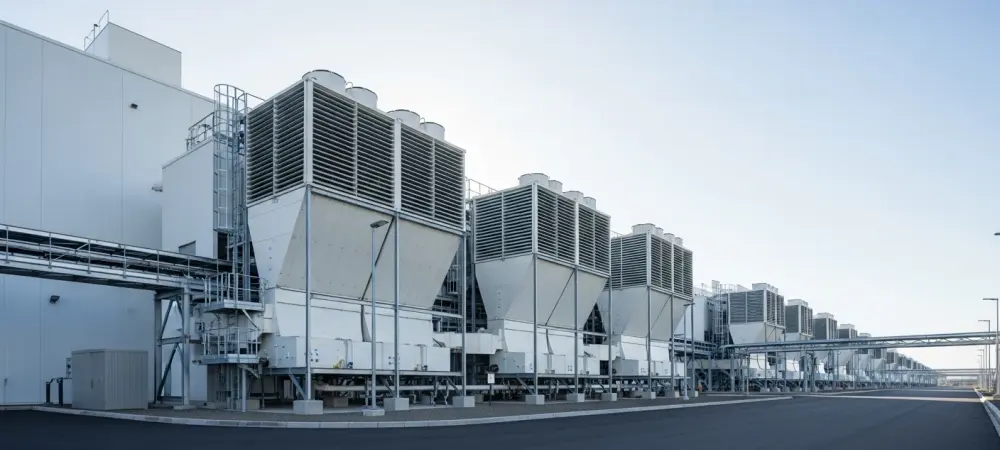
In Gardner, the Project Brewer proposal is even more ambitious, covering 300 acres with the potential for 16 distinct buildings. This scale requires advanced on-site power substations to manage the density of the planned server racks. Technical specialists highlight the implementation of sustainable closed-loop air cooling systems as a primary innovation, which drastically reduces the facility’s reliance on local water supplies compared to older designs.
However, the sheer size of the project has met some local resistance from residents concerned about noise and visual impact. While the project offers significant long-term economic contributions through tax revenue and job creation, the reality of local opposition creates a friction point. The upcoming city council decisions will determine how the project balances modernization with the preservation of community character.
Beyond State Lines: Kansas as a Cornerstone of a Broader National Strategy
The De Soto and Gardner projects are not isolated events but part of a wider national portfolio that includes developments in Arizona and Oklahoma. By diversifying across the Midwest and Southwest, Beale Infrastructure creates a resilient network of data hubs. Regional cost advantages, particularly regarding land and utility rates, continue to drive the tech industry toward housing high-capacity storage in non-traditional markets.
Observers challenge the idea that these data centers are solitary islands of technology. Instead, they are deeply interconnected with national fiber and energy grids, serving as vital relay points for the country’s digital traffic. This connectivity ensures that the Kansas sites remain essential to the national infrastructure, regardless of shifting market trends in other sectors.
Modernizing the Resource Narrative through Sustainable Infrastructure
The shift toward closed-loop cooling and on-site energy management is a direct response to rising environmental scrutiny within the technology sector. Modern mega-campuses are now designed with a focus on resource efficiency, often consuming less water per megawatt than traditional industrial plants. This technical evolution is critical for securing public support and passing rigorous environmental impact assessments.
These sustainable choices influence the final approval processes by demonstrating a commitment to responsible growth. When developers prioritize advanced cooling and energy-efficient architecture, they provide a roadmap for how large-scale digital infrastructure can coexist with regional resource management. This proactive approach helps reshape public perception of data centers as modern, efficient neighbors.
Strategic Pillars for Integrating Large-Scale Data Facilities into Local Ecosystems
Navigating the complexities of hundred-million-dollar infrastructure investments required early and constant utility coordination. Pre-leasing proved to be an essential pillar, ensuring that the facility had a purpose before the first stone was laid. Successful developers learned that municipal hurdles were best cleared through transparency and a clear demonstration of how the project would support local utility grids rather than strain them.
Effective community engagement served as the bridge between corporate expansion and resident concerns. By providing clear communication regarding noise mitigation and environmental stewardship, the projects fostered a sense of cooperation. Best practices involved including the community in the planning stages of the site’s aesthetic features, ensuring that the massive structures felt integrated into the Kansas landscape.
Cementing Kansas City’s Role in the Global Digital Economy
The strategic investment in these campuses solidified the technological profile of the Kansas City region for years to come. By attracting high-capacity storage and processing power, the area became a magnet for secondary tech services and specialized labor. This migration of talent and resources ensured that the local economy remained resilient against shifts in more traditional industries. The development of these sites established a clear blueprint for future digital infrastructure across North America. As operational capacity reached its peak, the region served as a prime example of how to balance massive industrial growth with sustainable resource management. These projects ultimately transformed the Midwest into a critical pillar of the global digital economy.