

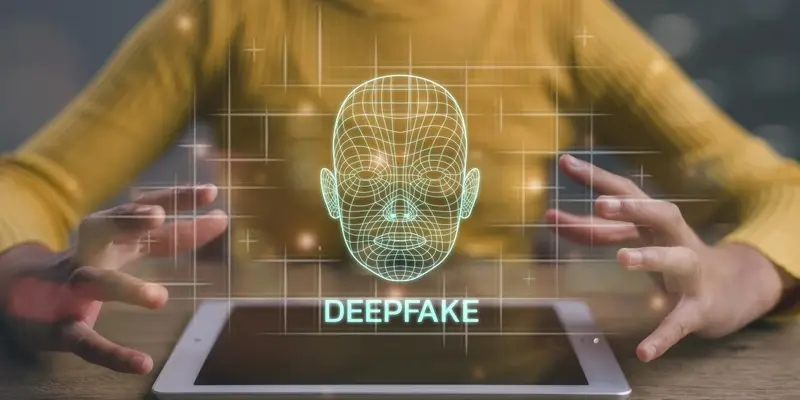
Artificial intelligence (AI) has made significant strides in recent years, leading to the creation of deepfake technology, which comprises highly convincing falsified images, videos, and other forms of multimedia. This rapid development poses substantial risks for celebrities, politicians, and ordinary individuals alike, emphasizing the urgent need for equally advanced detection tools to counteract the potential harm that could ensue from these deceptive creations.
The Dual-Edged Nature of Deepfake Technology
Deepfake technology operates on a dual-edged sword, with sophistication on the rise. There is a parallel advancement in detection tools designed to mitigate the adverse effects wrought by deepfakes. Central to this progress is the concept of generative adversarial networks (GANs). GANs involve a creative model that generates deepfake content and an adversarial model that assesses authenticity. This dynamic interplay fosters innovative development that sharpens both the creation and identification of counterfeit content.
As GANs continue to evolve, they produce increasingly convincing deepfakes while simultaneously equipping detection models with heightened accuracy. This constant progression is essential for ensuring that detection tools remain capable of identifying even the most sophisticated falsified content. The dual improvement of generative techniques and adversarial detection has maintained a necessary balance, ensuring that advances in creation are met with corresponding strides in identification.
The ongoing evolution of deepfake technology reflects the intricate balance between creators and detectors. Each enhancement in deepfake generation spurs advancements in detection methodologies, fostering a cyclic progression in which both aspects continuously strive to outpace one another. This interplay offers a fascinating insight into the intertwined relationship between technological creation and corresponding safeguards, illustrating the perpetual need for vigilance and innovation in countering deceptive digital content.
Sophisticated Detection Tools
Advancements in deepfake detection technology have led to the creation of highly effective tools capable of identifying counterfeit content through forensic markers. These subtle indicators reveal discrepancies between authentic and fabricated media, making detection more reliable. For instance, forensic experts analyze pixel-level inconsistencies and audio-visual mismatches to determine the authenticity of the content. These advanced techniques are augmented by machine learning algorithms trained to recognize an array of deepfake characteristics, providing a robust defense against digital deception.
Human expertise adds another layer of precision in the fight against deepfakes. Individuals like Louise Bruder are renowned for their exceptional ability to discern fake content. Such super-recognizers possess unique cognitive skills that enable them to identify inconsistencies that may escape automated systems. The inclusion of human insight elevates the reliability of detection efforts, blending technological sophistication with innate human acuity.
Moreover, tools like Deep Detect, highlighted in a TED talk by Melat Ghebreselassie and Elon Raya, showcase the effectiveness of real-time, accessible, and versatile detection systems. Unlike traditional tools, which are often restricted by their training in controlled environments, Deep Detect is equipped with real-world data. This makes it highly adept at identifying deepfakes in chaotic online environments, such as YouTube. Real-time capabilities ensure that users can actively counter the spread of fake content, providing a dynamic and responsive approach to deepfake mitigation.
Crowdsourcing in Detection
Another innovative approach in deepfake detection is crowdsourcing. Leveraging the collective intelligence and consensus of users, systems like Deep Detect can verify the authenticity of content more accurately. When a substantial majority of users report a piece of content as potentially fake, this collective judgment can be integrated into the AI’s learning mechanisms, enhancing the precision and reliability of detection tools. Crowdsourcing also introduces a democratic and inclusive element to the battle against deepfakes, empowering ordinary individuals to contribute to the fight against fake content.
By harnessing the power of community involvement, crowdsourcing provides a comprehensive and dynamic defense against the proliferation of deepfakes. The consensus-driven approach not only bolsters technological capabilities but also fosters a sense of collective responsibility in maintaining the integrity of digital media. This blending of human insight with AI capabilities creates a formidable barrier against the deceptive manipulation of content, ensuring a more resilient digital landscape.
Crowdsourcing also accelerates the refinement of deepfake detection systems. User feedback provides invaluable data for improving the algorithms, facilitating continuous learning and adaptation. This iterative process ensures that detection tools remain up-to-date and capable of addressing emerging deepfake techniques. By incorporating diverse user insights, crowdsourcing fosters the creation of more adaptable and versatile detection tools, essential for maintaining security in an ever-evolving digital world.
Technical Innovations in Deep Detect
The technological prowess of tools like Deep Detect is evident through advanced features such as multi-head attention mechanisms. These allow the system to analyze multiple elements simultaneously, significantly enhancing its detection capabilities. Multi-head attention mechanisms enable the tool to focus on various aspects of the content, identifying subtle inconsistencies that might otherwise be overlooked. This advanced analysis ensures a thorough and comprehensive evaluation of the material, boosting the reliability of the detection process.
Additionally, the inclusion of natural language processing (NLP) for normalization further refines the tool’s accuracy. NLP techniques help in identifying and correcting linguistic inconsistencies within the content, ensuring that both visual and auditory aspects are scrutinized meticulously. This integration of NLP with visual analysis capabilities presents a multifaceted approach to deepfake detection, addressing various dimensions of the content to ensure authenticity.
Powered by convolutional neural networks and visual transformers, these systems perform deep evaluations and extract relevant features, underscoring the sophistication of contemporary detection technology. Convolutional neural networks are adept at identifying intricate patterns, while visual transformers enhance the interpretative power of these systems, offering a deeper understanding of both the content and its context. This combination of advanced technologies creates a robust framework for identifying and mitigating the impact of deepfakes.
The Perpetual Arms Race
Artificial intelligence (AI) has made considerable progress in recent years, spurring the development of deepfake technology. Deepfakes are highly realistic but entirely fabricated images, videos, and other forms of multimedia that can easily deceive viewers. This rapid enhancement in AI-generated content presents significant risks for public figures such as celebrities and politicians, as well as for ordinary individuals. The dangers associated with these convincingly false depictions range from damage to reputation to security threats. Therefore, it is critically important to develop equally sophisticated detection tools to mitigate the potential harm caused by these deceptive creations. As deepfake technology continues to evolve, the race for reliable, advanced detection methods becomes ever more urgent to protect individuals and society from the malicious use of AI-induced misinformation. Innovation in countermeasures is essential to keep pace with these advancements and safeguard against the wide-ranging impacts of deceptive digital fabrications.