

Dominic Jainy stands at the forefront of the technological revolution, where massive-scale computing meets the essential evolution of energy infrastructure. With a background deeply rooted in artificial intelligence and the physical architecture of the digital world, he has become a leading voice on how hyper-scale developments reshape regional economies. As a massive infrastructure expansion unfolds in Pennsylvania, Jainy provides a unique perspective on the transition from traditional industrial power to the sophisticated energy demands of the modern cloud.
The following conversation explores the monumental scale of the Homer City Energy Campus, the strategic shift from coal to natural gas-powered computing, and the long-term economic implications for Indiana County. We delve into the complexities of building three dozen data centers over a decade, the integration of 4.5GW power generation with server capacity, and the evolving relationship between technology giants and the communities they inhabit.
Transitioning a site from a 2GW coal plant to a 4.5GW natural gas-powered computing hub is a monumental shift. How does this redefine the industrial landscape of Indiana County?
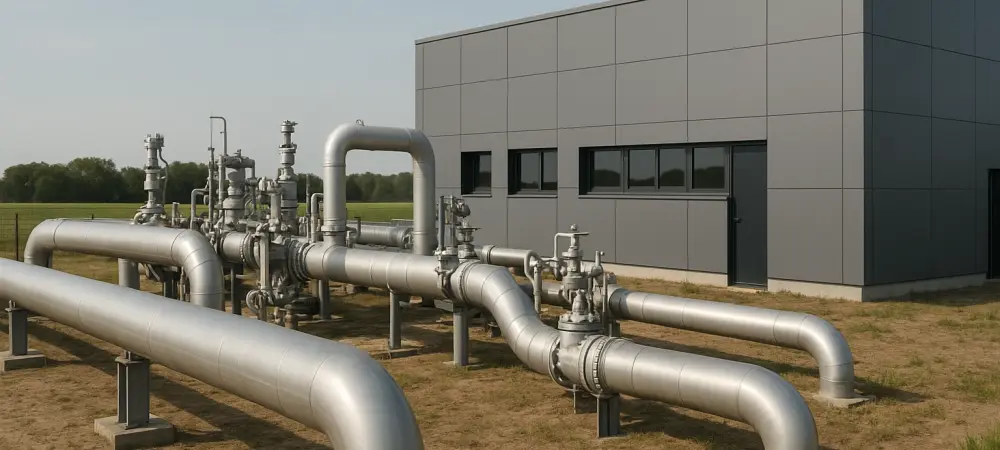
It is a total reimagining of what industrial power looks like in the modern age. For decades, the coal station was the backbone of Pennsylvania’s energy, but since its closure in 2023, there was a void that needed a future-forward solution. By replacing it with a 4.5GW natural gas facility, we aren’t just increasing capacity; we are creating a symbiotic relationship where energy production sits right next to the servers that consume it. This 1,100-acre project across six sites brings a sense of high-tech sophistication to a region that has long relied on traditional extraction. It signals to the world that Indiana County is pivoting from its rust-belt legacy to becoming a heartbeat of the global digital economy.
With 36 buildings planned, each reaching 70 feet in height and spanning 225,000 square feet, the scale is staggering. What are the logistical challenges for a project that won’t be fully completed until June 2036?
The sheer scale requires a vision that spans ten years, divided into four meticulous construction stages beginning this December. When you’re dealing with 36 two-story buildings, you aren’t just building shells; you’re installing incredibly complex electrical substations, security infrastructure, and specialized storage facilities. We have to think about the rhythm of the work, starting the final stage in January 2032 and maintaining a steady flow of labor and materials for nearly a decade. There’s a certain weight to the responsibility when you realize you’re managing an investment that is part of a larger $20 billion commitment to the state. We have to ensure that every 70-foot structure is optimized for the heat loads and connectivity demands that will only grow more intense as we move through the next decade.
The economic promise includes up to 2,000 jobs with salaries averaging $100,000. How do you see this workforce infusion affecting the local community and the broader tech ecosystem?
This is a life-changing injection of capital for local residents, offering 1,500 to 2,000 high-paying roles in a place where average annual salaries of $80,000 to $100,000 can truly transform a family’s trajectory. It’s not just about the numbers; it’s about the sense of pride and stability that comes with working on the cutting edge of cloud infrastructure. To support this, the project has moved away from restrictive non-disclosure agreements, choosing instead to lean into a community benefits agreement that actually listens to the people in Center and Blacklick townships. We are seeing a shift where tech giants are no longer shadows in the background but active participants in local growth. By pledging $1 billion toward community investments nationwide, the goal is to ensure that the people living near these 1,100 acres feel the benefits as much as the industry does.
While the gas plant will serve the data centers, over 1GW will flow back into the state’s grid. How does this dual-purpose energy strategy benefit the overall power stability?
It’s a brilliant piece of engineering and policy work that provides a massive safety net for the local grid. While the primary mission of the 4.5GW plant is to keep the data centers humming, the fact that over 1GW is being contributed to the public network means we are essentially replacing the old coal capacity and then some. This ensures that the lights stay on for residents while the computing power grows, effectively neutralizing the “energy drain” often associated with large tech campuses. Knighthead Capital Management’s involvement shows that there is a deep financial confidence in this hybrid model. It’s a blueprint for how we can scale up computing capacity without putting an undue burden on the existing utility infrastructure.
Pennsylvania is becoming a cluster for these developments, from nuclear-powered sites to new proposals in Falls and Kline. Why is this geographical diversification so critical for the future of the cloud?
Diversification is the only way to build true resilience in an era where data is our most valuable commodity. By acquiring 1,200 acres next to a nuclear facility in Salem and pursuing 15-building projects in other townships, the strategy ensures we aren’t relying on a single large campus for regional expansion. Each location—whether it’s powered by gas at Homer City or nuclear power elsewhere—offers a different profile of reliability and scale. This regional expansion strategy allows for lower latency and better disaster recovery, which is essential for the AI and machine learning workloads we are seeing today. We are watching Pennsylvania transform into a multi-hub powerhouse where different energy sources are being tapped to fuel the next generation of digital services.
What is your forecast for the intersection of energy production and data infrastructure over the next decade?
I believe we are entering an era of “sovereign energy” for technology firms, where the line between a power utility and a data provider completely disappears. By June 2036, when this campus is fully operational, I expect to see data centers that are entirely self-sustaining, perhaps even serving as the primary power generators for their surrounding counties. We will see more $20 billion statewide investments that prioritize localized energy generation because the grid simply cannot keep up with the exponential demand of modern computing. This shift will force a radical transparency in how companies operate, moving away from secret agreements and toward deep, multi-billion dollar community partnerships that define the social contract of the 21st century.