

With the digital world’s insatiable demand for data powered by AI and cloud computing, the physical infrastructure that underpins it is expanding at an unprecedented rate. We’re joined by Dominic Jainy, an IT professional whose work at the intersection of artificial intelligence and large-scale systems gives him a unique perspective on this global build-out. Today, we’re focusing on the Atlanta metro area, which is rapidly becoming a battleground for cloud titans, and specifically, a massive new development by Amazon Web Services in Covington, Georgia. We’ll explore AWS’s groundbreaking approach to resource management, the strategic chess game playing out across the region’s counties, and the profound economic transformations these billion-dollar investments promise for local communities.
AWS recently announced a $100 million water facility agreement in Covington, which includes a system projected to save 45 million gallons of freshwater annually. Could you break down the mechanics of this water innovation and explain how the new tax revenues will directly benefit local priorities like Covington’s schools and infrastructure?
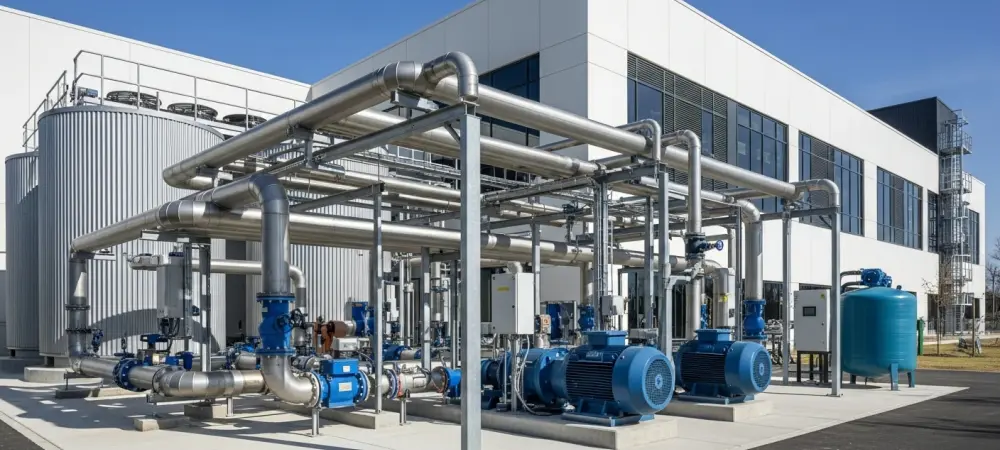
What’s truly remarkable about this isn’t just the scale, but the elegance of the solution. They’re investing a significant $100 million upfront to build a dedicated water treatment and cooling facility. The core innovation is a hybrid cooling system. Imagine this: for 94% of the year, the facility will rely solely on the ambient outside air to cool the servers—a massive energy and water saver. It’s only during that small 6% window, likely on the hottest days, that it will need to use water. Even then, they’re building a first-of-its-kind reclaimed water system. This isn’t about just using less water; it’s about creating a sustainable loop that will actively preserve over 45 million gallons of freshwater every year. That commitment directly translates into tangible community benefits through tax revenue, which is a key part of these public-private agreements. The infusion of cash from a project this size is earmarked to directly support the things a community feels every day: better funding for schools, improved public safety services, and much-needed infrastructure upgrades.
This Covington project is part of a larger $11 billion investment plan for Georgia. When you consider the 430 acres already purchased and the potential for a 1.41 million square foot campus, how do you envision a development of this magnitude rolling out, and what are the key indicators of its long-term economic impact?
A project of this scale is a marathon, not a sprint. You don’t just build a 1.41 million square foot campus overnight. We’ll almost certainly see a phased approach. They’ve secured a massive footprint of 430 acres, which gives them a long runway for growth. The first phase will likely involve constructing the initial data hall and the critical water and power infrastructure. Once that’s operational and generating revenue, they’ll build out subsequent phases based on customer demand. The long-term economic impact is staggering when you look at the numbers. The Development of Regional Impact application floated a potential investment of up to $5.7 billion for this campus alone. That’s a monumental figure that goes far beyond initial construction. It means sustained, high-value tax revenue for Newton County for decades, creating a stable funding source for public services. It also means attracting a highly skilled workforce and stimulating a whole ecosystem of supporting businesses.
The code name “Project Lighthouse” appears to be linked to this Covington site as well as another project in Douglas County. Considering this, along with major investments in nearby Butts County, what does this reveal about AWS’s broader regional strategy for the Atlanta area, especially with competitors like Meta and Sailfish establishing a huge presence?
The repeated use of the “Project Lighthouse” code name is a classic tell. It signals that these aren’t isolated projects but interconnected nodes in a much larger, cohesive regional strategy. AWS is essentially building a strategic triangle of influence, with major anchor points in Douglas, Butts, and now Newton counties. This creates redundancy, resilience, and incredible operational flexibility. They are not just planting a flag; they are building a fortress. This move is absolutely a response to the competitive landscape. You have Meta with a huge campus in the same county, and Sailfish is planning another massive 1.78 million square foot facility nearby. By creating this distributed but interconnected network of campuses, AWS is ensuring it can meet the explosive demand for cloud services in the Southeast, secure critical land and power resources, and maintain its competitive edge in one of the hottest data center markets in the country. It’s a brilliant, long-term power play.
What is your forecast for the Atlanta metro area’s growth as a top-tier data center hub, considering this wave of major investments from AWS and its competitors?
My forecast is that the Atlanta metro area is on a trajectory to solidify its position not just as a regional hub, but as a top-tier global data center destination, rivaling established markets. What we are witnessing is a critical mass event. When an anchor tenant like AWS commits to an $11 billion regional investment, it sends a powerful signal to the entire industry. Competitors like Meta and developers like Sailfish and TPA are also making nine- and ten-figure bets on the region, creating a powerful “data center alley” effect, particularly in counties like Newton. This intense concentration of investment creates a virtuous cycle: it attracts more specialized labor, spurs further infrastructure development, and encourages even more hyperscalers and enterprise clients to establish a presence. The region has the land, a favorable business climate, and is now seeing the massive investment in power and water infrastructure needed to support this next generation of computing. The growth won’t just be steady; it will be exponential over the next five to ten years.