

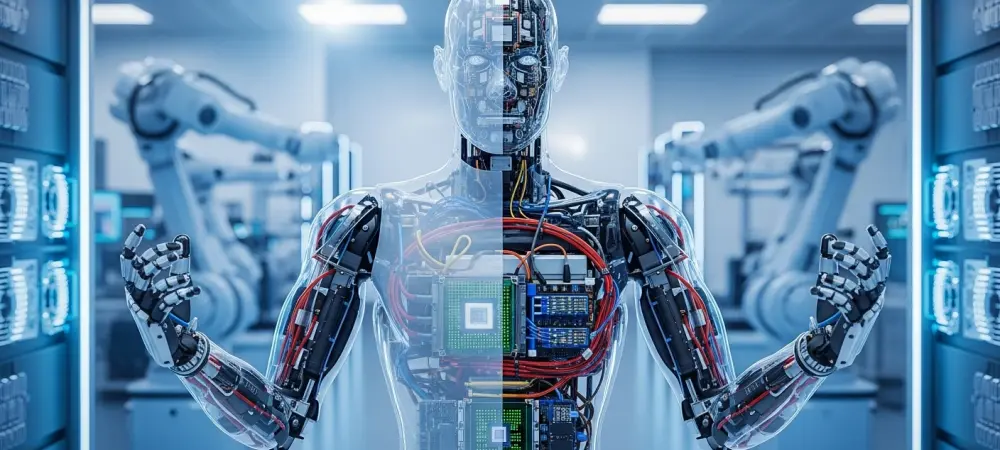
The recent evolution of autonomous humanoid robotics has fundamentally altered the trajectory of industrial automation by transitioning from rigid, pre-programmed scripts to fluid, intelligence-driven physical interactions. This review explores the technical and philosophical shift that characterizes the modern state of embodied intelligence, specifically focusing on the transition from specialized software layers to foundation-first robotic training. By examining the current landscape, this analysis provides a thorough understanding of the capabilities and limitations of humanoid systems that aim to bridge the gap between digital reasoning and physical utility. The purpose of this assessment is to identify how the integration of world models and biomimetic hardware is creating a new category of autonomous partners capable of operating alongside humans.
Introduction to the World Model Paradigm in Robotics
The traditional approach to robotic intelligence involved taking large-scale language models trained on internet text and attempting to graft them onto physical hardware through intensive fine-tuning. However, this method often resulted in a disconnect between the robot’s “brain” and its “body,” as the underlying data lacked an understanding of physical consequences. The industry has recently moved toward a world model paradigm, where AI is trained from the outset on robot-centric data, often referred to as “Step Zero” foundational training. This shift allows robots to process the world not as a series of labels or tokens, but as a continuous stream of predictive physics where every action has a simulated and measurable outcome.
World models represent a fundamental departure from generative AI because they prioritize spatial awareness and the laws of motion over linguistic probability. Instead of merely predicting the next word in a sentence, these models predict the next state of the physical environment. This foundational training is what enables a humanoid to understand that a glass will break if dropped or that a door requires a specific force to open. By embedding these physical intuitions into the core architecture, developers are paving the way for Artificial General Intelligence that can navigate the complexities of the real world with the same fluidity that an LLM navigates a conversation.
Core Technical Pillars of Humanoid Autonomy
World Model Architectures and Foundation-First Training
The Transition From Multimodal Fine-Tuning to Robot-Centric Tokens
The movement away from multimodal fine-tuning is driven by the recognition that physical intelligence requires a unique set of data units, or “robot tokens.” While early autonomous systems relied on interpreting human instructions through an LLM layer, contemporary architectures treat physical interaction as the primary data stream. This means that joint tension, balance adjustments, and visual depth are processed as fundamental components of the model’s internal logic rather than secondary inputs that need to be translated. This architecture allows for a more direct link between perception and action, reducing latency and increasing the reliability of complex tasks.
Utilizing Predictive Physics for Spatial Awareness and Interaction
Predictive physics serves as the cognitive backbone for modern humanoid autonomy, allowing machines to simulate the immediate future of their environment. By treating reality as a video-generation problem where the robot is the primary actor, the AI can anticipate how objects will respond to its touch. This capability is essential for interaction in dynamic settings, such as a busy kitchen or a warehouse floor, where variables are constantly changing. The World Model Lab’s approach exemplifies this by ensuring that the robot does not just see a chair, but understands the chair’s mass, stability, and potential for movement before even making contact.
Biomimetic Engineering and Tendon-Driven Systems
Human-Centric Embodiment for Effective Data Transferability
The design of robots like Neo is not merely an attempt to mimic human aesthetics; it is a strategic engineering choice to maximize data transferability. Because the majority of available data regarding physical tasks exists in the form of human video, a robot with human proportions can learn more efficiently through imitation. If the robot’s limbs and joints mirror those of a human, the AI can directly map the movements seen in a video onto its own motor commands. This reduces the “embodiment gap” that has historically hindered the training of non-humanoid robots, allowing for a faster transition from visual observation to physical execution.
High-Degree-of-Freedom Dexterity and Proprioceptive Feedback
Achieving human-level manual dexterity remains one of the most significant challenges in the field, often described as the “final boss” of robotics. Recent advancements in tendon-driven mechanics, as opposed to traditional gear-driven systems, have allowed for 22-degree-of-freedom hands that move with remarkable fluidity. These systems rely on proprioceptive feedback, which provides the robot with a “sense” of its own limb positions and the forces it is exerting. This nuance is critical for tasks that require a delicate touch, such as handling glassware or assisting a person with mobility, where the difference between a firm hold and excessive pressure is a matter of safety.
Emerging Trends in Agile Hardware and Vertical Integration
The pace of development in the humanoid sector is currently defined by a move toward agile hardware iteration, a process that mirrors the rapid cycles of software development. Companies are increasingly bringing the entire manufacturing stack in-house, allowing them to move from a CAD design to a functional prototype in as little as four weeks. This vertical integration is not just about cost-cutting; it is about creating a “data moat” where every hardware change is immediately tested and refined by the AI. When a new sensor is added or a joint is redesigned, the impact on the robot’s performance is instantly captured and used to improve the foundational world model.
This strategy creates a continuous learning flywheel where scaled deployment feeds intelligence. As more units are shipped to residential and industrial environments, the diversity of the data they collect grows exponentially. This feedback loop ensures that the robots are not static products but evolving entities that become more capable with every hour of operation. The ability to manufacture at scale while maintaining the flexibility to iterate on the fly is what separates the current leaders from those who rely on traditional, slow-moving industrial manufacturing processes.
Real-World Applications and Autonomous Utility Deployment
Humanoid units are no longer confined to laboratory settings; they are seeing initial deployment in sectors ranging from logistics to residential assistance. In industrial environments, these robots are being tasked with general labor that requires more adaptability than a standard robotic arm can provide. However, the true breakthrough lies in their deployment in residential spaces, where the environment is unpredictable and unstructured. Here, the robots assist with everyday tasks, acting as a force multiplier for human labor and providing a glimpse into a future where physical chores are fully automated. The utility of these machines is continuously enhanced through over-the-air updates, which allow for the deployment of more advanced autonomous models without the need for hardware replacement. This means that a robot purchased for simple fetching tasks can, over time, learn to perform complex sequences like laundry or meal preparation as its underlying world model matures. This evolution from early-adopter experimentation to full-task mastery is the key metric by which the success of the humanoid industry is being measured in the current 2026 landscape.
Technical Barriers and Global Competitive Challenges
Despite the rapid progress, several technical hurdles remain that prevent humanoid robots from achieving true parity with human capability. Replicating the extreme nuance of human force-related proprioception is difficult, as it requires a level of sensor density and processing speed that is still being refined. Furthermore, while a robot might be able to pick up an object, the “common sense” required to handle unexpected interruptions—such as a person walking into its path or a tool breaking—is still under development. These nuances represent the gap between a machine that imitates and a machine that truly understands its environment.
On a global scale, the competition for dominance in the humanoid market is intense, with international manufacturers leveraging vast ecosystems of component production. Companies in North America and Europe are countering this scale by focusing on superior AI integration and agile development cycles. However, the need for robust regulatory safety frameworks remains a significant market obstacle. Ensuring that an autonomous, 160-pound machine can operate safely in a home with children and pets requires a level of reliability and “fail-safe” engineering that the industry is still working to standardize across the board.
Future Outlook: The Evolution Toward Physical AGI
As the industry moves from 2026 toward 2027, the focus is shifting from specialized utility to the realization of physical Artificial General Intelligence. The integration of “mind” and “body” through unified foundation models is expected to reach a level of maturity where robots can operate with nearly total autonomy in complex, high-stakes environments. This will likely lead to a redefinition of the labor market, where humanoid robots handle repetitive or dangerous work, allowing humans to focus on creative and high-level decision-making.
The long-term impact of this collaboration will be profound, as human-robot interaction becomes a standard part of daily life. The goal is not just to create a tool, but to develop an autonomous partner that can understand intent and provide proactive assistance. By 2027, the gap between a specialized robotic assistant and a general-purpose humanoid partner is projected to close, marking the beginning of an era where physical AGI is a tangible reality. This evolution will require continued investment in both the cognitive world models and the biomimetic hardware that allows those models to express themselves in the physical world.
Conclusion and Strategic Industry Assessment
The analysis of the current humanoid robotics landscape showed that the rejection of standard AI fine-tuning in favor of embodiment-first modeling was a decisive turning point for the industry. This shift enabled a more profound connection between digital intelligence and physical execution, allowing robots to move with a level of intuition that was previously unattainable. The investigation revealed that vertical integration and agile hardware development served as the primary catalysts for rapid iteration, effectively shortening the time between conceptual design and real-world utility. These strategies collectively established a new benchmark for how autonomous systems should be built and trained.
The strategic assessment demonstrated that while technical barriers in dexterity and global manufacturing competition remained, the path toward physical AGI was clearly defined by the successful integration of world models. The review confirmed that the transition from narrow, task-specific automation to general-purpose humanoid partners progressed faster than many industry analysts originally predicted. Ultimately, the fusion of predictive physics and biomimetic engineering provided the necessary framework to bridge the gap between abstract artificial intelligence and practical, physical utility. The findings indicated that the industry successfully laid the foundation for a future where autonomous humanoids are integral to the global workforce and domestic life.