

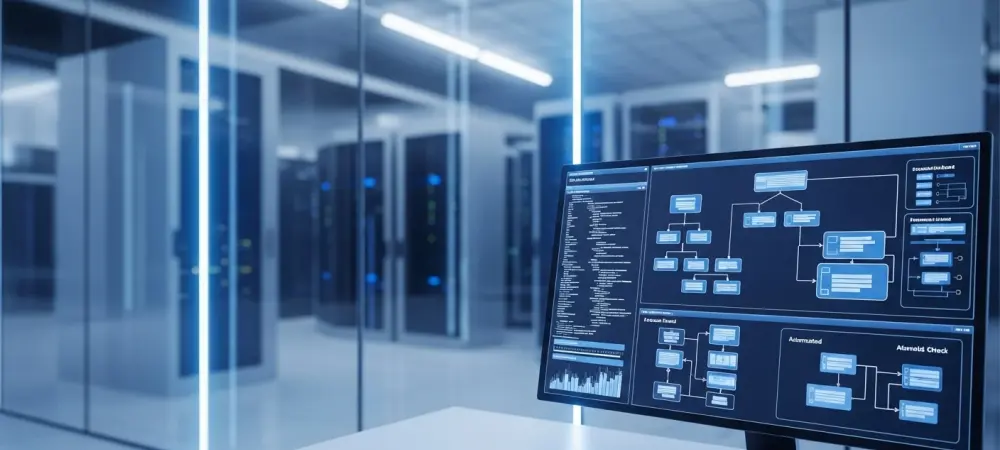
The traditional image of a professional developer hunched over a keyboard, manually typing every semicolon and bracket, has rapidly dissolved into a new reality where autonomous agents handle the bulk of syntax generation. This shift represents a fundamental evolution from simple code completion to goal-oriented orchestration, where the human role has transitioned from a writer of lines to a curator of intent. The current technological landscape is no longer defined by how fast a person can type, but by how effectively a system can interpret complex requirements and execute them across distributed architectures. This review evaluates the emergence of these autonomous entities, analyzing their technical foundations and the profound impact they have exerted on the software industry.
The Paradigm Shift in Software Engineering
The emergence of autonomous coding agents marks a departure from the “copilot” era, where AI functioned as a reactive assistant. In the current framework, these agents operate with a high degree of agency, meaning they can navigate file systems, execute shell commands, and interact with external APIs without constant human prompting. The core principle involves a move toward intent-based development, where the engineer provides a high-level objective, and the agent decomposes that objective into a series of actionable steps. This change has been facilitated by larger context windows and the integration of specialized reasoning chains that allow models to maintain a coherent understanding of an entire codebase rather than just isolated snippets.
The relevance of this shift in the broader technological landscape cannot be overstated. As digital infrastructure becomes increasingly complex, the cognitive load on human developers has reached a breaking point. Autonomous agents serve as a necessary abstraction layer, managing the “plumbing” of software development—such as dependency management, boilerplate creation, and routine refactoring—while humans focus on architectural integrity and business logic. This transition mirrors the move from assembly language to high-level programming languages, further distancing the developer from the underlying machine while increasing overall leverage.
Core Technical Components and Architectural Frameworks
Spec-Driven Development and Constraint Logic
At the heart of modern autonomous agents lies the transition toward spec-driven development. Unlike earlier iterations of AI coding tools that relied on probabilistic guessing, contemporary agents utilize constraint logic to ensure that generated outputs adhere to strict architectural rules. This process begins with the ingestion of a comprehensive specification, which defines not only what the code should do but also the constraints under which it must operate. By grounding the agent in a formal specification, organizations can mitigate the risk of “hallucinations” that previously plagued generative models, ensuring that the AI remains within the boundaries of the established design system.
The performance of these systems is tied to their ability to reason about these constraints in real-time. When an agent encounters a conflict—such as a security policy that forbids a specific data flow—it must be capable of self-correcting its trajectory. This is achieved through a multi-layered reasoning architecture where a “planner” model outlines the strategy and a “coder” model executes the individual tasks. This separation of concerns allows for a more robust development process, as the planner can evaluate the coder’s output against the original specification before any changes are committed to the repository.
Automated Validation and Integration Suites
Another critical technical component is the integration of automated validation suites that function as the agent’s “eyes and ears.” For an agent to be truly autonomous, it requires a feedback loop that provides empirical evidence of its success or failure. Modern frameworks now embed the agent directly within the CI/CD pipeline, allowing it to run tests, interpret error logs, and perform iterative fixes. This closed-loop system is what differentiates an autonomous agent from a mere text generator; it is the difference between writing a script and engineering a solution that actually works in a live environment.
In real-world usage, this validation process has become the primary bottleneck, shifting the human effort from writing code to designing robust test cases. If the validation suite is weak, the agent will produce code that appears functional but lacks the necessary edge-case handling. Consequently, the performance of an agent is often a reflection of the quality of the environment in which it operates. The significance of this component lies in its ability to enforce high standards of code quality at a scale that was previously impossible for manual review teams to maintain.
Emerging Trends: From Syntax Generation to System Orchestration
The industry is currently witnessing a transition from agents that focus on single-file edits to those capable of full-system orchestration. This trend involves agents that understand the interdependencies between microservices, databases, and front-end components. Rather than just fixing a bug in a Python script, a modern agent can identify a performance bottleneck in a database query, update the relevant API endpoint, and adjust the front-end state management to reflect the change. This holistic understanding of the system is the next frontier, moving the technology toward a state where the AI acts as a digital site reliability engineer.
Moreover, there is a visible shift in industry behavior as organizations move away from “off-the-shelf” models toward fine-tuned, domain-specific agents. These specialized agents are trained on an organization’s internal documentation, coding standards, and historical bug reports, making them far more effective than general-purpose models. This trend suggests a future where every enterprise maintains its own “digital twin” of its engineering department, with agents that are deeply familiar with the nuances of its specific tech stack and legacy systems.
Real-World Implementations and Industrial Use Cases
A notable application of autonomous coding agents is found in the modernization of legacy financial systems. Large banking institutions are utilizing these agents to translate monolithic COBOL or Java codebases into modern, cloud-native architectures. This is a task that was previously deemed too risky and expensive for human teams alone. By employing agents to map out logic flows and generate equivalent microservices, these institutions have been able to accelerate their digital transformation initiatives by several orders of magnitude.
In the cybersecurity sector, autonomous agents are being deployed to proactively patch vulnerabilities. These agents continuously scan codebases for known security flaws, generate the necessary fixes, and initiate the deployment process once the fix passes all validation tests. This use case highlights the unique capability of agents to operate at a speed and consistency that surpasses human capacity, effectively narrowing the window of opportunity for malicious actors to exploit unpatched systems.
Critical Challenges: Technical Debt and Review Scarcity
Despite their impressive capabilities, autonomous agents introduce significant challenges, most notably the risk of “review debt.” When an agent can produce thousands of lines of code in minutes, the human capacity to review that code becomes a massive bottleneck. There is a dangerous temptation for engineers to engage in “vibe coding,” where they merge agent-generated pull requests based on a general feeling of correctness rather than a deep understanding of the logic. This behavior can lead to a silent accumulation of technical debt, where the codebase becomes a “black box” that no human fully understands.
Furthermore, current regulatory and ethical hurdles surround the provenance of the data used to train these models. Organizations must grapple with the potential for copyright infringement or the inadvertent introduction of licensed code into proprietary projects. While ongoing development efforts are focused on creating “clean-room” training environments and more transparent attribution models, these issues remain a significant obstacle to widespread adoption in highly regulated industries like aerospace or healthcare.
Future Outlook: Observability and AI-Native Architectures
The future of software engineering will likely be characterized by “AI-native” architectures, where systems are designed from the ground up to be managed by autonomous agents. This involves a shift toward higher levels of observability, where every component of a system provides rich metadata that an agent can use to diagnose and fix issues. In this future, the primary role of the software architect will be to design the “sensors” and “actuators” that allow the AI to interact with the software ecosystem effectively. Potential breakthroughs in neuro-symbolic AI may further enhance the reliability of these agents by combining the creative power of large language models with the rigorous logic of symbolic reasoning. This would allow agents to not only generate code but also provide mathematical proof of its correctness. Long-term, this technology will likely redefine the global labor market for software engineers, moving the profession away from manual labor and toward a high-level discipline centered on system design and governance.
Final Assessment: Redefining Productivity Beyond Code Volume
The evaluation of autonomous AI coding agents revealed a fundamental shift in the definition of engineering excellence. It was observed that the traditional metrics of productivity, such as commit frequency and lines of code, became obsolete as agents began to flood repositories with machine-generated syntax. The true value was found not in the volume of output, but in the rigor of the constraints placed upon the agents and the robustness of the validation frameworks that governed them. The technology demonstrated an undeniable capacity to handle routine tasks, yet it simultaneously highlighted the irreplaceable nature of human judgment in high-stakes architectural decisions.
In the final analysis, the successful integration of autonomous agents depended more on the maturity of an organization’s engineering culture than on the sophistication of the AI itself. Those who treated the technology as a silver bullet often suffered from increased technical debt and system instability. Conversely, organizations that utilized agents to enhance their existing validation and observability pipelines saw significant gains in both speed and reliability. The verdict on autonomous coding agents was clear: they functioned as a powerful force multiplier, but only when directed by a human hand that prioritized systemic understanding over raw speed. Moving forward, the industry must continue to focus on the human-agent interface to ensure that the software of tomorrow remains both manageable and secure.