

The silent, coordinated dance of robots across a warehouse floor is no longer a futuristic vision but the current reality of a supply chain industry undergoing a seismic technological transformation. Automated Warehouse Systems represent a significant advancement in the logistics sector, fundamentally altering how goods are stored, managed, and dispatched. This review will explore the evolution of this technology, its key features, performance metrics, and the profound impact it has had on various applications. The purpose of this review is to provide a thorough understanding of the technology, its current capabilities, and its potential future development as a cornerstone of modern commerce.
The Foundation of Modern Warehousing
At their core, automated warehouse systems are integrated ecosystems that blend physical machinery with intelligent software to manage the entire lifecycle of inventory. From the moment goods arrive at the receiving dock to their final departure, these systems orchestrate every step, including put-away, storage, picking, packing, and shipping. Their core principle is to replace manual, repetitive, and often inefficient processes with data-driven precision, speed, and reliability. This creates an operational environment where real-time visibility and control are standard, not aspirational.
The widespread adoption of these systems is a direct response to a changed commercial landscape. The relentless growth of e-commerce has permanently altered consumer expectations, making same-day and next-day delivery the benchmark for success. For any growing manufacturer, distributor, or online retailer, reliance on manual picking and paper-based tracking has become a significant liability. The costs associated with inaccuracy, labor shortages, and slow fulfillment are too high to ignore, making automation a critical strategic imperative for survival and growth.
Core Technologies and System Components
Automated Storage and Retrieval Systems
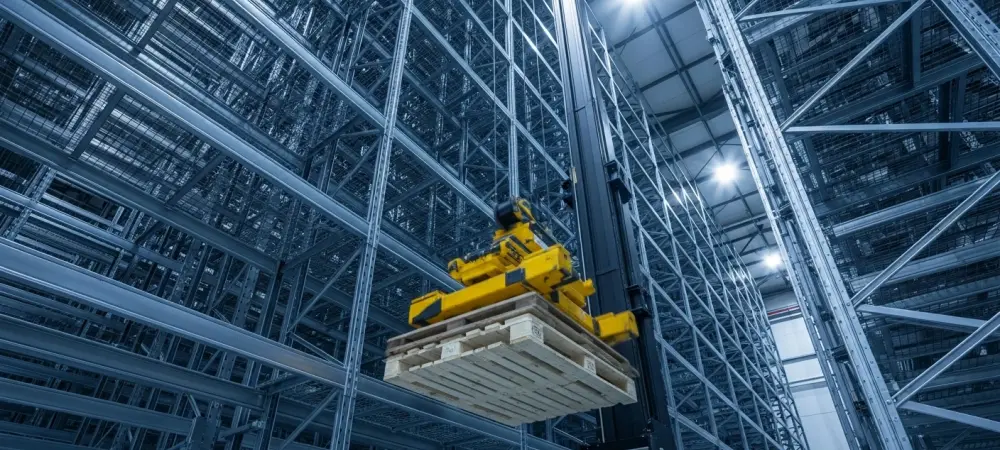
Automated Storage and Retrieval Systems (AS/RS) are a foundational technology in high-density warehousing, utilizing computer-controlled cranes, shuttles, and vertical lift modules to manage inventory. These systems autonomously handle the placement and extraction of pallets, totes, or cartons from towering storage racks with remarkable speed and precision. Their operation minimizes the need for wide aisles required by forklifts, enabling a far more compact storage environment. The primary advantage of AS/RS lies in its ability to maximize a facility’s vertical space, effectively multiplying storage capacity without expanding the physical footprint. By automating the most labor-intensive storage and retrieval tasks, these systems dramatically increase throughput, improve inventory accuracy, and enhance worker safety by reducing the need for manual handling of heavy loads at height. This efficiency is critical for operations that need to process a high volume of goods rapidly.
Autonomous Mobile Robots and AGVs
Mobile robotics has emerged as a flexible and scalable solution for automating the movement of goods within the warehouse. This category is broadly divided into two types: Automated Guided Vehicles (AGVs), which typically follow predefined paths like magnetic strips or wires, and the more advanced Autonomous Mobile Robots (AMRs). AMRs use a suite of sensors, cameras, and onboard intelligence to navigate dynamic environments, allowing them to safely maneuver around obstacles and optimize their routes in real time.
These robots are instrumental in transforming picking operations through goods-to-person workflows. Instead of workers walking miles of aisles each day, AMRs bring mobile shelving units directly to fixed picking stations, drastically reducing travel time and boosting productivity. Moreover, they are deployed for a variety of transport tasks, such as moving finished orders from packing stations to shipping docks or transferring materials between different zones of the warehouse, creating a fluid and continuous flow of operations.
Warehouse Management and Execution Systems
The software layer is the central intelligence that governs the automated warehouse. At the highest level, the Warehouse Management System (WMS) serves as the administrative brain, maintaining a comprehensive, real-time record of all inventory. It tracks stock levels, bin locations, order statuses, and cycle counts, providing the foundational data necessary for all warehouse activities. A modern, cloud-native WMS can offer unparalleled visibility and can be scaled quickly to accommodate business growth. Complementing the WMS is the Warehouse Execution System (WES), which functions as the operational conductor. While the WMS manages what inventory is available, the WES directs how and when tasks are performed by the automated hardware. It optimizes workflows by dynamically assigning orders to picking stations, directing robots on the most efficient paths, and controlling conveyor and sortation systems. This real-time decision-making ensures that all physical components work in harmony to maximize throughput and meet tight fulfillment deadlines.
Robotic Picking and Sortation Technology
At the most granular level of automation are the systems designed to handle individual items. Robotic picking arms, equipped with advanced vision systems and sophisticated grippers, are increasingly capable of identifying and handling a diverse range of products, a task that was once the exclusive domain of human workers. These robots can be deployed for piece-picking tasks in fulfillment centers or for building mixed-SKU pallets in distribution environments, operating with consistent speed and accuracy.
Once items are picked and packed, high-speed sortation systems take over to prepare orders for shipment. Using a network of interconnected conveyors, scanners, and diverters, these systems can automatically route thousands of packages per hour to the correct shipping lane based on their destination or carrier. This level of automation is essential for high-volume operations, as it eliminates manual sorting bottlenecks and significantly reduces the risk of shipping errors.
Current Innovations and Emerging Trends
The field of warehouse automation is in a state of constant evolution, with several key trends shaping its future. Artificial intelligence and machine learning are being integrated more deeply into management systems to enable predictive analytics. These AI-driven tools can forecast demand with greater accuracy, optimize inventory slotting based on sales patterns, and even predict potential equipment maintenance needs before a failure occurs, shifting operations from a reactive to a proactive model. Another significant development is the rise of collaborative robots, or “cobots,” designed to work safely alongside human employees. Unlike traditional industrial robots that operate in caged areas, cobots can assist with tasks like lifting heavy items or transporting goods, augmenting human capabilities rather than replacing them entirely. This collaborative approach allows businesses to blend the flexibility and problem-solving skills of their workforce with the strength and endurance of automation. Furthermore, the shift toward scalable, cloud-native software platforms is making sophisticated automation accessible to a broader range of businesses, lowering the barrier to entry and enabling more flexible, subscription-based implementation models.
Real World Applications and Industry Impact
E-commerce and Retail Fulfillment
In the hyper-competitive world of e-commerce, automated systems have become indispensable. The demand for immediate order fulfillment has made manual processes untenable for large-scale retailers. Automation enables the rapid processing of thousands of orders per day with near-perfect accuracy, which is fundamental to meeting the promise of same-day or next-day delivery. Systems like AMRs and high-speed sorters are crucial for quickly moving products from storage to shipping, while automated returns processing helps manage the high volume of inbound products efficiently, returning them to sellable stock faster.
Manufacturing and Production Logistics
Within manufacturing, automated warehouse systems play a vital role in maintaining the pace and efficiency of production lines. They provide precise management of raw materials and components, ensuring that the right parts are delivered to the assembly line exactly when needed, a concept known as just-in-time delivery. This eliminates costly production delays caused by material shortages and reduces the amount of space needed for line-side inventory. Once production is complete, automated systems manage the storage and dispatch of finished goods, creating a seamless logistical flow from raw material intake to final product distribution.
Food, Beverage, and Pharmaceutical Sectors
For industries governed by strict regulations, automation offers unparalleled control and compliance. In the food, beverage, and pharmaceutical sectors, automated systems are essential for managing the cold chain, maintaining precise temperature controls in refrigerated and frozen storage areas without requiring human workers to endure harsh conditions for extended periods. Furthermore, the technology is critical for ensuring lot traceability and serialization. Automated data capture at every touchpoint provides an error-proof digital record, which is essential for meeting regulatory requirements and executing swift, precise recalls if necessary.
Challenges and Implementation Hurdles
High Capital Investment and ROI Complexity
Despite the clear benefits, the path to automation is often paved with significant financial considerations. The upfront cost of purchasing and installing automated hardware and software represents a major capital investment that can be prohibitive for many businesses. Calculating the return on investment (ROI) is also a complex exercise that goes beyond simple labor savings. Companies must factor in long-term benefits like increased accuracy, higher throughput, improved safety, and enhanced scalability, while also accounting for ongoing costs such as maintenance, software subscriptions, and potential system upgrades.
System Integration and Interoperability
A significant technical challenge lies in integrating new automated systems with a company’s existing technology stack. Many organizations rely on legacy Enterprise Resource Planning (ERP) systems and other established software that were not designed to interface with modern robotics and control systems. Achieving seamless communication between the WMS, WES, and the overarching ERP is critical for maintaining data integrity and operational visibility. Without proper integration, companies risk creating data silos, where different systems operate independently, leading to inefficiencies and a fragmented view of the supply chain.
Workforce Adaptation and Skill Development
The human element is a critical and often overlooked aspect of an automation project. The introduction of advanced technology can be met with resistance from a workforce accustomed to traditional processes, fearing job displacement. Overcoming this requires transparent communication and a clear strategy for workforce transition. The focus must shift from manual labor to higher-value roles that support the automated environment, such as system monitoring, maintenance, and data analysis. This necessitates a significant investment in upskilling and training programs to equip employees with the technical skills needed to manage and collaborate with the new technology effectively.
Future Projections and Long Term Outlook
Looking ahead, the trajectory of warehouse automation points toward even greater intelligence and autonomy. The concept of the fully autonomous, “lights-out” warehouse—a facility that can operate around the clock with minimal human intervention—is steadily moving from theory to reality. Advances in robotics and AI will enable systems to self-optimize, perform their own diagnostics, and manage increasingly complex logistical scenarios without direct oversight.
The sophistication of artificial intelligence will continue to deepen, extending beyond operational execution to strategic supply chain management. AI will likely manage entire networks of warehouses, predict global demand shifts, and autonomously re-route inventory to mitigate disruptions caused by weather, geopolitical events, or other unforeseen circumstances. This evolution will further solidify the role of the automated warehouse as the intelligent, responsive hub of a resilient and agile global logistics network, fundamentally reshaping labor markets and the very nature of supply chain work.
Conclusion and Final Assessment
The review of automated warehouse systems confirmed their status as a transformative force in the supply chain and logistics industry. The integration of advanced robotics, intelligent software, and data analytics has moved these facilities far beyond their traditional role as simple storage spaces, turning them into dynamic, high-throughput hubs of commerce. Their ability to deliver unprecedented levels of speed, accuracy, and efficiency has become a critical competitive advantage in a market driven by consumer demand for instant gratification. While significant challenges related to investment, integration, and workforce adaptation remain, the trajectory of innovation continues to make these systems more powerful, accessible, and intelligent. Automated warehouse systems are no longer a niche technology for mega-corporations; they are a fundamental component of the modern supply chain, and their continued evolution will define the future of global logistics.