

The sheer velocity of digital transformation across the Australian continent has reached a critical juncture where the deployment of sophisticated cloud services and autonomous artificial intelligence is fundamentally outstripping the defensive capabilities of traditional security frameworks. As organizations and individual households migrate toward digital-first environments, they are inadvertently widening an innovation gap that leaves sensitive data vulnerable to sophisticated exploitation. This disparity is not merely a technical oversight but a systemic challenge, as the rapid adoption of agentic AI and cloud-connected IoT devices creates a complex web of dependencies that legacy protocols were never designed to manage. Consequently, the Australian digital landscape is becoming a high-stakes environment where the benefits of operational efficiency must be carefully weighed against the emerging threats of a hyper-connected world. This evolution has transformed the nature of cyber threats from manual, human-led incursions into automated, high-velocity attacks that utilize the same AI-driven efficiency that businesses prize. Adversaries are now leveraging machine learning algorithms to scan for network vulnerabilities and execute breaches at a pace that far exceeds the detection capabilities of static security tools. The defense of critical digital assets now requires a strategic pivot toward adaptive systems that can operate at the same scale and speed as the threats they encounter. Without a fundamental shift in how security is integrated into the technological lifecycle, the promise of an autonomous digital economy may be undermined by the very tools intended to drive its growth and innovation.
Adapting to the Era of Autonomous Intelligence
Securing Agentic AI and High-Privilege Actors
The transition from basic machine learning to agentic AI marks a significant shift in corporate risk management, as these systems possess the ability to retain context and make independent decisions across various business functions. Because these autonomous agents often require extensive access to internal databases and sensitive APIs to perform their tasks, they effectively operate as high-privilege actors within a corporate network. This level of access creates a unique vulnerability; if an AI agent is compromised or experiences a logic failure, the potential blast radius could include the exposure of proprietary intellectual property or customer data. To mitigate this, organizations are beginning to implement “validator agents”—secondary, specialized AI systems designed specifically to monitor and verify the actions of primary autonomous agents in real-time. This dual-layer approach ensures that no single AI entity can execute high-risk operations without oversight, effectively creating a digital system of checks and balances.
Furthermore, the management of these AI entities requires a fundamental reassessment of identity and access management protocols that were originally designed for human users. Unlike human employees, AI agents can execute thousands of transactions per second, meaning that a security breach involving an automated system can result in catastrophic data loss before a manual intervention can occur. Security architects are now advocating for the implementation of scoped permissions, which restrict the capabilities of an AI agent to the absolute minimum required for its specific function. By treating AI agents as entities with high-level administrative potential, firms can apply granular controls and constant behavioral monitoring to ensure that these systems do not deviate from their intended operational parameters. This proactive stance is essential for maintaining the integrity of complex automated workflows as they become more deeply integrated into the Australian economy from 2026 to 2028.
Implementing Zero Trust Architectures
The dissolution of the traditional network perimeter has rendered the old “castle-and-moat” strategy obsolete, necessitating a move toward a comprehensive Zero Trust security architecture. In this modern framework, the assumption that any user or device located inside a corporate network is inherently trustworthy is completely discarded in favor of continuous, real-time verification. Every attempt to access a digital resource, whether originating from a local workstation or a remote cloud instance, must be authenticated and authorized based on a variety of contextual factors, including device health and user behavior. This methodology is particularly effective in Australia’s current cloud-centric environment, as it prevents lateral movement by attackers who might have gained an initial foothold through a compromised endpoint or a phishing attempt. By enforcing strict micro-segmentation, organizations can isolate sensitive workloads and ensure that a breach in one department does not compromise the entire enterprise.
Implementing Zero Trust is not merely a software upgrade but a cultural and operational shift that aligns security with the dynamic nature of cloud-native applications. As Australian businesses increasingly rely on multi-cloud environments to host their critical infrastructure, the complexity of managing disparate security policies across different platforms grows exponentially. A unified Zero Trust strategy provides a consistent layer of protection that follows the data and the user, regardless of their physical location or the underlying infrastructure. This approach allows security teams to gain unprecedented visibility into network traffic and application usage, enabling them to identify and respond to anomalies with much greater precision. As the technological landscape continues to evolve through 2028, the adoption of Zero Trust principles will be the foundational element that allows organizations to scale their digital operations without compromising the safety of their most valuable information assets.
Balancing Consumer Privacy and Cloud Convenience
Addressing Data Sovereignty in Smart Homes
The proliferation of internet-connected security cameras and smart home devices has brought the complexities of cybersecurity directly into the private lives of Australian citizens. As these devices become more common in 2026, consumers are expressing heightened concerns regarding data residency and the transparency of the cloud platforms that manage their personal information. The primary worry is often centered on who has access to private video footage and how that data is stored or shared by third-party vendors. When sensitive home data is processed on servers located in different jurisdictions, it can become subject to varying legal standards, creating a lack of clarity for the end-user. This has led to a significant demand for vendors to provide clear disclosures regarding their data handling practices and the physical location of their primary and backup servers.
Moreover, the vulnerability of cloud-connected household devices during service outages or server-side breaches has highlighted the risks of total reliance on external infrastructure. If a major cloud provider experiences a significant failure, millions of Australian households could lose access to their security systems, potentially leaving their properties and families unprotected. This reality is driving a shift in consumer sentiment, where the initial convenience of “plug-and-play” cloud devices is being weighed against the long-term need for reliability and privacy. Consequently, the market is seeing a growing interest in technologies that allow for greater individual control over data, as people look for ways to secure their homes without sacrificing their personal privacy to the whims of remote service providers. This trend is forcing manufacturers to rethink their product designs to better align with the expectations of a more security-conscious public.
The Shift Toward Hybrid Storage Models
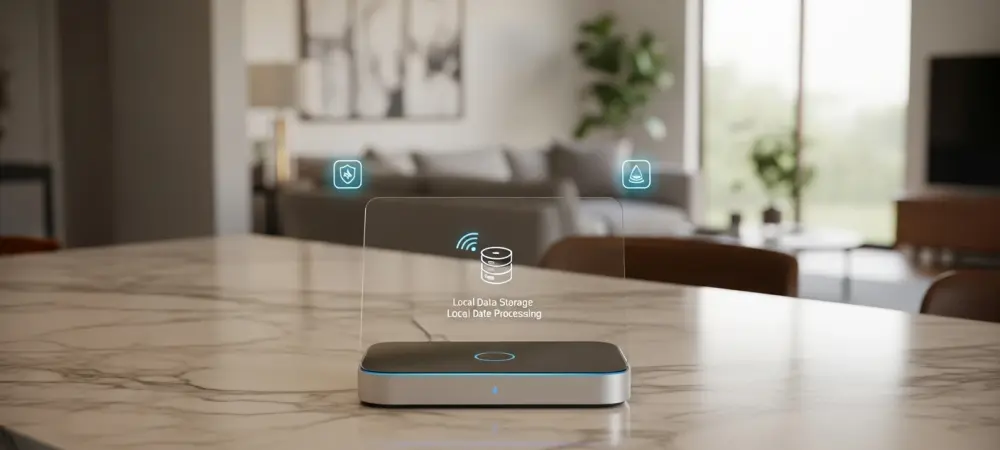
In response to growing privacy concerns, the technology industry is increasingly moving toward hybrid storage solutions that prioritize local-first architectures while offering optional cloud archives. By allowing users to store their most sensitive data, such as high-definition security footage, directly on a local device or a home network storage unit, manufacturers are providing a foundational layer of resilience. This local storage keeps private information out of the reach of external hackers and prevents unauthorized access by third-party service providers. While the cloud still offers the undeniable convenience of remote access and off-site redundancy, the hybrid model ensures that the primary copy of the data remains under the physical control of the user. This approach effectively balances the need for high-speed accessibility with the absolute necessity of data sovereignty and long-term security.
This shift toward hybrid models also addresses the bandwidth and latency issues often associated with uploading large volumes of data to the cloud in real-time. By processing and storing data locally first, smart devices can function more efficiently even when internet connectivity is intermittent or restricted. For Australian consumers, this means that their security systems remain operational during network disruptions, providing continuous protection that cloud-only devices cannot match. Furthermore, the hybrid strategy allows for more sophisticated edge computing, where AI-driven analysis happens on the device itself rather than in a remote data center. This not only enhances the speed of threat detection but also ensures that only the most relevant, metadata-stripped information is ever sent to the cloud. As we move from 2026 toward 2028, these hybrid architectures will likely become the standard for any consumer technology that handles personal or sensitive information.
Aligning Innovation with Modern Security Guardrails
The rapid pace of technological advancement in Australia necessitates a proactive approach where security is integrated as a fundamental guardrail rather than being treated as a secondary consideration. For businesses and individual consumers to safely navigate the autonomous digital economy, there must be a concerted effort to align the speed of innovation with the maturity of defensive systems. This requires a commitment from technology vendors to prioritize transparency in how they handle data and to provide users with the tools necessary to manage their own digital footprints. Organizations that fail to bridge this innovation gap risk losing the hard-earned trust of their customers and may face significant operational disruptions as cyber threats continue to grow in complexity and frequency.
Building a resilient digital future was once a matter of simply installing antivirus software, but it has now evolved into a complex requirement for adaptive, intelligence-driven defenses. Moving forward, Australian firms should prioritize the implementation of Zero Trust principles across all cloud and AI integrations to ensure that every transaction is verified and every autonomous agent is monitored. Additionally, the adoption of hybrid storage models will be crucial for maintaining data sovereignty in an increasingly interconnected world. By fostering a culture of security-first design and maintaining an open dialogue about risk management, Australia can secure its position as a leader in the global digital economy while protecting the integrity of its most critical assets. The path forward is defined by the seamless integration of safety and innovation, ensuring that the technologies of tomorrow do not become the vulnerabilities of today.