

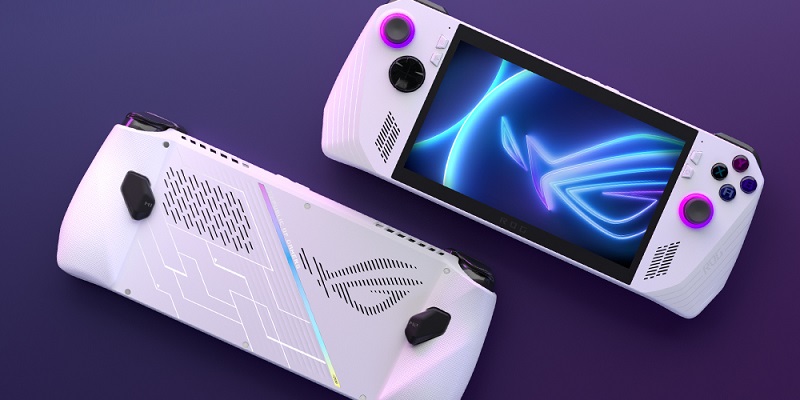
As the handheld gaming market makes a comeback, gaming console manufacturers are trying to woo consumers with advanced technologies and features. ASUS, one of the leading names in the gaming industry, is set to launch its upcoming handheld gaming console, ROG Ally, soon. Recently, Best Buy, the popular consumer electronics retailer, leaked the pricing of the ROG Ally handheld gaming console. The console is expected to cost $699.99 USD, making it a very competitive offering against other consoles in the market.
In this article, we will take a closer look at the ROG Ally handheld gaming console and its features, including the newly announced AMD Ryzen Z1 series processors.
The console features newly announced AMD Ryzen Z1 Series processors
ASUS has confirmed that the ROG Ally will be the first console to feature the recently announced AMD Ryzen Z1 series processors. The processors will come in two flavors, and we can expect the console to have two variants based on leaked benchmarks from a few days ago.
The AMD Ryzen Z1 series is designed to deliver high performance within a low power envelope. The APU offers 50% higher performance than the Valve Steam Deck at 15W, and provides twice the uplift when running at its peak 35W performance mode. The Ryzen Z1 targets 1080p low-quality gaming at 60 FPS using RSR, while the Ryzen Z1 Extreme aims for over 60 FPS with higher visual fidelity using RSR.
ROG Ally to Come in Two Variants Based on Leaked Benchmarks
Based on leaked benchmarks, it appears that the ROG Ally will come in two variants: 16GB LPDDR5 and 512GB NVMe M.2 SSD. These configurations are expected to be priced at $699.99 US, which is a competitive price range compared to the Valve Steam Deck.
The overall design of the ROG Ally handheld gaming console is expected to mirror similar designs seen in the current handheld market. The console will have a sleek, compact design that makes it easy to carry around and use on the go. Additionally, the handheld will have built-in controls that allow gamers to play games without needing an external controller.
Engadget China reveals breakdown of ROG Ally PCB board
Engadget China recently revealed images showing the breakdown of the ROG Ally handheld and the PCB board that will be used to house the AMD Ryzen Z1 Extreme chip. The chip is based on the AMD Ryzen 7 4800U processor and offers compute TFLOPs on par with the PS4 Pro, which is a significant feat for a handheld gaming console.
The Ryzen Z1 Extreme also offers more computational TFLOPs than the original PS4. While the TFLOPs comparison is only for reference, it gives an idea about the performance that the console will be capable of.
In conclusion, the ASUS ROG Ally handheld gaming console is poised to revolutionize the handheld gaming market with its advanced technologies and features. The console’s competitive pricing and advanced AMD Ryzen Z1 series processors make it a compelling choice for gamers seeking a robust handheld gaming console that provides high-quality gameplay experiences. With the impending launch of the ROG Ally, gamers can anticipate a new chapter in handheld gaming.