

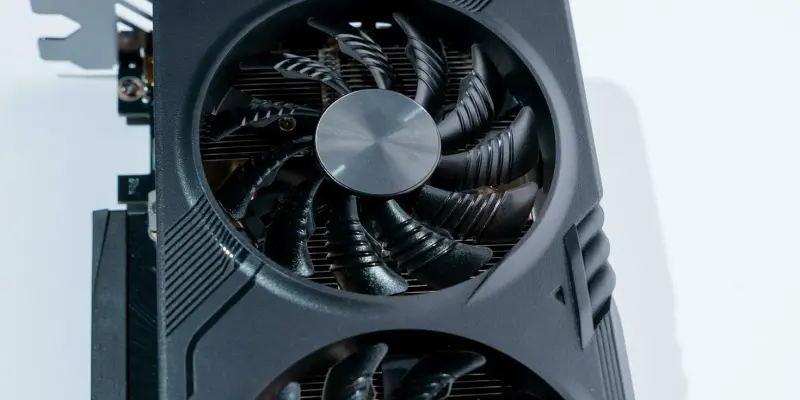
The evolution of graphics processing units (GPUs) has led to a growing challenge regarding their size and weight. As high-end graphics cards become more sophisticated, they also become heavier, contributing to an issue known as GPU sag. This phenomenon can compromise the integrity of the PCIe connection due to the gravitational pull on the bulky hardware over time. As GPUs and their cooling systems grow in size, manufacturers are compelled to find innovative ways to mitigate these challenges. Asus stands at the forefront of this effort, introducing a novel feature in its GPU Tweak monitoring software to address the problem of GPU sag. Dubbed “Equipment Installation Check,” this feature provides users with alerts when the horizontal angle of their installed graphics card deviates excessively, potentially preventing long-term damage. The solution is paramount as GPUs are not just hefty but also costly, illustrated by the new Asus ROG Astral RTX 5090, priced at $3,300 and weighing 6.6 pounds.
Innovative Hardware Solutions
The Asus ROG Astral RTX 5090 is equipped with a Bosch BMI323 IMU gyroscopic accelerometer, which plays a crucial role in detecting and addressing GPU sag. This innovative hardware component senses deviations in the card’s positioning, empowering users to make necessary adjustments before permanent damage occurs. While GPU brackets or braces have been commonly adopted solutions to provide the needed structural support, they might not be sufficient or convenient for all setups. As a response, other companies are also exploring unique solutions. For instance, 51RISC’s inclusion of spirit levels in its RTX 4090 and EVGA’s stabilizing leash for the 3090 Ti highlight how the industry is actively seeking alternate methods to ensure the durability and proper installation of these powerful components. Asus’s attention to this detail not only reflects its commitment to quality assurance but also places consumer safety and investment protection at the forefront of its design priorities.
Addressing the Trend in GPU Sizes
The growth in GPU size is a direct result of the pressure on manufacturers to sustain significant performance enhancements despite the decline of Moore’s Law benefits. As traditional computing advancements reach their limits, there is a greater need for larger cooling systems and increased power to maintain or improve GPU performance. This trend is evident in comparing the ROG Astral RTX 5090 to the TUF 4090; while the RTX 5090 draws slightly less power, it occupies more space and weighs nearly twice as much. Asus is adapting by balancing top-tier performance with structural durability through both hardware and software innovations. This reflects an industry-wide push to overcome design limit constraints, showcasing a shift toward creative structural solutions that assure efficiency and safety. Manufacturers, like Asus, are proactive against issues like GPU sag to address modern hardware demands. They’ve added features such as Equipment Installation Check to minimize peripheral damage, thereby extending the lifespan of valuable components. This approach promises aesthetic and functional solutions to contemporary computing challenges.