

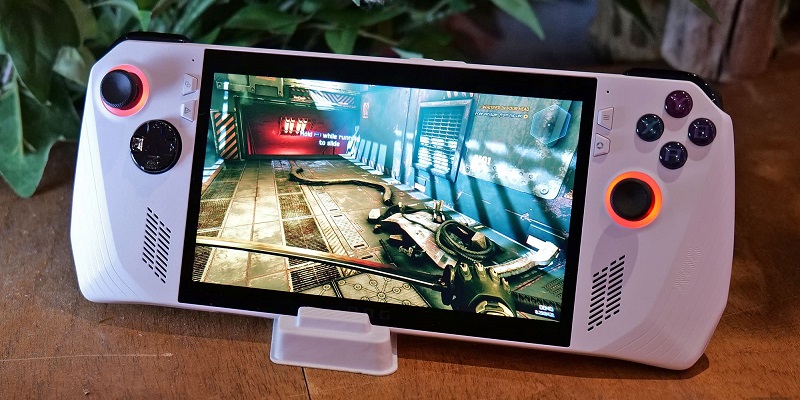
In today’s gaming world, players crave mobility and the ability to take their game on the go. That’s where handheld gaming consoles come in. ASUS has announced the launch of its new ROG Ally handheld gaming PC, powered by AMD’s Zen4 chipset. It’s a direct challenger to Valve’s Steam Deck, offering an impressive package for gaming on the go.
Asus has finally revealed the full specs list and pricing details for its ROG Ally handheld gaming PC. The ROG Ally stands as a formidable competitor to Valve’s recently released Steam Deck. But what makes the ROG Ally such a promising option for gamers? Let’s take a closer look at its specifications.
Overview of ROG Aya and Its Competition with Valve’s Steam Deck
The ROG Ally is a handheld gaming PC designed for gaming enthusiasts who require a console-like experience. It’s a powerful device that promises to offer an excellent gaming experience on the go. The AMD Zen 4 device is a direct challenger to Valve’s Steam Deck, which has captured a significant following in the gaming community.
The ROG Ally brings a 7-inch IPS LCD display with an FHD resolution, a 16:9 aspect ratio, and a 120Hz refresh rate. This ensures a smooth visual experience that enhances gameplay for those on the go.
The ROG Ally offers chipset options, including the Ryzen Z1 and Ryzen Z1 Extreme. The Ryzen Z1 chipset is suitable for casual gamers, while the Ryzen Z1 Extreme is designed for serious gamers and enthusiasts who require maximum performance.
Memory and storage specifications for both models
Both ROG Ally models come with 16GB LPDDR5 dual-channel memory and 256/512GB PCIe 4.0 M.2 SSD of 2230 size. Larger storage sizes will allow for more game titles and faster game load times.
The controller features of ROG Ally include analog thumbsticks with capacitive touch and RGB lighting, a D-pad, ABXY buttons, left and right Hall Effect triggers and bumpers, as well as two assignable grip buttons on the back. This gives gamers maximum control and precision when playing on the go.
In terms of I/O, users get a Type-C combo port with support for USB 3.2 Gen2, a port for connecting external GPUs, a microSD card slot that supports up to UHS-II cards, and a headphone/mic combo jack with ROG Ally. This variety of options allows gamers to customize their gameplay and create an immersive experience tailored to their preferences.
Pricing for both models of ROG Ally
The Ryzen Z1 version (12/256GB) of ROG Ally is priced at $600 in the US and is confirmed to ship in Q3. The more capable Z1 Extreme model (16/512GB) starts at $700 in the US, €800 in Europe, and £700 in the UK.
Availability and pre-order information for the Z1 Extreme model
The Z1 Extreme version is available for pre-order from Asus and local retail partners, with deliveries and open sales starting next month. With its powerful hardware on the inside and excellent price tag on the outside, this device is sure to turn a lot of heads in the gaming community.
The ROG Ally is an impressive handheld gaming PC that comes equipped with the latest technology, making it a serious contender to Valve’s popular Steam Deck. The specifications are sure to attract gamers who desire portability and versatility without sacrificing performance. With the device already on sale, consumers may purchase it and experience the full range of its features.