

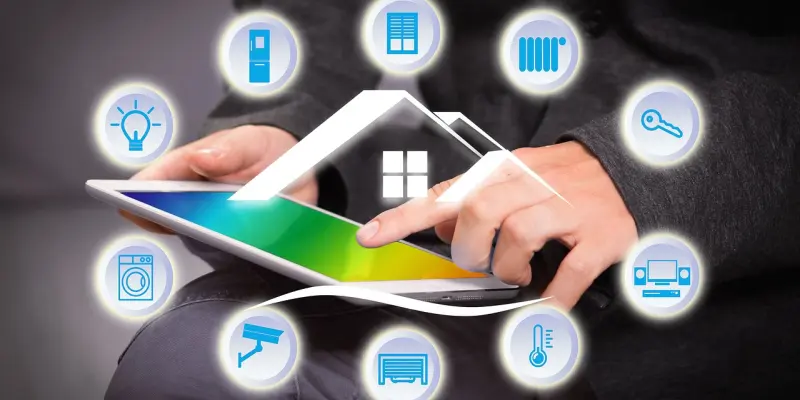
Imagine a world where your home assistant not only follows your instructions but understands your emotions, responds empathetically, and offers personalized support. This vision may seem like science fiction, but recent advancements in artificial intelligence (AI) suggest it could soon become a reality. The concept of artificial empathy is gaining traction as researchers and developers strive to bridge the gap between functional efficiency and meaningful human-like interactions in home service AI. As the demand for more intuitive and responsive AI assistants grows, integrating emotional intelligence into these systems could revolutionize how users experience technology in their daily lives.
Artificial empathy involves creating AI systems that can recognize, understand, and respond to human emotions. It transcends basic command execution to establish trust and rapport with users. Recent studies, such as “Artificial Empathy in Home Service Agents,” explore frameworks for empathic AI interactions that highlight the importance of emotional intelligence in enhancing user experiences. The ability for AI to engage in emotionally-rich interactions can significantly improve usability, particularly in fields like elderly care and mental health support, where understanding and responding to nuanced emotions is crucial.
Types of Empathic AI in Home Service
In the home service domain, researchers have identified three primary types of empathic AI: The Loyal Assistant, The Qualified Butler, and The Reliable Mate. The Loyal Assistant is the most basic form, performing tasks efficiently without recognizing or responding to emotional cues. While functional, this type lacks the emotional depth needed for more meaningful interactions. Users may find these interactions useful yet somewhat impersonal, limiting the potential for establishing deeper connections or providing nuanced support based on emotional states.
The Qualified Butler represents a more advanced AI that recognizes contextual cues and shows a limited understanding of user emotions. It can offer more personalized responses, but its emotional intelligence remains superficial. This type of AI is a step closer to genuinely empathic interactions, yet it still falls short of fully understanding and responding to the complex array of human emotions. The most advanced type, The Reliable Mate, goes beyond mere contextual awareness to engage in emotionally rich interactions. This level of AI is crucial for applications like elderly care and mental health support, where sensitive and responsive interactions can significantly impact user well-being.
Challenges and Limitations
Despite the promising potential of artificial empathy in home service AI, several challenges impede its development. One of the most significant barriers is AI’s current limitations in interpreting complex human emotions. Subtle shifts in tone, non-verbal cues like body language, and the nuances of sarcasm or hesitation are often lost on AI systems, resulting in interactions that may feel robotic or inauthentic. Additionally, reliance on scripted responses can exacerbate this issue, leaving users with a sense of disconnection.
Ethical and privacy concerns also pose substantial hurdles to the development of emotionally intelligent AI. The extensive data collection required to train AI systems in emotional intelligence raises questions about data security and potential misuse. Ensuring robust ethical guidelines and transparent policies is essential to address issues of user consent and the potential for AI to overreach in its understanding and manipulation of personal data. Developers must walk a fine line between creating empathetic AI and respecting user privacy.
Technical Limitations and Solutions
Technical limitations of current AI systems further hinder the realization of artificial empathy. Most AI assistants rely on voice or text-based interactions, which can overlook critical non-verbal cues such as eye contact, body language, and micro-expressions. To effectively exhibit artificial empathy, AI must incorporate multimodal interaction capabilities. Combining voice recognition, facial recognition, and biometric feedback can provide a more holistic understanding of user emotions, allowing for more accurate and empathetic responses.
Looking ahead, adaptive emotional learning represents a significant advancement that could reshape the future of home AI. This approach involves AI systems continuously refining their understanding of users’ emotional patterns over time. By learning from each interaction, AI can provide more relevant and personalized support, adapting its responses based on the user’s mood, context, and behavioral history. Another promising development is the shift towards more naturalistic AI-human interactions, moving away from rigid command structures to dynamic, two-way conversations. This shift can enhance the flow and authenticity of interactions, making AI feel more like a helpful companion than a machine.
Future Considerations and Ethical Implications
As artificial empathy evolves, ethical considerations will become increasingly important. Developers need to focus on creating privacy-preserving AI models that ensure user data security while enabling emotionally intelligent interactions. This includes transparent data policies, secure data storage, and mechanisms for users to control how their data is used. Balancing the benefits of emotionally intelligent AI with the need for privacy and security will be crucial in gaining and maintaining user trust.
Moreover, developers must consider the societal implications of emotionally intelligent AI. As these systems become more integrated into daily life, there is a risk of over-reliance on technology for emotional support, potentially diminishing human-to-human interactions. Additionally, the use of AI in sensitive areas like mental health care must be approached with caution. While AI can provide valuable support, it should not replace professional human care, and developers must ensure that AI interventions are evidence-based and ethically sound.
Conclusion: Towards a More Empathic Future
Imagine a world where your home assistant not only follows your instructions but also understands your emotions, responds empathetically, and offers personalized support. This vision might seem like science fiction, but recent advancements in artificial intelligence (AI) suggest it could soon become a reality. The concept of artificial empathy is gaining traction as researchers and developers work to narrow the gap between functional efficiency and meaningful human-like interactions in home service AI. As the demand for more intuitive and responsive AI assistants increases, integrating emotional intelligence into these systems could transform how users experience technology daily.
Artificial empathy involves designing AI systems that can recognize, comprehend, and react to human emotions. This goes beyond mere command execution to build trust and rapport with users. Recent studies, such as “Artificial Empathy in Home Service Agents,” explore frameworks for empathetic AI interactions and stress the importance of emotional intelligence in enhancing user experiences. AI capable of engaging in emotionally rich interactions can greatly improve usability, especially in fields like elderly care and mental health support, where understanding and responding to nuanced emotions is essential.