

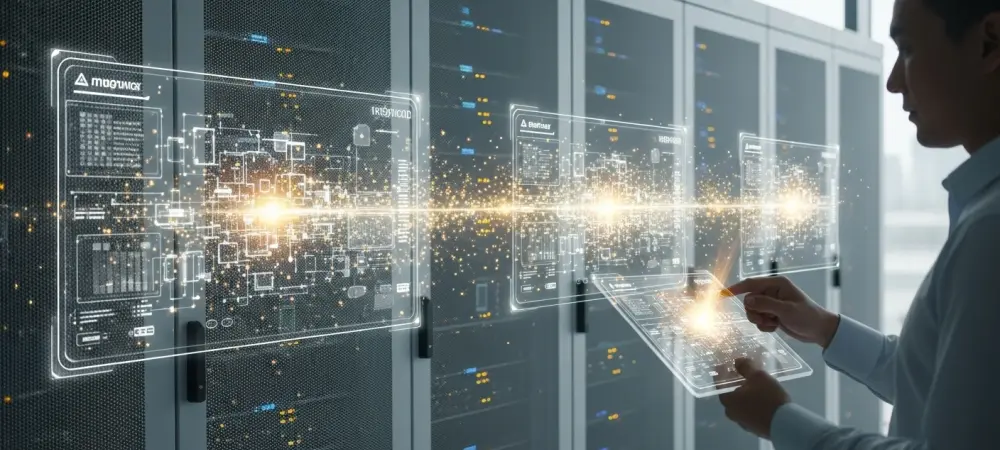
The rapid evolution of sophisticated cyber threats in 2026 demands a fundamental shift from manual oversight to autonomous defense mechanisms that can match the speed of modern attackers. Traditional penetration testing often relies on periodic assessments conducted by human teams, creating significant windows of vulnerability between scheduled audits. As enterprise architectures become increasingly fragmented across multi-cloud environments and decentralized edge networks, the necessity for a persistent, self-evolving security layer has never been more critical. The company has addressed this gap by introducing a system designed to operate beyond the constraints of human-led testing. By leveraging advanced machine learning models that do not merely follow pre-programmed scripts but actually reason through complex attack vectors, the firm seeks to transform how organizations perceive their digital perimeter. This technology effectively bridges the divide between static scanning and the unpredictable reality of a real-world cyber assault.
Orchestrating Collective Intelligence: The Swarm Mechanics
The core of this innovation lies in the transition from monolithic AI models to a distributed ecosystem of specialized agents that collaborate in real-time. Rather than relying on a single general-purpose engine to identify vulnerabilities, the system utilizes a fleet of distinct modules, each optimized for specific domains such as cryptographic weaknesses, broken access controls, or complex business logic flaws. This multi-agent architecture mimics the collaborative efforts of an elite red team, where various specialists share telemetry and findings to uncover deep-seated issues that a single-perspective scan would likely overlook. When one agent identifies a potential entry point, it broadcasts relevant metadata to its peers, allowing the entire swarm to pivot and escalate the simulated attack with surgical precision. This methodology ensures that the testing process is not just a linear checklist but a dynamic hunt that adapts to the unique defensive layers encountered within a target network or application.
Building on this collaborative foundation, the system incorporates a consensus-driven verification layer to eliminate the false positives that historically plagued automated security tools. By requiring multiple specialized agents to validate a discovered vulnerability before it is flagged, the platform reduces the noise typically associated with automated reporting, allowing security analysts to focus on high-priority threats. This internal cross-referencing mechanism allows the swarm to autonomously discard dead-end exploits and concentrate computational resources on the most promising attack paths. Moreover, the swarm maintains a continuous feedback loop where successful exploit chains are documented and used to refine the tactics of the entire group in subsequent iterations. This iterative learning process ensures that the system becomes more efficient over time, developing a bespoke understanding of the environment. Such a granular approach to autonomous testing provides a level of depth previously reserved for manual engagements.
Continuous Validation: Redefining Security in Dynamic Environments
The integration of such autonomous capabilities becomes particularly impactful within high-velocity development environments where code changes are deployed multiple times daily. Modern CI/CD pipelines require security measures that can keep pace without introducing friction or delaying production schedules, a task that manual penetration testing simply cannot fulfill due to human resource constraints. By embedding the swarm intelligence directly into the software development lifecycle, organizations can achieve a state of persistent validation where every significant update is subjected to immediate, rigorous scrutiny. This transition from point-in-time testing to continuous security represents a paradigm shift for enterprises struggling to manage expanding attack surfaces. Furthermore, the ability to simulate realistic adversary behavior on demand allows teams to verify the effectiveness of their defensive controls against actual exploits. This proactive stance ensures that vulnerabilities are remediated before they can be exploited.
Forward-thinking organizations adopted this autonomous model as a prerequisite for maintaining operational resilience in an era where speed and security must coexist. By moving away from stagnant compliance-driven audits, these entities prioritized actionable intelligence and real-world exploitability over generic vulnerability lists. The implementation of swarm-based security allowed IT departments to reallocate their most skilled human assets toward strategic architecture and incident response, rather than repetitive scanning tasks. Decision-makers increasingly recognized that the only viable way to counter AI-driven threats was to deploy equivalent AI-driven defenses that operated with the same level of autonomy and scale. As the technology matured, the focus shifted toward establishing integrated security fabrics where the swarm didn’t just find holes but actively suggested patch logic and configuration changes. This strategic pivot ensured that defensive postures remained robust even as the complexity of the digital landscape grew.