

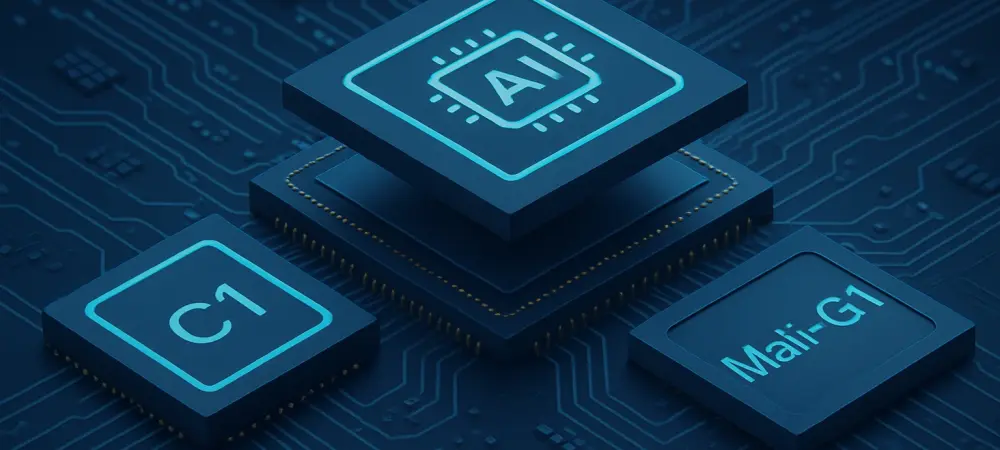
Imagine a world where smartphones handle complex AI tasks like real-time translation or advanced gaming without a hitch, all while lasting days on a single charge. This vision is closer than ever with Arm’s recent unveiling of the C1 CPU series and Mali G1 GPU, a groundbreaking duo designed to turbocharge on-device AI and efficiency. As a semiconductor giant, Arm’s innovations often set the tone for consumer electronics, and this release has sparked lively discussions across the tech community. This roundup gathers insights, opinions, and analyses from various industry perspectives to explore how these new components are poised to reshape AI-powered devices, comparing diverse views on their potential impact and challenges.
Unpacking the Hype Around Arm’s New Tech
What Industry Voices Are Saying About C1 CPUs
Feedback from tech analysts highlights the C1 CPU series, built on the Arm v9.3 architecture, as a game-changer for AI workloads, with performance boosts reported up to five times higher for tasks like voice recognition and image processing. Many industry watchers praise the tiered core structure—ranging from high-powered C1-Ultra to energy-efficient C1-Nano—for its ability to dynamically handle everything from intensive gaming to casual browsing. This adaptability is seen as a step toward more personalized device performance.
However, not all opinions are unanimously positive. Some software development experts express concern over whether app creators can fully tap into this AI potential without significant updates to existing frameworks. There’s a split view on compatibility, with a faction arguing that the leap in power might leave older applications struggling to keep up, potentially creating a fragmented user experience in the short term.
A third perspective comes from hardware manufacturers who are excited about the licensing model that Arm employs, allowing widespread integration into upcoming devices. Many predict a rapid rollout by major players like Qualcomm and Samsung, though they caution that the timeline for seeing these CPUs in budget devices remains unclear, raising questions about accessibility across market segments.
Efficiency Claims: Consensus and Skepticism
On the efficiency front, the C1 series, particularly the C1-Ultra, has garnered attention for a claimed 25 percent performance increase per clock cycle while cutting power consumption compared to previous designs. Mobile device reviewers are optimistic, noting that extended battery life could address a long-standing pain point for users who rely heavily on their gadgets throughout the day. This is seen as a major win for consumer satisfaction.
Contrasting this enthusiasm, some energy efficiency specialists question whether the gains are as universal as promoted, suggesting that the benefits might be more pronounced in specific use cases like AI processing rather than general tasks. They argue that over-optimization for niche workloads could limit the perceived impact for average users who don’t push their devices to the limit.
Another angle comes from competitive analysis, where rival chipmakers’ responses are anticipated to challenge Arm’s efficiency edge. Industry commentators speculate that while the power savings are impressive, competitors might counter with alternative solutions focused on different priorities, such as cost reduction, potentially swaying manufacturers looking for more affordable options.
Mali G1 GPU: Graphics Meets AI
The Mali G1 GPU has sparked intrigue for its dual role in enhancing graphics for gaming and media while supporting AI tasks, a synergy that many visual tech enthusiasts find promising. Reviews from gaming hardware forums emphasize the potential for richer, more immersive experiences on mobile platforms, applauding the integration of AI processing as a forward-thinking move.
Divergent opinions emerge from regional market analysts who note that adoption might vary based on local priorities. In markets where high-end gaming isn’t a primary focus, the GPU’s advanced features could be underutilized, leading to debates on whether its capabilities will resonate equally across global audiences or remain a niche appeal.
A unique take from AI hardware researchers underscores the growing importance of GPUs beyond traditional visuals, highlighting their role in accelerating smarter device interactions. This shift in perception is gaining traction, with many arguing that Arm’s approach could set a new standard for how graphics hardware contributes to overall system intelligence, though some caution that real-world results will depend on software optimization.
Broader Implications for the Tech Landscape
Market Adoption and Industry Shifts
Arm’s licensing model continues to be a focal point, with chip design commentators predicting that the C1 CPUs and Mali G1 GPU will soon appear in a wide array of Android devices, thanks to partnerships with industry giants. This broad reach is viewed as a catalyst for standardizing on-device AI, aligning with current trends toward reduced cloud dependency for faster, more private processing.
A contrasting opinion from market readiness analysts suggests that while flagship devices will likely adopt these technologies swiftly, integration into mid-range and budget categories could lag, echoing past patterns with Arm’s rollouts. They point to the need for chipmakers to balance cost with performance, a challenge that might slow the democratization of these advancements over the next few years.
Another layer of insight comes from consumer electronics trend trackers who believe this release could blur the lines between device tiers. The potential for even lower-end products to feature impressive AI and efficiency capabilities is seen as a transformative possibility, though some warn that manufacturers might reserve the best features for premium models to maintain price differentiation.
Practical Tips for Staying Ahead of the Curve
For tech enthusiasts and developers, industry blogs recommend keeping an eye on device announcements from major brands to spot the first wave of products featuring C1 and G1 components. Early adoption could offer a competitive edge in experiencing cutting-edge performance, especially for those invested in AI-driven apps or high-intensity gaming.
Manufacturers and app developers receive advice from tech consultants to prioritize optimization for local AI processing, ensuring their software can harness the full power of these new chips. This preparation is deemed critical to avoid being left behind as hardware capabilities outpace current application designs, a concern echoed across multiple forums.
End users are encouraged by consumer tech advisors to consider devices with these new Arm technologies when upgrading, particularly if battery life and responsive AI features are priorities. This shift could redefine daily interactions with technology, making it a strategic moment to invest in hardware that aligns with evolving standards of efficiency and intelligence.
Reflecting on Arm’s Bold Step Forward
Looking back, the discussions surrounding Arm’s C1 CPUs and Mali G1 GPU paint a vivid picture of excitement tempered by practical considerations. Diverse opinions from analysts, developers, and market watchers reveal a shared recognition of the potential for enhanced AI performance and energy savings, balanced against challenges in software compatibility and market reach. As a next step, stakeholders are advised to monitor upcoming device releases for real-world applications of this technology, while developers are urged to adapt their creations to fully leverage these advancements. Moving forward, exploring deeper case studies on early adopter experiences could provide valuable lessons, ensuring that both industry players and consumers navigate this AI hardware revolution with informed confidence.