

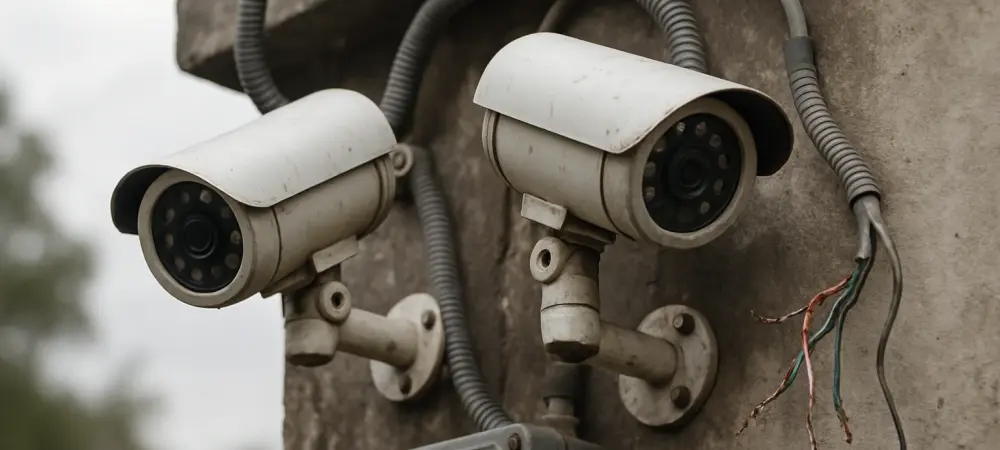
Imagine a scenario where a seemingly harmless security camera, installed to protect a home or business, becomes the very gateway for cybercriminals to infiltrate a network, steal sensitive data, or spy on private moments. This unsettling possibility is no longer just a hypothetical situation but a pressing reality, as highlighted by a recent alert from the U.S. Cybersecurity and Infrastructure Security Agency (CISA). The agency has issued a stark warning about active exploitation of vulnerabilities in specific internet-connected devices, particularly security cameras. These devices, often overlooked in the broader landscape of cybersecurity, are proving to be weak links in the chain of digital defense. As more households and organizations rely on Internet of Things (IoT) technology for surveillance and monitoring, the risks associated with neglecting their security grow exponentially. This discussion delves into the critical nature of these threats, exploring why even niche devices can pose significant dangers when left unprotected.
Unpatched Flaws: A Gateway for Hackers
The core of the issue lies in unpatched vulnerabilities that persist in certain security camera models, making them prime targets for malicious actors. CISA has pinpointed specific flaws in five D-Link camera models, including the DCS-2530L, DCS-2670L, and DNR-322L, cataloged under identifiers such as CVE-2020-25078, CVE-2020-25079, and CVE-2022-40799. These issues range from unspecified weaknesses to severe risks like command injection and unauthorized code downloads due to a lack of integrity checks. Despite the availability of firmware patches to address these problems, a staggering number of devices remain exposed due to negligence or lack of awareness among users. The danger is amplified by the fact that hackers are actively exploiting these known flaws, using them as entry points to access broader networks or sensitive information. This situation underscores a critical gap in cybersecurity practices, where even solutions that are readily accessible fail to be implemented, leaving systems at the mercy of both sophisticated and unsophisticated attackers who capitalize on these easy opportunities.
Urgent Action: Safeguarding Connected Devices
Reflecting on the severity of these threats, CISA took decisive steps by imposing a strict 21-day deadline for federal agencies to develop and execute patch management plans to mitigate the risks posed by these camera vulnerabilities. The agency’s evidence of ongoing exploitation added urgency to the directive, emphasizing that the danger is not a distant possibility but a current crisis affecting both individual users and larger enterprises. Beyond federal mandates, this issue serves as a wake-up call for all who rely on IoT devices, urging a reevaluation of security practices. Moving forward, the focus must shift to proactive measures, such as regularly updating firmware, monitoring for unusual activity, and consulting resources like CISA’s Known Vulnerabilities Catalog for the latest threat information. Manufacturers also bear responsibility to ensure timely security bulletins and accessible patches. By prioritizing these actionable steps, the cybersecurity community can close the gaps that hackers exploit, preventing future breaches and reinforcing trust in connected technologies.