

The staggering cost of a failed Enterprise Resource Planning implementation, a figure that can easily reach into the millions, often traces back not to the technology itself but to the teams tasked with managing it. As organizations navigate the complex digital landscape of 2026, the process of hiring ERP professionals—from analysts to developers—demands a fundamental strategic overhaul. The traditional checklist of technical skills is no longer sufficient. To build a team capable of transforming an ERP system from a mere operational backbone into a powerful engine for growth, C-suite executives must adopt a more sophisticated line of questioning. The interview process must now serve as a rigorous evaluation of a candidate’s practical experience, their ability to think systemically across an integrated enterprise, and their foresight into the technological currents shaping the future. Identifying individuals who possess this holistic blend of hard and soft skills is the first and most critical step in de-risking a company’s most vital technology investments.
Verifying Foundational and Platform-Specific Knowledge
A crucial starting point in the modern ERP interview is establishing a candidate’s alignment with the industry’s definitive pivot to cloud-based architecture. A direct inquiry, such as “What is your cloud experience vs. on-premises experience?”, serves as an essential litmus test. With major vendors like Oracle and SAP focusing their innovation almost exclusively on cloud offerings, proficiency in these environments is no longer a “nice-to-have” but a core competency. This question aims to uncover whether a candidate’s skill set is contemporary or anchored in legacy systems. Following this, it is vital to probe their direct experience by asking, “With what ERP systems are you most familiar?”. However, the goal is not to simply collect a list of platforms like Oracle Fusion Cloud ERP or Sage X3. The real value lies in the candidate’s ability to articulate the nature of their involvement. A compelling response will detail their specific role in a full-cycle implementation or their experience gathering and reconciling business requirements, demonstrating strategic and analytical capabilities that transcend any single platform. This approach helps identify adaptable problem-solvers with valuable transferable skills, even if their background isn’t a perfect match for the company’s current tech stack.
Beyond specific platform knowledge, it is essential to confirm a candidate’s grasp of core architectural principles and validate their credentials. The question, “What are the core components of the average ERP system?”, serves a dual purpose. On the surface, it assesses their fundamental understanding of the database, workflow management, reporting tools, and analytics that form an ERP’s foundation. More profoundly, it evaluates their communication skills. A superior candidate can explain how these intricate components function in concert to a non-technical audience, a critical skill for training end-users and securing buy-in from business stakeholders. This question can also serve as a gateway to deeper technical discussions about data management and platform-specific structures. To add a layer of certainty to a candidate’s claims, a direct inquiry about their professional credentials is non-negotiable. Asking “What certifications do you have?” provides verifiable, third-party validation of their expertise from vendors like SAP, Oracle, or Microsoft. In an industry where resumes can be easily embellished, certifications not only confirm a specific skill set but also signal a commitment to continuous learning and staying current with evolving standards.
Assessing Real-World Performance and Resilience
Moving from theoretical knowledge to practical application is key to identifying candidates who can deliver tangible results. Asking a candidate to “Tell me about a successful ERP implementation in which you participated” shifts the focus to their proven ability to execute. While technical details are part of the story, the interviewer should listen intently for the soft skills that underpin project success. A strong narrative will include clear examples of effective project management, such as finishing on time and under budget, and demonstrate leadership in navigating the often-conflicting demands of different business units. This question provides a platform for the candidate to showcase their teamwork, their experience with budgeting and resource allocation, and how they applied formal training in a real-world context. The goal is to uncover a track record of not just participating in projects but actively contributing to their successful outcomes, turning technological initiatives into measurable business victories.
Equally revealing is an exploration of how a candidate navigates adversity. A behavioral question like “What was your most difficult interface challenge, and how did you deal with it?” is designed to measure resilience, problem-solving skills, and the capacity to learn from setbacks. In many ERP projects, the most significant challenges are not technical but human, stemming from the need to negotiate contradictory requirements from various departments. A top-tier response will articulate the nature of the challenge clearly, outline the specific steps taken to overcome it, and reflect on the lessons learned from the experience. The candidate should demonstrate resourcefulness, strong communication skills, and leadership under pressure. Furthermore, the most impressive answers will connect the resolution of the challenge to concrete business benefits, such as improved operational efficiency, reduced data errors, or significant time savings, proving they understand that their role is ultimately about driving business value.
Uncovering Integration and Systemic Thinking
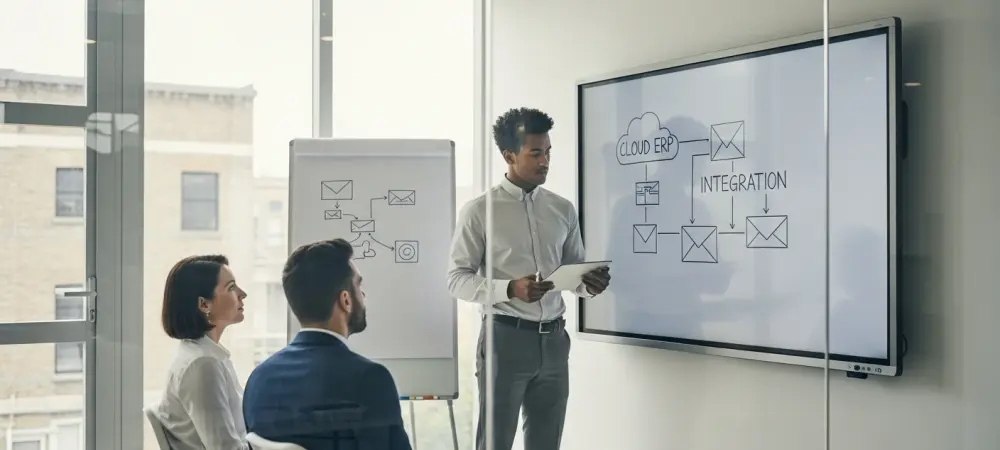
The era of the single, monolithic ERP system has given way to a more distributed and complex architecture of specialized cloud modules and best-of-breed SaaS applications. This evolution makes a candidate’s ability to think systemically more critical than ever. Posing the question, “How did one of your ERP projects integrate with other software platforms?”, is paramount for gauging this competency. An ideal candidate will possess direct experience in creating and executing a comprehensive ERP integration strategy. They should be prepared to discuss their approach to API management, their work with vendor-provided tools versus third-party integration Platform as a Service (iPaaS) offerings like Dell Boomi or MuleSoft, and the nuances of connecting disparate on-premises and cloud-based applications. Critically, their response should also demonstrate an understanding that integration is not a one-time event. A forward-thinking professional will address the need for an ongoing maintenance plan for these connections, a frequently overlooked aspect that is essential for preventing data integrity issues and ensuring the long-term health of the entire enterprise technology ecosystem.
Probing for Future-Focused Technological Acumen
To hire an individual who will be a strategic asset for the future, not just a caretaker of the present, the interview must assess their awareness of emerging technologies. Asking a broad, forward-looking question like “How will technological advancements affect ERP?” effectively separates tactical thinkers from strategic visionaries. This question prompts the candidate to look beyond current operations and consider the impact of transformative technologies such as the Internet of Things (IoT), robotics, Artificial Intelligence (AI), Machine Learning (ML), and blockchain. A strong candidate will not only be familiar with these trends but will also be able to articulate how they can be practically leveraged to enhance a company’s ERP system. For instance, they might discuss how data from IoT sensors can be integrated for advanced analytics and predictive maintenance, or how blockchain can be deployed to create a more secure and transparent supply chain, demonstrating an ability to connect innovation with tangible business opportunities.
Building on that strategic vision, it is vital to drill down into the technologies that are actively reshaping the ERP landscape today. A direct inquiry—”How well versed are you on AI and ML?”—recognizes that these are no longer futuristic concepts but integral components of modern enterprise systems, driving everything from predictive analytics to the automation of routine tasks. This question aims to evaluate a candidate’s hands-on experience with AI and ML tools and their ability to apply them to foster data-driven decision-making and enhance operational efficiency. Finally, to address the needs of an increasingly mobile and distributed workforce, ask “How familiar are you with mobile and IoT ERP?”. As ERP vendors continue to prioritize mobile-first platforms, employees expect to access critical business data and perform key tasks from anywhere. This line of questioning assesses whether a candidate possesses the experience necessary to support and develop solutions for a modern, connected, and mobile-centric business environment, ensuring the ERP system remains a valuable and accessible tool for the entire organization.
A Strategic Shift in Talent Acquisition
The hiring process, when re-engineered with these targeted questions, evolved from a simple staffing function into a strategic imperative. The goal was never just to fill a vacant position but to identify professionals who could navigate the intricate convergence of technology, business processes, and human dynamics. By probing beyond surface-level technical knowledge, the interview became a diagnostic tool for assessing a candidate’s real-world resilience, their capacity for systemic thinking, and their vision for the future. This approach ultimately allowed organizations to build teams that were not only technically proficient but also strategically aligned with the long-term goals of the enterprise, ensuring their ERP investments yielded transformative and sustainable value.