

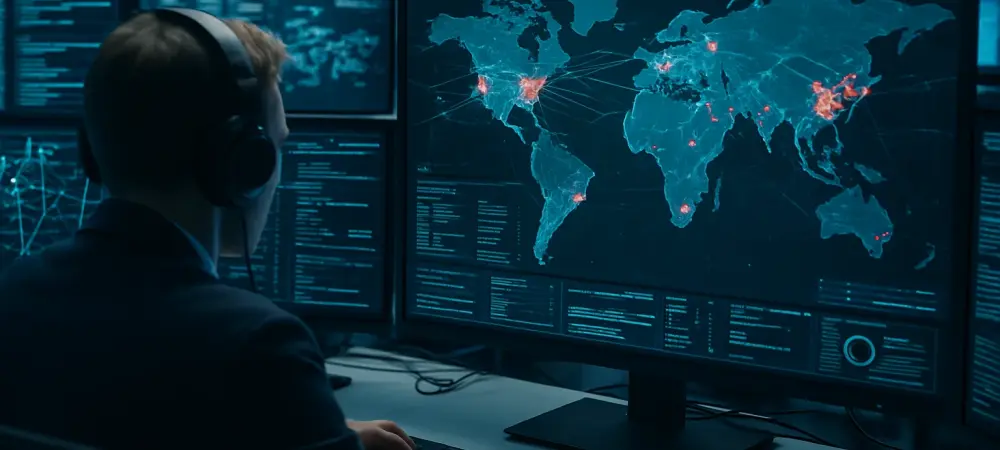
What if the fiercest wars of today are not fought on battlefields but in the invisible realm of cyberspace, where a single line of code can cripple a nation’s defenses? Reports from China’s National Computer Emergency Response Team (CNCERT) have ignited a firestorm of controversy, alleging that US intelligence agencies are orchestrating sophisticated cyberattacks on Chinese military-industrial networks, painting a picture of a hidden conflict that could redefine global security and power dynamics in the digital age. These claims raise urgent questions about trust, technology, and the future of international relations.
The significance of these accusations cannot be overstated. If true, they signal a new era of warfare where digital espionage targets the very backbone of a nation’s defense—its research, manufacturing, and strategic secrets. Beyond the bilateral tension between two superpowers, this story touches on the broader implications for global stability, technology supply chains, and the fragile norms governing cyberspace. As allegations of state-sponsored cyber intrusions mount, the world watches a high-stakes game unfold, one that could shape how nations defend themselves in an increasingly connected world.
Exposing the Digital Battlefield
Deep within the networks that power China’s military-industrial complex, a silent war is allegedly raging. CNCERT reports detail a series of cyberattacks since mid-2025, targeting critical infrastructure with precision and stealth. These incidents are not mere hacks but calculated efforts to extract sensitive data, potentially undermining national security at its core. The scale of the operations, as described, suggests a formidable adversary with resources and expertise far beyond typical cybercriminal groups.
The methods described are chilling in their sophistication. Attackers reportedly exploit zero-day vulnerabilities—flaws unknown even to software creators—in systems like Microsoft Exchange servers. In one documented case from early 2025, a military contractor’s email system was breached, allowing intruders to access over 50 core hosts for nearly a year. Such prolonged access, facilitated by covert tactics, hints at a deliberate strategy to gather intelligence over time rather than strike and retreat.
What sets these attacks apart is the intent behind them. CNCERT’s findings suggest a focus on crippling China’s defense capabilities, targeting proprietary designs and operational data that could tilt military balances. This isn’t just about stealing information; it’s about weakening a nation’s ability to protect itself. As these allegations surface, they cast a spotlight on the evolving nature of conflict in the 21st century, where digital weapons may prove more devastating than physical ones.
Global Stakes of a Cyber Clash
The ramifications of these cyberattacks extend far beyond China’s borders. Military-industrial networks are the lifeblood of any nation’s defense, housing secrets that underpin global standing and security. When such systems are compromised, the fallout ripples through international markets, disrupting technology supply chains that rely on stable partnerships. A breach of this magnitude signals vulnerabilities that could embolden other actors to test similar tactics elsewhere.
Moreover, the escalating digital hostility between superpowers sets a dangerous precedent. If state-sponsored cyber espionage becomes normalized, trust in global systems—already fragile—could erode entirely. Nations may retreat into technological isolation, prioritizing domestic solutions over collaborative innovation. This shift could stifle progress in critical areas like artificial intelligence and telecommunications, where international cooperation has historically driven breakthroughs.
The broader concern lies in the future of warfare itself. Cyberattacks on defense networks are not isolated incidents but glimpses into a world where digital strikes could precede or replace traditional military engagements. As tensions mount, smaller nations and private sectors caught in the crossfire may find themselves unprepared for collateral damage. The urgency to address these risks on a global stage has never been clearer, as the balance of power hangs on a delicate, virtual thread.
Inside the Alleged Cyber Assaults
Delving into the specifics, CNCERT’s reports reveal a pattern of relentless and intricate cyber operations. One notable incident from mid-2025 targeted a defense supplier’s production environment, compromising over 300 devices. Attackers, using IP addresses traced to Romania and the Netherlands, installed Trojanized updates to siphon off proprietary diagrams and specifications. This breach wasn’t a one-off; it was part of a sustained campaign to harvest data critical to military advancements.
The technical prowess on display is staggering. Custom mechanisms, such as encrypted command-and-control channels disguised as messaging services, allowed attackers to maintain persistent access while evading detection. Dynamic log wiping and reconnaissance of defense-specific security systems further masked their presence. These tactics demonstrate not just skill but a deep understanding of the target’s infrastructure, pointing to significant planning and resources behind the operations.
Perhaps most alarming is the use of relay nodes in countries like Germany and Finland to obscure the origin of attacks. Such obfuscation is a hallmark of state-sponsored actors, designed to complicate attribution and accountability. These details, as laid out by CNCERT, build a compelling case for a highly coordinated effort to penetrate and exploit China’s most sensitive networks, raising questions about the ultimate goals of such intrusions in the geopolitical arena.
Expert Perspectives and Hard Evidence
CNCERT’s technical analysis offers a stark portrayal of an adversary with unparalleled capabilities, directly implicating US intelligence agencies in the attacks. Their reports cite specific methodologies, including the exploitation of obscure vulnerabilities and the deployment of bespoke malware, as evidence of a well-funded operation. Cybersecurity analysts note that such sophistication aligns with the tactics of advanced persistent threat groups often linked to state actors, lending credence to the accusations.
During high-level discussions with technology firms like Nvidia, the Cyberspace Administration of China voiced deep concerns over supply-chain vulnerabilities. The fear that foreign hardware and software might contain hidden backdoors has fueled calls for reduced reliance on external tech. This sentiment resonates with global experts who warn that embedded risks in critical systems could be weaponized, amplifying the stakes of digital dependency in defense sectors.
While no official response from US authorities is referenced, the narrative from China’s side is one of urgency and defiance. Cybersecurity professionals worldwide acknowledge that the described attack patterns match historical profiles of state-backed operations. This convergence of technical evidence and expert insight underscores a troubling reality: cyberspace has become a primary theater for geopolitical rivalries, with defense networks as prime targets.
Building Defenses Against Invisible Threats
Confronting such advanced cyber threats demands robust and proactive measures, especially for nations safeguarding critical infrastructure. One essential step is aggressive patching and monitoring—updating systems to seal zero-day vulnerabilities and deploying intrusion detection tools to spot covert channels. Regular audits can help identify anomalies before they escalate into full-scale breaches, a lesson drawn from past incidents of prolonged unauthorized access.
Securing the supply chain is equally vital. Nations must audit foreign-sourced technology for potential risks, prioritizing domestic alternatives where possible. This approach, echoed in China’s dialogue with tech giants, aims to minimize exposure to pre-installed threats. Building resilience through localized solutions could redefine how countries approach technological sovereignty in defense and beyond.
Finally, enhancing incident response capabilities and fostering international dialogue are critical. Rapid-response teams must be equipped to detect and contain breaches swiftly, while global discussions on cyber norms could prevent further escalations. These strategies collectively represent a call to fortify digital borders, ensuring that nations are not left vulnerable to unseen enemies in an era where cyber warfare reigns supreme.
In reflecting on this saga of alleged cyberattacks, it is evident that the digital realm has transformed into a battleground of unprecedented complexity. Nations like China face relentless pressure to protect their defense networks from sophisticated adversaries. The incidents detailed by CNCERT serve as a stark reminder of the vulnerabilities inherent in a hyper-connected world. Moving forward, the path demands not just stronger defenses but a concerted global effort to establish rules for cyberspace. Only through collaboration and innovation can the specter of digital warfare be contained, paving the way for a more secure future.