

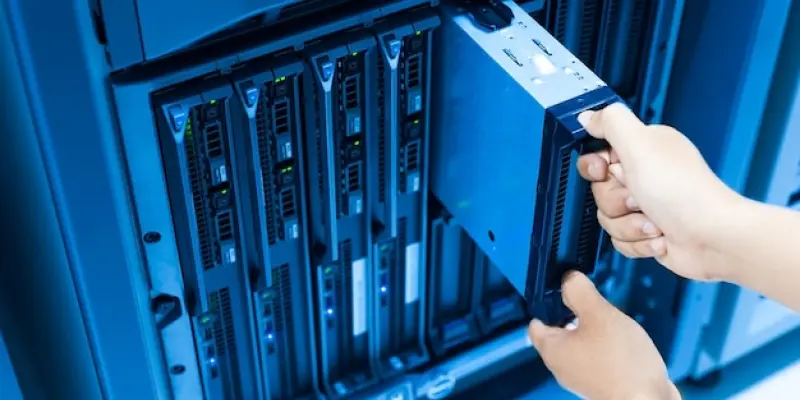
The decision by the Department of Government Efficiency (DOGE) to replace 14,000 magnetic storage tapes of the U.S. General Services Administration (USGSA) with new digital formats has stirred a debate among experts and industry observers. Aimed at saving approximately $1 million annually, this move has faced criticism from advocates of magnetic tape storage, who argue that this technology remains indispensable for many applications. Far from being an outdated medium, magnetic tapes—particularly Linear Tape-Open (LTO) drives—continue to evolve and offer several significant benefits, especially for businesses and government agencies.
Magnetic Tapes in the Modern Era
Evolution and Capabilities of LTO Tapes
Despite the rapid advancements in digital storage technology, magnetic tapes such as LTO drives have kept pace by continually evolving to meet modern needs. While hard disk drives (HDDs) and solid-state drives (SSDs) are indeed faster, LTO tapes distinguish themselves by offering vast storage capacities at a significantly lower cost. For instance, current IBM LTO drives can store up to 150 terabytes (TB) per cartridge, a feature that underscores their utility for large-scale data storage. This enormous capacity allows organizations to maintain extensive archives without incurring prohibitive expenses. LTO tapes also excel in security, primarily because they are offline except during specific backup and recovery processes. This offline nature provides a robust defense against cyberattacks and ransomware, shielding critical data from unauthorized access. The demand for LTO tapes reached unprecedented levels recently, driven partly by a rise in ransomware incidents which highlighted the importance of secure offline backups. By mitigating threats of data encryption and deletion, LTO tapes have established themselves as a resilient component of a comprehensive data protection strategy. Critics of the DOGE’s decision contend that transitioning to more connected digital formats could expose data to increased cyber vulnerabilities.
Longevity and Sustainability
Another advantage of LTO tapes lies in their durability and long lifecycle. Properly maintained LTO tapes can last up to 30 years, a longevity unmatched by many other storage media. For comparison, DVDs—another medium often used for archival purposes—are susceptible to disc rot and can degrade much faster. This extended lifespan of LTO tapes ensures that vital data remains accessible and intact for decades, providing a reliable option for long-term storage needs. In addition to their durability, LTO tapes are also more energy-efficient than conventional digital storage drives. They consume less power during both storage and data retrieval processes, aligning well with the sustainability goals of many organizations today. As businesses and governmental bodies increasingly prioritize environmental considerations, the energy efficiency of LTO tapes becomes a significant factor in their continued relevance. For entities looking to balance performance with ecological responsibility, LTO tapes present a compelling choice.
Controversial Decisions in Data Management
Concerns Over DOGE’s Approach
The Department of Government Efficiency, established under President Trump’s administration to streamline government expenditures, has faced persistent scrutiny for its methods and decisions. Founded by Elon Musk, the agency has been involved in numerous controversial practices, including extensive layoffs and the assignment of sensitive data management tasks to very young personnel. This backdrop of contentious decisions ignites skepticism about their latest move to phase out LTO tapes in favor of new digital formats. Critics have highlighted the potential risks associated with this transition, especially concerning data security and handling. The reliance on younger, less experienced individuals for critical data management roles raises questions about the adequacy of security measures in place. Given that LTO tapes provide a robust offline storage solution, experts argue that an abrupt shift to more interconnected digital systems could inadvertently increase the threat landscape. The DOGE’s initiative, while pursued in the name of efficiency and cost-cutting, may overlook the nuanced needs and risks inherent in governmental data storage.
Balancing Modernization With Reliability
The conversation around DOGE’s decision brings to light a broader dilemma faced by many organizations: the balance between modernization and the maintenance of proven, reliable technologies. While the appeal of newer, faster, and more connected storage solutions is undeniable, the reliability and security of established technologies like LTO tapes cannot be dismissed lightly. For agencies and businesses that handle sensitive data, the offline nature and extended lifecycle of LTO tapes offer tangible benefits that newer solutions might lack.
Modernization efforts should consider an integrative approach, where incremental upgrades coexist with time-tested technologies. Such a strategy ensures that as digital storage evolves, it does so without compromising data security and integrity. By selectively adopting new technologies while retaining core elements of older systems, organizations can craft a balanced and resilient data management infrastructure. The DOGE’s decision to completely phase out LTO tapes might save costs in the short term, but it could also entail longer-term risks and losses if critical data were to be compromised.
Future Considerations for Data Storage
Evolving Needs and Technological Advances
As the technology landscape continues to evolve, so too will the needs and solutions in data storage. Future advancements may bring about hybrid systems that combine the best features of LTO tapes with those of digital formats, providing enhanced security, cost efficiency, and storage capacity. Such innovations could offer a middle ground, allowing organizations to harness new technologies without forgoing the security benefits of offline storage. The demand for secure, high-capacity storage solutions will persist, driven by the exponential growth of data in various sectors. While LTO tapes have proven their worth in terms of durability and security, ongoing research and development efforts are likely to enhance these capabilities further. By staying abreast of technological trends and making informed decisions, organizations can navigate the complexities of data storage effectively.
Strategic Decision-Making in Data Management
For governmental bodies and businesses alike, strategic decision-making in data storage requires a thorough understanding of both current technologies and future trends. Rather than adopting an all-or-nothing approach, a nuanced strategy that evaluates the specific needs and risks associated with different storage media will yield the best outcomes. Modernization should be pursued judiciously, with due consideration given to the unique advantages of established systems like LTO tapes.
Ultimately, the goal should be to create a robust, adaptable data storage infrastructure that can meet evolving requirements without compromising security and reliability. By balancing innovation with tradition, organizations can ensure that their data storage practices remain resilient in the face of changing technological landscapes.
Reflection on Magnetic Tapes
The Department of Government Efficiency (DOGE) has decided to replace 14,000 magnetic storage tapes of the U.S. General Services Administration (USGSA) with new digital formats. This decision, aimed at saving around $1 million annually, has ignited a debate among experts and industry watchers. Critics, particularly advocates of magnetic tape storage, argue that this technology still holds great value for numerous applications. Despite perceptions of being outdated, magnetic tapes, especially Linear Tape-Open (LTO) drives, have continued to progress and provide several critical benefits. These advancements make them particularly valuable for businesses and government agencies. For many, the reliability, longevity, and cost-effectiveness of magnetic tapes make them an essential component for data storage solutions. The tension between modernization and the enduring value of LTO technology highlights the challenges and considerations in the ongoing evolution of data storage methodologies.