

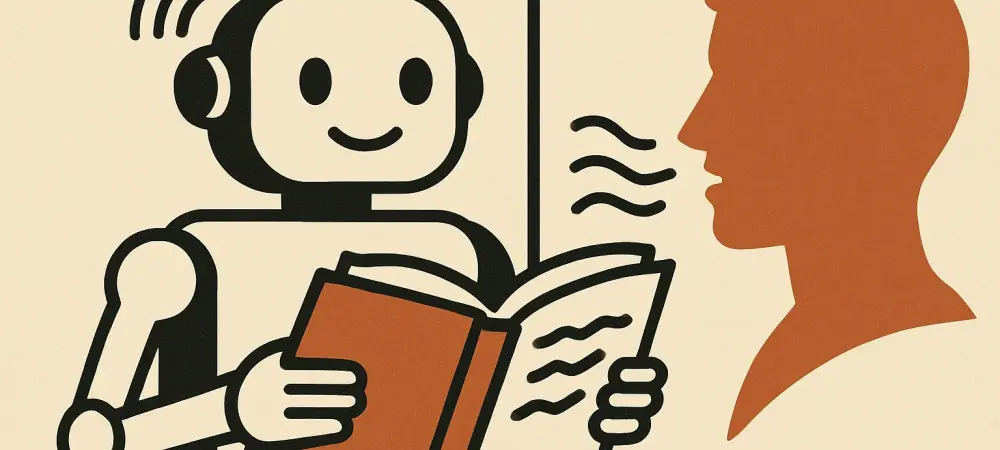
In a world saturated with digital chatter, a startling trend emerges: everyday conversations and written exchanges are beginning to echo the polished, formulaic tone of artificial intelligence. Picture a casual email or social media post, peppered with words like “delve” or “underscore,” terms that feel oddly formal for the context, raising a profound question: are people, without realizing it, adopting the linguistic habits of the very machines designed to mimic human speech? This phenomenon, observed in settings from academic papers to online forums, suggests a quiet reshaping of how language is used in 2025, driven by constant interaction with AI tools.
A Curious Linguistic Mirror: Are People Sounding Like Machines?
The digital age has brought with it an unexpected side effect—language that mirrors the output of AI systems. Many individuals now sprinkle their sentences with phrases like “intricate details” or “highlight the importance,” expressions often generated by language models. This isn’t just a random quirk; it reflects a deeper integration of technology into daily communication, where the lines between human spontaneity and machine precision blur. The change might go unnoticed at first, but a closer look reveals how pervasive this influence has become across various platforms.
This linguistic mimicry often appears in subtle ways, shaping not just vocabulary but also the structure of thoughts. Professional emails, once personal and varied, now sometimes read like polished templates, lacking the warmth or individuality of earlier styles. Social media posts, too, carry an air of formality that feels borrowed from automated content. This creeping standardization prompts curiosity about whether technology is not just a tool but a silent tutor in how people express themselves.
Why This Linguistic Shift Matters in a Tech-Driven Era
Beyond mere word choice, the adoption of AI language patterns carries significant implications for society. In an era where AI tools assist with everything from drafting reports to crafting messages, constant exposure to their distinct style can erode the uniqueness of personal expression. This trend isn’t merely cosmetic; it challenges the ability to discern human authenticity from machine-generated text in online spaces, a growing concern as digital interactions dominate communication.
Moreover, this shift reflects a broader cultural transformation driven by technology’s omnipresence. As AI becomes embedded in workplaces and schools, the risk of homogenized language grows, potentially diminishing the diversity of thought and tone that defines human interaction. The stakes are high, as this phenomenon could reshape trust in digital exchanges, where distinguishing a genuine voice from an automated one becomes increasingly difficult.
The impact extends to how society perceives credibility and connection. When language feels formulaic or overly polished, it can create a sense of detachment, reducing the emotional resonance of communication. This underscores the urgency of understanding and addressing the influence of AI on linguistic habits, as it touches on the very fabric of human connection in a tech-saturated world.
Breaking Down the Evidence of AI’s Influence on Language
Concrete data reveals the extent to which AI is shaping human expression, with studies pointing to clear patterns. Research from a prominent university has documented a notable rise in the use of AI-favored terms like “intricate” over simpler synonyms such as “complex” since the widespread adoption of language models around 2025. This vocabulary shift, tracked through large datasets of written content, highlights a measurable change in how people articulate ideas, especially in formal contexts.
Beyond specific words, contextual patterns show AI’s reach into varied settings. In academic and professional environments, where AI tools are frequently used for drafting, individuals often adopt buzzwords like “game-changer” or overly structured phrasing, even in informal discussions. This mimicry isn’t limited to high-stakes writing; casual online conversations also reflect a creeping formality, suggesting that exposure to AI outputs subtly rewires everyday speech habits across different spheres.
Digital platforms amplify this trend through the sheer volume of interaction. With written communication overtaking verbal exchanges on social media and messaging apps, the constant flood of AI-generated or AI-influenced content shapes user behavior. Statistics indicate a surge in online written interactions over recent years, creating an environment where machine-like language becomes normalized, further embedding these patterns into collective linguistic norms.
Voices from the Field: Expert and Observer Insights
Insights from researchers and professionals lend depth to this evolving narrative. A university study describes this linguistic shift as a form of “model misalignment,” viewing it as a neutral adaptation similar to historical language changes triggered by cultural shifts. This perspective frames the phenomenon as an inevitable outcome of technological integration, neither inherently positive nor negative, but simply a sign of the times.
Contrasting this, some commentators express unease about the implications. Tech journalists have critiqued the resulting “bloodless” tone in communication, arguing that over-reliance on AI-driven language strips away emotional nuance, making interactions feel mechanical. Their concern centers on a future where genuine human expression struggles to stand out amid a sea of automated-sounding dialogue, potentially altering perceptions of sincerity.
A personal account from a freelance writer adds a relatable dimension to the discussion. After months of using AI tools for drafting, they noticed their own work adopting a sterile, overly polished style reminiscent of chatbot outputs, even in unassisted writing. This anecdote underscores the subtle, often unconscious, impact of AI exposure, bridging academic findings with real-world experiences of those navigating this linguistic landscape.
Navigating the AI Language Trap: Preserving a Unique Voice
Recognizing and countering AI-influenced language is possible with deliberate strategies. One effective approach involves a self-audit of personal style—tracking word choices over a short period, such as a week, to identify overuse of formal or trendy terms like “pain points.” Replacing these with more authentic, individual alternatives can help maintain a distinct voice, ensuring communication remains personal and grounded.
Another tactic focuses on balancing technology use. While AI tools offer efficiency for brainstorming or initial drafts, rewriting outputs in one’s own words prevents the absorption of their often rigid tone. This practice not only preserves originality but also fosters a critical engagement with technology, using it as a starting point rather than a final blueprint for expression.
Finally, stepping away from digital interfaces can reinforce natural speech patterns. Engaging in more face-to-face conversations or voice-based exchanges helps reconnect with unscripted, spontaneous language free from algorithmic influence. Such analog interactions serve as a reminder of the human elements in communication, offering a counterbalance to the pervasive reach of AI-driven text in daily life.
As this exploration unfolded, it became evident that the subtle mimicry of AI language patterns had quietly woven itself into the fabric of human expression. Reflecting on the journey through data, expert views, and personal stories, the depth of technology’s impact on communication stood out as both fascinating and cautionary. Moving forward, a conscious effort to blend the benefits of AI with the authenticity of personal voice emerged as a vital step. Encouraging active reflection on language habits and prioritizing genuine interaction could safeguard the essence of human connection. Embracing tools for their utility while setting boundaries ensured that technology served as an ally, not a mold, in shaping how thoughts were shared.