
Are G.Skill’s DDR5 6000 RAM Kits the Best Choice for Ryzen 9000 Users?

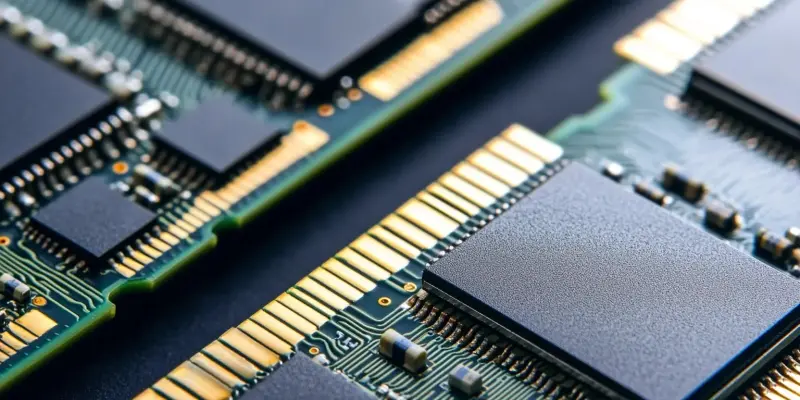
In a significant development for the PC hardware community, G.Skill recently introduced its low-latency DDR5 6000 memory kits tailored specifically for the AM5 platform and Ryzen 9000 processors. These advanced memory kits are available under the Trident Z5 Royal Neo RGB, Trident Z5 Neo RGB, and Ripjaws M5 Neo RGB product families, designed to offer users ultra-low latency with timings as low as CL26 at a memory speed of 6000 MT/s. This is particularly advantageous for AMD platform owners seeking to optimize performance.

G.Skill’s new memory kits come in a variety of capacities, addressing different user requirements with options such as 16 GB, 32 GB, and 48 GB kits. For mainstream PC users, including gamers and office workers, the 2x 16 GB and 2x 32 GB kits are well-suited. On the other hand, the 2x 48 GB kit, totaling 96 GB, caters to content creators and professionals who need more substantial memory capacity for resource-intensive tasks.

Notably, the 2x 32 GB RAM kit stands out as the world’s first 64 GB kit to achieve such low latency with CL26-36-36-96 timings. However, this level of performance is achievable only on select X670 motherboards. One key example is the ASUS ROG Crosshair X670E Hero motherboard paired with an AMD Ryzen 9 7950X CPU. This highlights the importance of high-end motherboard support for users aiming to achieve these ultra-low latency timings.

A significant feature of these new memory kits is the implementation of AMD EXPO support. This enables high clock speeds and facilitates easy overclocking directly out of the box, allowing users to optimize their systems for improved performance without needing extensive manual adjustments. It’s a crucial feature for those looking to maximize the potential of their hardware setups.

In summary, G.Skill’s new DDR5 6000 memory kits represent an impressive advancement for users of the AM5 platform and Ryzen 9000 processors. By offering a combination of high memory speeds and ultra-low latency, these RAM kits are designed to meet the varied needs of mainstream gamers, professionals, and demanding content creators. The emphasis on AMD EXPO support and compatibility with specific high-end motherboards underscores the importance of an optimal hardware setup to leverage these gains fully. This release sets a new standard for memory performance, reinforcing G.Skill’s reputation as a leader in the high-performance memory market.

Explore more

Trend Analysis: Alternative Assets in Wealth Management

The traditional dominance of the sixty-forty portfolio is rapidly dissolving as high-net-worth investors pivot toward the sophisticated stability of private market ecosystems. This transition responds to modern volatility and geopolitical instability. This analysis evaluates market data, real-world applications, and the strategic foresight required to navigate this new financial paradigm. The Structural Shift Toward Private Markets Market Dynamics and Adoption Statistics

Trend Analysis: Embedded Finance Performance Metrics

While the initial excitement surrounding the integration of financial services into non-financial platforms has largely subsided, the industry is now waking up to a much more complex and demanding reality where simple growth figures no longer satisfy cautious stakeholders. Embedded finance has transitioned from a experimental novelty into a foundational layer of the global digital infrastructure. Today, brands that once

How to Transition From High Potential to High Performer

The quiet frustration of being labeled “high potential” while watching peers with perhaps less raw talent but more consistent output secure the corner offices has become a defining characteristic of the modern corporate workforce. This “hi-po” designation, once the gold standard of career security, is increasingly viewed as a double-edged sword that promises a future that never seems to arrive

Trend Analysis: AI-Driven Workforce Tiering

The long-standing corporate promise of a shared destiny between employer and employee is dissolving under the weight of algorithmic efficiency and selective resource allocation. For decades, the “universal employee experience” served as the bedrock of corporate culture, ensuring that benefits and protections were distributed with a degree of egalitarianism across the organizational chart. However, as artificial intelligence begins to fundamentally

Trend Analysis: Systemic Workforce Disengagement

The current state of the global labor market reveals a workforce that remains physically present yet mentally absent, presenting a more dangerous threat to corporate stability than a wave of mass resignations ever could. This phenomenon, which analysts have termed the “Great Detachment,” represents a paradoxical shift where employees choose to stay in their roles due to economic uncertainty while