

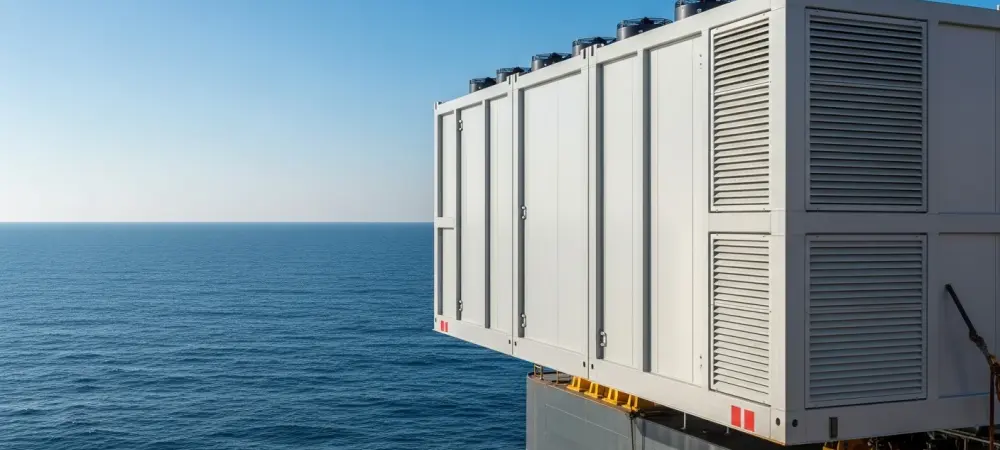
Bridging the Gap Between Maritime Engineering and Artificial Intelligence
The relentless surge in large language model training is currently forcing a total re-evaluation of how industrial-scale electricity is delivered to the most dense computing clusters on the planet. As terrestrial grids groan under the weight of unprecedented demand, a profound shift is occurring where the digital world meets the maritime industry. The emergence of floating data centers represents a strategic pivot for infrastructure developers who are no longer willing to wait for the expansion of aging electrical networks. By moving high-density computing from land-locked warehouses to specialized vessels, the industry is finding a way to bypass traditional bottlenecks that have threatened to stall the momentum of the current technological revolution. This analysis examines how the integration of heavy maritime engineering and advanced computational needs is creating a new blueprint for the global digital economy.
The central challenge facing modern developers is the physical reality of power density. Traditional facilities are often limited by the local utility’s ability to provide massive amounts of electricity in concentrated areas, leading to project delays that can stretch into years. In contrast, the use of water-adjacent infrastructure allows for a more fluid approach to site selection and power sourcing. This movement is not merely a creative workaround but a fundamental reorganization of infrastructure that prioritizes speed and proximity to energy sources. As coastal regions become the new frontier for these massive projects, the technical expertise required to manage offshore assets is becoming as critical as the software used to manage the servers themselves.
The Texas Power Crisis and the Limits of the Modern Grid
The current infrastructure squeeze is perhaps most visible in the Texas energy market, where the electrical reliability council is facing a backlog of connection requests that defies traditional expansion strategies. With data centers making up the vast majority of new demand, the grid has reached a point where existing capacity simply cannot keep up with the speed of industrial growth. This has led to a landscape where regulatory oversight is tightening, and developers are being told that the only way to move forward is to provide their own power. The limitations of the modern grid have turned what was once a conceptual “ship-in-a-bottle” idea into a necessary strategy for those who need to scale their operations quickly.
Historical shifts in industrial power usage have often been reactive, but the current situation in Texas has forced a proactive search for alternative deployment models. The realization that the land-based grid is no longer a guaranteed utility has shifted the focus toward coastal industrial zones. These areas often house older power generation plants that have the necessary output but lack the transmission infrastructure to send that energy across the state. By placing the data center directly next to the source of the power, developers are able to utilize energy that might otherwise be underutilized or stranded. This approach provides a level of security that is becoming increasingly rare in a market defined by scarcity and intense competition for resources.
Navigating the Technical and Regulatory Waters of Floating Infrastructure
Direct Power Integration and the End of the Interconnection Queue
The primary economic advantage of a floating model lies in its ability to facilitate direct power integration, which effectively sidesteps the lengthy interconnection queues that plague terrestrial projects. By mooring 50-megawatt data modules directly adjacent to existing coastal power plants, such as combined-cycle gas turbine facilities, developers can create a “behind-the-meter” connection. This allows for the immediate utilization of high-voltage electricity without the need for additional substations or miles of new transmission lines. This proximity ensures that the computing clusters are not competing with residential neighborhoods for energy, providing a specialized environment where high-density loads are the priority rather than an afterthought.
Furthermore, this model allows for a more predictable development timeline. In a market where the window for competitive advantage in artificial intelligence is measured in months, the ability to eliminate the uncertainty of grid approval is invaluable. Projects that utilize maritime infrastructure can be operational much faster than their land-based counterparts, primarily because the electrical work is contained within a controlled industrial environment. This efficiency not only reduces the capital expenditure associated with long delays but also provides investors with a clearer path to profitability. The ability to deploy modular units as demand increases further enhances the scalability of this approach, making it an attractive option for hyperscalers who need to expand rapidly across different geographic regions.
Environmental Sustainability Through Non-Evaporative Cooling
One of the most pressing concerns for local communities is the massive consumption of water required by traditional cooling systems. Floating data centers address this issue by utilizing closed-loop, non-evaporative cooling technologies that do not consume potable water. By leveraging the natural thermal properties of the surrounding water without discharging waste heat or processed fluids back into the ecosystem, these facilities offer a zero-discharge alternative. This is particularly significant in drought-prone areas where the use of millions of gallons of fresh water for server cooling is becoming socially and politically untenable. The shift toward non-evaporative methods reflects a broader trend toward more sustainable industrial practices that prioritize resource conservation.
In addition to water savings, the maritime design inherently reduces other environmental impacts such as noise pollution. Traditional data centers often require massive banks of external fans and cooling towers that generate significant acoustic disruption, often leading to friction with local residents. By housing the cooling apparatus within the hull of a vessel and using water-to-water heat exchangers, the noise profile is drastically lowered. This makes floating facilities much easier to permit in coastal industrial zones that might otherwise be sensitive to the presence of large-scale technology hubs. The ability to minimize the physical and environmental footprint of these facilities is becoming a key differentiator for companies looking to maintain a positive public image while expanding their digital capabilities.
Engineering Resilience and International Safety Standards
The transition to a maritime environment brings with it unique engineering challenges, ranging from salt-air corrosion to the physical impact of wave action. To meet the high reliability standards required for modern computing, these floating units are designed to adhere to international maritime safety codes. Classification by organizations such as the American Bureau of Shipping ensures that every module meets rigorous standards for structural stability, fire suppression, and environmental isolation. This level of engineering rigor is comparable to what is found in the offshore oil and gas industry, where equipment must operate in much harsher conditions than those found in sheltered harbors. By building these facilities in world-class shipyards, developers can achieve a level of precision that is difficult to replicate on a standard construction site. The factory-built approach allows for construction to occur in parallel with site preparation, significantly shortening the overall project duration. Each module is treated as a high-tech vessel, equipped with redundant systems to ensure the “five-nines” of uptime that are essential for critical data processing. This focus on engineering resilience demonstrates that the maritime environment, while challenging, provides a controlled and stable platform for the next generation of digital infrastructure. As the industry matures, these safety and reliability standards will likely become the benchmark for all water-adjacent computing projects.
The Shift Toward Modular Shipyard Manufacturing and Global Scaling
Looking toward the future, the industry is increasingly moving toward a modular, “plug-and-play” architecture that favors shipyard manufacturing over traditional onsite builds. The ongoing shortages of specialized labor and the disruption of global supply chains have made land-based construction more volatile and expensive. Shipyards, however, are designed for the high-volume production of complex industrial assets, making them the ideal setting for the mass production of data modules. This shift allows for a more globalized approach to infrastructure, where units can be manufactured in one part of the world and towed to their final destination across the globe. This level of mobility provides a strategic advantage for companies that need to pivot their capacity based on changing market demands or regulatory environments.
This trend is also fostering a new level of cooperation between the technology sector and traditional heavy industry. Shipbuilders are diversifying their portfolios by moving into high-tech infrastructure, while technology companies are gaining access to the massive manufacturing capacity of the maritime world. As projects expand beyond Texas and into regions like California, the ability to scale these solutions will be the primary driver of market growth. The focus is shifting from whether these facilities are viable to how quickly they can be deployed at a gigawatt scale. This maturation of the market suggests that the maritime model will not remain a niche solution but will instead become a standard component of the global data infrastructure landscape, particularly in coastal urban centers where land and power are at a premium.
Best Practices for Implementing Water-Adjacent Digital Solutions
For stakeholders navigating this new landscape, the most critical takeaway is the necessity of “near-source” energy planning. Relying on the expansion of the public grid is no longer a viable strategy for high-density computing projects. Organizations must instead prioritize sites where they can establish direct connections to existing power generation assets. Actionable strategies include focusing on coastal industrial zones that are already zoned for heavy utility use and looking for partnerships that combine maritime engineering with data center operational expertise. By focusing on these specific locations, developers can simplify the permitting process and ensure that they have the energy security required to support the massive loads associated with modern artificial intelligence.
Another key recommendation involves the early adoption of zero-discharge and non-evaporative cooling systems. As environmental regulations become stricter, the ability to demonstrate a minimal impact on local water resources will be a significant competitive advantage. Prioritizing these “factory-built” solutions allows for better quality control and more predictable capital expenditures. As the first wave of these projects becomes operational by 2028, the ability to apply these best practices will distinguish the leaders in the field from those who remain tethered to the limitations of land-based development.
Conclusion: A New Frontier for the AI Era
The transition toward floating data centers represented a fundamental shift in how the industry approached the physical constraints of the digital age. This movement successfully decoupled high-density data processing from the limitations of traditional terrestrial power grids, providing a much-needed outlet for the growing demands of artificial intelligence. By integrating advanced maritime engineering with “near-source” energy strategies, developers found a way to deliver capacity with a speed and efficiency that was previously thought to be impossible. The reliance on shipyard manufacturing and international maritime standards ensured that these facilities met the highest levels of reliability, even while operating in unconventional environments.
Ultimately, the significance of this shift was found in its ability to address both energy and environmental challenges simultaneously. The move away from potable water consumption and the reduction of noise pollution made these facilities more acceptable to regulators and local communities alike. The collaborative efforts seen in regions like Texas and California provided a robust proving ground for a model that has since begun to redefine global infrastructure. As the industry looked back on the progress made during this period, it became clear that the decision to look toward the sea was a decisive response to the power crisis. The maritime frontier provided the flexibility and resilience needed to ensure that the advancement of artificial intelligence would not be halted by the limitations of the land. This evolution proved that the future of digital infrastructure was no longer confined to solid ground but was instead anchored in the innovative application of maritime engineering and sustainable energy management.