

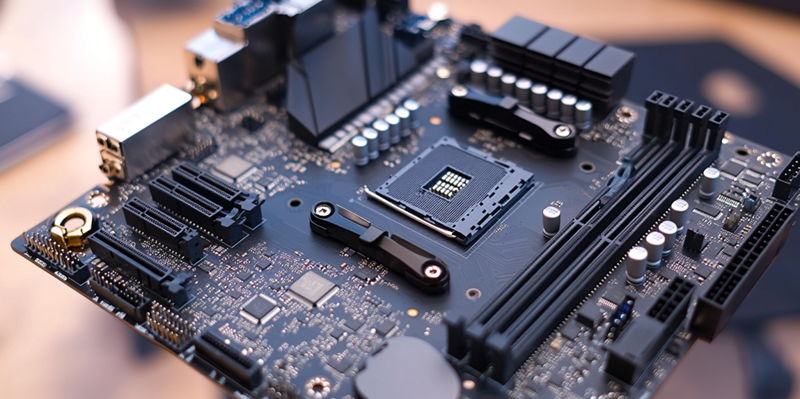
Erying has recently unveiled its new line of 14th Gen "HX" MoTD motherboards, which features Intel’s 14th Gen "HX" Raptor Lake Refresh CPUs. Unlike traditional desktop CPUs, these CPUs are predominantly used in mobile devices and have now been adapted for desktop use. This adaptation involves directly soldering the CPUs onto the motherboard, rather than using the conventional LGA sockets. Such a design aims to strike a balance between performance and cost-efficiency, potentially setting a new standard for future desktop computing.
Innovative Design Approach
In a notable departure from traditional motherboard design, Erying has opted to use BGA CPUs soldered directly onto the motherboard. This approach results in a form factor that is both space-saving and cost-effective, eliminating the need for a socket, and consequently reducing production costs while potentially increasing durability. By embracing this design, Erying is pushing the industry towards integrating the efficiency of mobile CPUs with the performance of desktop systems.
This method also simplifies the build process, making it easier for users to assemble high-performance systems without breaking the bank. The inclusion of high-performance CPUs adapted for desktop use expands the possibilities for consumers who are keen on top-tier performance but operate within budget constraints. By offering mobile CPUs in a desktop-compatible layout, Erying opens up new avenues for those seeking cost-effective yet powerful computing solutions.
The design’s cost efficiency and space-saving make it an appealing option for a wide range of consumers, especially those who prioritize performance within budget restrictions. This strategic move by Erying could signal the beginning of a trend towards more streamlined, efficient desktop motherboards that do not compromise on power or versatility. Its forward-thinking approach positions Erying as a leader in the evolving landscape of motherboard design.
Advanced Technical Specifications
Erying’s Intel 14th Gen "HX" MoTD motherboards come with an impressive array of advanced technical specifications that cater to power users and professionals alike. The motherboards boast a Micro-ATX form factor with dimensions of 244 x 244 mm, featuring an Intel 700 series chipset and a robust 10-phase power supply. This robust power supply ensures stable performance, even during intensive computing tasks, making it a reliable choice for users with demanding workloads.
One of the standout features of these motherboards is their support for DDR5 memory in a dual-channel configuration. Memory frequencies range from 4800 to 5600+ MHz when overclocked, providing the necessary bandwidth for high-performance applications. The motherboard can support a maximum memory capacity of 192 GB, with each stick capable of holding up to 48 GB. This extensive memory capacity is ideal for users who require substantial memory, such as those engaged in video editing, 3D rendering, or other resource-intensive tasks.
Such high memory and bandwidth capabilities enable the motherboard to handle heavy workloads with ease, making it suitable for a variety of professional and personal use cases. The impressive memory specifications ensure that users will not outgrow their systems easily, allowing for future upgrades and sustained performance. This makes Erying’s motherboards a compelling option for anyone looking to build a high-performance desktop system that is both powerful and future-proof.
Comprehensive Connectivity Options
Perhaps one of the most critical aspects of any modern motherboard is its connectivity options, and Erying excels in this department. These motherboards are equipped with various input and output ports, ensuring that users have the versatility to connect a wide range of devices. This includes one PCIe 4.0 x16 slot for a graphics card, one PCIe 4.0 x4 slot, three M.2 NVMe slots, and four SATA 3.0 ports. Such a variety of slots and ports delivers ample room for storage and expansion, enabling users to tailor their systems according to their needs.
Additionally, a variety of USB ports are available, including 4 x USB 3.0, 2 x USB 2.0, and 1 x USB 4 (Type-C), providing fast and flexible options for peripheral connections. Integrated graphics interfaces feature 2 x HDMI and 1 x DisplayPort, catering to multiple display setups. Network connectivity is robust, with a 2.5G Ethernet port ensuring fast and reliable wired connections. Moreover, wireless connectivity is addressed with the inclusion of the Intel AX211 Wi-Fi card, offering seamless and high-speed internet access.
With such comprehensive connectivity options, Erying ensures that its motherboards are versatile and capable of meeting diverse user needs. Whether it’s for gaming, professional work, or day-to-day use, the array of ports and slots provides users with the flexibility to configure their systems as they see fit. This focus on connectivity not only adds to the motherboard’s overall appeal but also positions it as a highly adaptable option in the market.
Cooling Mechanism and Thermal Efficiency
High-performance components inevitably generate heat, and effective thermal management is crucial for maintaining system stability and performance. Erying’s new motherboards tackle this challenge head-on with an integrated vapor chamber (VC) heat spreader, a highly efficient solution for managing thermal loads. This advanced cooling mechanism ensures that the motherboard can sustain peak performance over extended periods, even under demanding conditions.
The cooling solution is further complemented by compatibility with standard LGA 1700 socket coolers, offering users various options to maintain optimal temperatures. Efficient heat dissipation is particularly important for tasks that require pushing the CPU to its limits, such as gaming, video editing, or other computational workloads. Erying’s focus on thermal efficiency demonstrates their commitment to providing a reliable, high-performance product that will not suffer from thermal throttling or instability.
This dedicated approach to thermal management not only enhances the longevity and reliability of the motherboard but also ensures that users can fully exploit the high-performance capabilities of their systems without overheating concerns. As performance demands continue to increase, Erying’s integrated cooling solutions position their motherboards as a trustworthy choice for both enthusiasts and professionals.
Price and Market Positioning
One of the standout aspects of Erying’s new motherboards is their pricing, which positions them as a competitive and affordable option in the current market. Listed on Tmall at approximately $252, these motherboards make high-performance computing accessible to a broader audience. This price point is particularly appealing for budget-conscious users who seek robust specifications but previously found such features out of reach.
Despite the affordable pricing, Erying does not compromise on features or performance. The balanced combination of cost and capability ensures that these motherboards cater to a wide range of users, from enthusiasts to professionals. This balance makes them suitable for compact and budget-friendly systems, offering robust specifications and performance without breaking the bank.
The competitive pricing strategy demonstrates Erying’s commitment to making advanced technology accessible to a more extensive user base. By offering high performance at a reasonable cost, Erying’s motherboards are poised to attract attention from a diverse market segment, which includes both casual users and those in need of powerful computing solutions.
Future Prospects and Market Impact
Erying has recently introduced its new line of 14th Gen "HX" MoTD motherboards, which boast Intel’s 14th Gen "HX" Raptor Lake Refresh CPUs. These latest CPUs are mainly designed for mobile devices, setting them apart from traditional desktop processors. In a significant shift, these CPUs are now adapted for desktop use through a design that involves soldering them directly onto the motherboard, bypassing the conventional LGA sockets. This innovative approach seeks to balance high performance and cost-efficiency. In essence, Erying is pioneering a new standard in desktop computing, making powerful, mobile-first CPUs accessible to desktop users. This means users can potentially enjoy enhanced performance without the added costs typically associated with high-end desktop CPUs. Notably, the move towards soldered CPUs could herald a shift in how we think about upgrading and maintaining desktop systems, potentially simplifying the process but also requiring a complete motherboard replacement for future upgrades, which is a significant consideration for enthusiasts and professionals.