

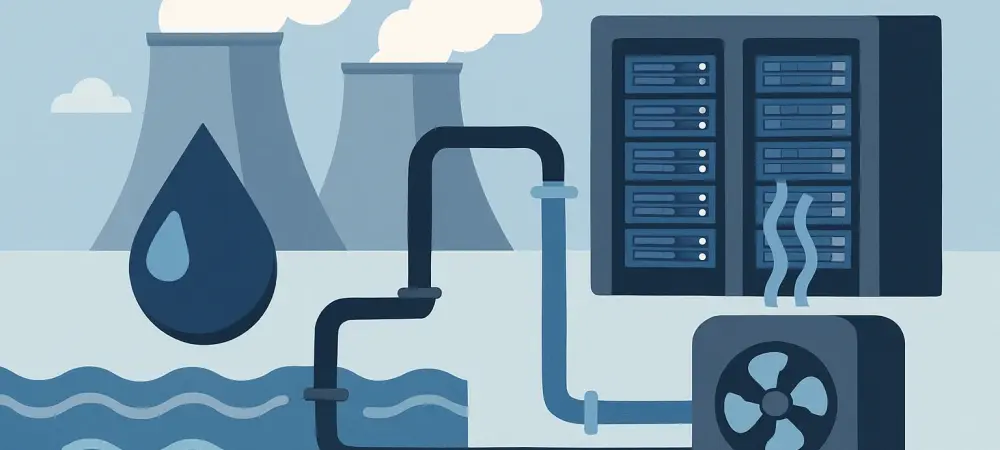
What if the digital engines powering every click, stream, and search are silently sipping far less water than public outcry suggests, and could this reshape how we view their environmental impact? Across England, datacenters—those sprawling hubs of servers fueling the online world—stand accused of guzzling precious resources. Yet, a recent industry report challenges this narrative, claiming innovative tech has slashed water use far below expectations. With environmental stakes high and skepticism mounting, this debate cuts to the heart of balancing digital growth with sustainability.
The significance of this issue cannot be overstated. As datacenters multiply to support everything from cloud computing to artificial intelligence, their environmental footprint has become a flashpoint. Water, a critical resource already under strain in many regions, is often used in vast quantities for cooling these facilities. Understanding whether their consumption is truly lower than assumed—or if claims are overstated—matters not just for policy, but for communities facing resource scarcity. This story delves into the data, disputes, and deeper implications of sustaining a hyper-connected society.
Unpacking the Hidden Thirst of Digital Infrastructure
Datacenters form the invisible backbone of modern life, humming away in industrial parks across England to keep data flowing seamlessly. These facilities, often out of sight, power essential services like e-commerce platforms and streaming giants. However, their reliance on water for cooling servers has long raised alarms, with fears that unchecked expansion could exacerbate local shortages, especially in drought-prone areas.
Recent claims from a prominent industry group suggest the problem might be less severe than believed. Their findings point to advanced cooling technologies—such as closed-loop systems—that drastically cut water needs compared to older methods. If accurate, this could reshape perceptions of datacenters as resource hogs, offering a glimmer of hope for greener digital infrastructure.
Yet, not everyone buys into this optimistic view. Critics argue that glossy reports may obscure a grittier reality, with some facilities still drawing heavily on municipal supplies. The tension between industry assurances and public concern sets the stage for a closer look at the numbers and the narratives behind them.
Why Water Usage in Datacenters Matters Now More Than Ever
The stakes surrounding datacenter resource use have never been higher. As England pushes to cement its status as a global tech hub, the proliferation of these server farms aligns with ambitious economic goals. From 2025 to 2027, projections indicate a sharp rise in datacenter construction to meet soaring demand for digital services, intensifying scrutiny on their environmental toll.
Water, in particular, emerges as a critical battleground. Cooling systems in datacenters often evaporate thousands of gallons daily to prevent overheating, a process that can strain local reserves in water-scarce regions. With climate change amplifying drought risks, the clash between technological progress and ecological limits grows more urgent, demanding solutions that don’t compromise either.
Public trust hangs in the balance as well. Communities near datacenter sites increasingly question whether economic benefits—like job creation—justify potential resource depletion. This friction underscores the need for clarity on how much water is truly consumed and whether the industry can deliver on sustainability promises amid mounting pressure.
Diving Into the Data—Claims, Critiques, and Contradictions
A detailed industry report, drawing from 73 datacenter sites across England, asserts that water usage is surprisingly low. The study highlights innovations like air-based cooling and water recycling, claiming these methods have reduced consumption by up to 40% in some facilities compared to traditional approaches. Such figures, if reliable, could ease fears about the sector’s environmental impact.
However, the report’s methodology has sparked sharp criticism. Based on voluntary, self-reported data, the sample raises questions of bias—potentially skewing results toward operators with better practices while ignoring laggards. Without independent audits, the findings lack the rigor needed to settle the debate, leaving room for doubt about their broader applicability.
Real-world cases add weight to these concerns. In water-stressed areas like parts of southeast England, new datacenter projects have faced local opposition over fears of overexploitation of aquifers. These examples highlight the gap between industry claims and on-the-ground realities, fueling calls for more transparent and comprehensive data to guide policy and public opinion.
Voices From the Field—Expert Insights and Industry Pushback
Skeptics of the industry’s narrative aren’t holding back. Tim Squirrel, a spokesperson for a tech fairness advocacy group, cautions that “relying on self-reported stats from a narrow pool risks whitewashing the real strain on local resources.” His critique targets the potential conflict of interest in industry-led studies, suggesting they might prioritize positive spin over hard truths.
On the other side, the industry stands firm. A representative from the trade association behind the report argues that their work is a crucial first step, not a final word, in measuring impact. They advocate for constructive dialogue, pushing for policies that support innovation while addressing environmental challenges, rather than blanket condemnation of the sector.
Government bodies also weigh in, though not without controversy. A statement from the Environment Agency stresses their commitment to partnering with tech firms to monitor water use, yet their involvement in validating disputed data has drawn accusations of coziness with industry. These conflicting voices paint a complex picture of accountability and intent in tackling the issue.
Charting a Path Forward—Practical Steps for Transparency and Sustainability
Addressing the uncertainties around datacenter water use demands concrete action. One starting point is mandating standardized, independently verified reporting for all facilities in England. Such a measure would cut through self-selection biases, providing a clearer picture of consumption patterns and identifying where improvements are most needed.
Beyond data, stricter regulations could enforce sustainability benchmarks. Tying datacenter approvals to renewable energy targets or water conservation quotas might ensure that growth doesn’t outpace environmental capacity. Additionally, involving local communities in planning decisions for new sites could help balance economic gains with regional resource concerns, fostering trust and fairness.
Collaboration offers another avenue. A joint framework bringing together government, industry, and advocacy groups could establish uniform metrics for environmental impact. This approach would prioritize accountability without stifling technological advancement, paving the way for datacenters to coexist with sustainable priorities in an increasingly digital world.
Looking back, the debate over datacenter water usage in England revealed a critical divide between industry optimism and public skepticism. Disputed data and clashing perspectives underscored how much was at stake as digital infrastructure expanded. The push for transparency had gained momentum, with calls for verified reporting echoing louder than ever. Moving ahead, the focus shifted to actionable policies—mandatory disclosures, tougher standards, and community engagement became non-negotiable steps. Only through such measures could the balance between powering the online realm and preserving vital resources be struck, ensuring that progress didn’t leave sustainability behind.