

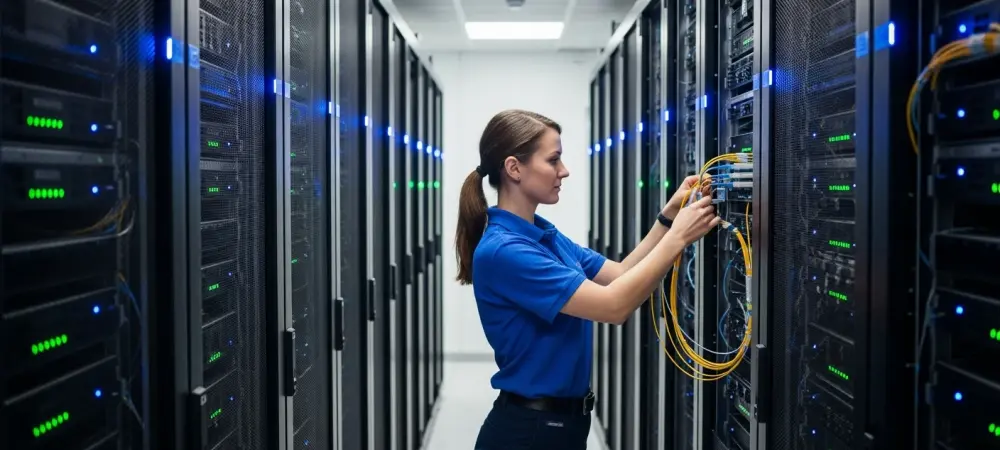
The sheer velocity of the digital revolution has often obscured the physical foundations required to sustain it, leaving the vital contributions of the American skilled labor force largely unexamined by the mainstream public eye. While financial markets and tech headlines remain transfixed by the newest iterations of generative models and neural networks, a far more grounded transformation is taking place across the American landscape. As the United States reinforces its position as the preeminent global leader in digital infrastructure, the labor market is experiencing a profound realignment. Data centers, frequently characterized as the “factories of the digital age,” have evolved into a primary engine for high-wage employment and long-term economic stability. This analysis explores how the relentless expansion of cloud computing and artificial intelligence is fundamentally redefining the skilled trades, shifting them from legacy industrial environments into the high-tech backbone of the contemporary economy. By evaluating the staggering demand for physical infrastructure, it becomes clear that the American tradesperson has emerged as the indispensable architect of a digital future.
The Digital Transformation of the American Blue-Collar Workforce
As the domestic labor market continues to adapt to the demands of the 21st century, the definition of “blue-collar” work is undergoing a significant metamorphosis. The data center industry represents the intersection of traditional mechanical expertise and cutting-edge technological requirements, creating a new class of specialized professionals. These facilities are not merely warehouses for servers; they are complex ecosystems that require constant maintenance, precision engineering, and rigorous security protocols. For the modern workforce, this represents a departure from the volatile cycles of traditional manufacturing toward a sector characterized by consistent growth and high barriers to entry. This shift is not just about new job titles but about the increasing sophistication of the tools and systems that tradespeople must master to keep the digital world operational.
The economic implications of this transformation are far-reaching, particularly as the demand for localized data processing continues to surge. Unlike previous industrial shifts that often led to the hollowing out of regional labor markets, the rise of data centers necessitates a physical, non-exportable presence. This geographic permanence ensures that the wealth generated by the digital economy is anchored in the communities where these facilities are built. Furthermore, the integration of advanced technologies within these sites requires a workforce that is both physically capable and technically adept. As a result, the “modern tradesperson” is increasingly viewed as a high-skill professional whose contributions are as vital to a company’s bottom line as those of any software developer or data scientist.
From Legacy Manufacturing to the Era of Hyperscale Infrastructure
To grasp the magnitude of the current data center boom, one must evaluate the historical transition of American industry away from its traditional roots in heavy manufacturing and mining. For much of the 20th century, the national economy was anchored by the production of physical goods, but as the global market pivoted toward a data-driven model, the requirement for massive storage and processing power became the new industrial priority. Today, the United States accounts for approximately 50% of the world’s total data center capacity, a remarkable statistic considering the nation represents a small fraction of the global population. This concentration of digital infrastructure is the direct result of a strategic shift where hyperscale data centers have replaced the traditional mills and factories of previous generations.
The current acceleration of “hyperscale” development is moving at a pace that dwarfs the construction cycles seen over the past twenty-five years. This rapid expansion is driven by the dual necessity of supporting foundational cloud services and the exponential power requirements of modern artificial intelligence. In the current market, the demand for capacity is not merely growing; it is reinventing the very nature of infrastructure investment. As developers race to build larger and more efficient campuses, the data center has become the essential utility of the modern era, comparable to the power plants and water systems of the past. This evolution explains why the industry is now the primary focus for institutional investors and why it has become the most significant driver of new construction activity across many American regions.
The Human Element in a High-Tech Landscape
The Essential Roles Powering the Digital Grid
A persistent misconception suggests that data centers are largely autonomous “ghost towns” requiring minimal human intervention once the initial construction is complete. In reality, these facilities are high-density hubs for specialized labor, where the complexity of the systems demands a constant human presence. The power requirements of current AI hardware are unprecedented, necessitating a level of electrical expertise that goes far beyond standard commercial applications. Electricians, HVAC technicians, and pipefitters are the frontline workers responsible for managing mission-critical systems where even a momentary failure can result in catastrophic financial losses. These roles require a deep understanding of complex power distribution and sophisticated cooling technologies, such as liquid-to-chip systems, which are becoming the industry standard.
Because of the high-stakes nature of this environment, these specialized trades often command a substantial wage premium, frequently earning 25% to 30% more than their counterparts in other construction or maintenance sectors. The data center is a unique workplace where traditional mechanical skills meet advanced technical applications, requiring a workforce that can bridge the gap between heavy machinery and digital controls. This environment fosters a high-skill culture where precision and reliability are the most valued commodities. As the technical requirements for these facilities continue to climb, the specialized tradespeople who keep them running are finding themselves at the very top of the labor market hierarchy, enjoying levels of compensation and job security that were once reserved for the white-collar elite.
Addressing the Looming Labor Supply Gap
Despite the clear economic advantages and the promise of career stability, the data center sector faces a critical challenge: a widening gap between the demand for skilled talent and the available supply of qualified workers. Projections indicate that the industry will need to secure an additional 140,000 skilled tradespeople by 2030 just to maintain the current pace of development. This shortage is already creating significant operational friction, with more than half of the firms in the sector reporting disruptions related to staffing difficulties in 2025. The problem is compounded by a general aging of the traditional workforce and a lack of awareness among younger generations regarding the high-tech nature of modern trade careers.
However, this labor crisis also provides a unique opportunity for aggressive workforce development at the local level. Since a data center is a permanent fixture in a community, the jobs it creates cannot be offshored or automated away easily. This reality has forced developers to move beyond traditional hiring practices and instead invest in “talent supply chains” through partnerships with local community colleges, vocational schools, and labor unions. By cultivating a specialized workforce from within the surrounding area, the industry can ensure a steady pipeline of talent while simultaneously providing residents with access to recession-proof careers. This localized approach to labor is becoming a cornerstone of successful data center development, proving that human capital is just as important as fiber optics or electricity.
Regional Impacts and Overcoming Public Misconceptions
The regional impact of data center development is profound, often revitalizing areas that have struggled with the decline of traditional industrial sectors. In established hubs such as Northern Virginia or emerging markets like Phoenix, these projects are frequently misunderstood by the public as isolated “black boxes” that contribute little to the local economy. In truth, the technical density of these campuses requires an extensive array of support roles, from heavy equipment operators to sophisticated facility managers. These projects provide a massive boost to local tax bases and stimulate peripheral economic activity, as the long-term nature of the work allows for the growth of local specialized contracting firms and service providers.
To ensure continued growth, the industry must proactively address public misconceptions by being transparent about the accessibility and benefits of these career paths. Many of the highest-paying roles within a data center do not require a four-year university degree, making them an ideal path for upward mobility for a broad segment of the population. By highlighting the reality of these high-paying, high-tech careers, developers can foster stronger community support and mitigate the “not in my backyard” sentiment that often hinders large-scale projects. When communities see data centers not as cold industrial sites but as centers of opportunity for their workforce, the path to expansion becomes significantly smoother for all stakeholders involved.
Emerging Trends and the Future of Mission-Critical Construction
The nature of employment within the data center sector is shifting away from the transient “gig” model often associated with the construction industry and toward a model of long-term career stability. In the past, construction was largely viewed as a temporary endeavor; once a project reached completion, the workforce moved on to the next site, often in a different city. Today, hyperscale campuses are frequently designed in multiple phases that can span a decade or more. This allows a welder, electrician, or technician to remain on a single site for ten to twelve years, providing the financial consistency necessary to invest in homes and families. This shift has transformed the skilled trades into a lifestyle of stability that was previously rare in the industrial world.
Looking ahead, the evolution of hardware will continue to drive innovations in facility design, particularly in the areas of modular power and advanced liquid cooling. These advancements will require tradespeople to engage in continuous upskilling to remain competitive in a rapidly changing environment. The role of the “digital mechanic” is likely to become one of the most resilient and sought-after positions in the future economy, as the skills required to maintain mission-critical infrastructure are difficult to replicate. As the global reliance on data intensifies, the professionals who build and maintain the physical foundation of that data will find themselves in a position of permanent relevance, shielded from the volatility that often plagues other technology-driven sectors.
Strategies for Building a Resilient Workforce Ecosystem
To fully capitalize on this new industrial frontier, both businesses and individual professionals must adopt a proactive and strategic approach to talent development. For developers and operators, this means moving beyond simple recruitment and instead investing in “people-first” organizational cultures that prioritize mentorship and internal mobility. Veterans, in particular, represent an ideal talent pool for this industry due to their extensive experience with high-stakes environments and disciplined technical systems. By creating clear pathways for non-traditional candidates to enter the field, companies can diversify their workforce and build a more resilient operations team that is capable of handling the complexities of modern digital infrastructure.
Educational institutions also play a critical role in this ecosystem by developing specialized curricula that bridge the gap between traditional mechanical skills and the specific requirements of data center operations. Programs that focus on mission-critical environments, high-voltage electrical systems, and advanced thermal management are essential for preparing the next generation of workers. For the individual worker, the path forward is clear: acquiring a foundation in the modern trades offers a route to economic security that is largely immune to the fluctuations of the broader tech market. By focusing on these collaborative strategies, the industry can ensure that the benefits of the digital boom are distributed widely across the labor force, creating a more robust and equitable national economy.
Conclusion: The New Foundation of American Prosperity
The rise of the data center industry represented more than a mere technological milestone; it marked a fundamental evolution in the structure of the American workforce. Throughout the development of this sector, it became evident that the success of the digital economy did not rely solely on the strength of code or the speed of processors, but on the skilled hands of the technicians and operators who maintained the physical infrastructure. This industry successfully transitioned the skilled trades from legacy industrial roles into a prestigious and stable career path that offered significant financial rewards for the next generation of workers. As the demand for processing power intensified, the partnership between high-tech innovation and traditional labor remained the bedrock of national progress.
The strategies implemented by industry leaders to address the labor gap and foster local talent ecosystems provided a clear roadmap for other sectors facing similar challenges. By prioritizing transparency and investing in the human element of technology, the data center industry demonstrated that technological advancement and community prosperity could be mutually reinforcing. The decade-long construction cycles and high-wage premiums associated with mission-critical work established a new standard for employment in the 21st century. Ultimately, the data center emerged as a new frontier of opportunity, proving that those with the technical skills to build and maintain the physical world would always find a place at the center of the modern economy.