

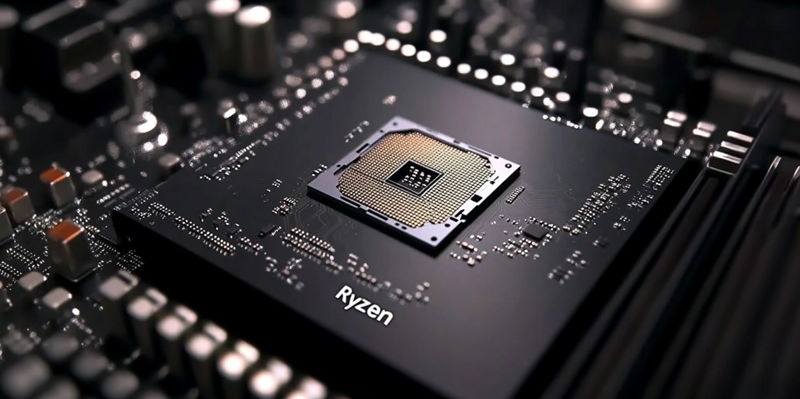
In an aggressive move to redefine their market stance, AMD has recently slashed the prices of their high-performance Ryzen 9000 “Zen 5” desktop CPUs, significantly enhancing their allure and competitiveness. The price cuts, implemented by prominent US retailer Microcenter, see substantial discounts on four key models—Ryzen 9 9950X, Ryzen 9 9900X, Ryzen 7 9700X, and Ryzen 5 9600X. These reductions address prior concerns about the performance-to-price ratio of these processors, positioning them more favorably against their Intel counterparts. This move not only makes these CPUs more accessible to a broader audience but also underscores AMD’s commitment to providing value through optimized performance and pricing. As AMD continues to fine-tune the performance metrics of their Ryzen 9000 series, the strategic price adjustments are poised to attract a wide range of consumers, potentially reshaping the dynamics of the CPU market.
Substantial Discounts to Key Models
One of the most notable discounts can be seen with the Ryzen 9 9950X, which now retails at $569.99, down from its original price of approximately $650. This model, featuring 16 cores, positions itself as a formidable competitor to the Intel Core Ultra 9 285K, boasting superior gaming and multithreaded performance. The 12.3% reduction not only makes it more affordable but also enhances its value proposition, making it a compelling option for both gaming enthusiasts and professionals requiring robust multithreading capabilities.
The Ryzen 9 9900X, another significant player in AMD’s lineup, has experienced the most dramatic price drop, now available for $359.99 compared to its initial retail price of $499. This 28% reduction positions the 12-core processor as an exceptional choice for users seeking high multithreaded performance and strong gaming abilities. This considerable price cut renders it highly competitive, particularly against similarly priced Intel offerings, further consolidating AMD’s foothold in the high-performance CPU market.
Enhanced Budget Options
Not to be overlooked is the Ryzen 7 9700X, now available for $309.99 after a 13.9% reduction from its original price of $359.99. Although this places it somewhat close to the Ryzen 9 9900X, the 8-core 9700X remains a viable option, especially for users who prioritize gaming performance. In head-to-head comparisons with the similarly priced Intel Core Ultra 5 245K, the 9700X holds its ground, making it an attractive choice for gamers seeking a balance of performance and cost.
For budget-conscious consumers, the Ryzen 5 9600X also sees a noticeable price cut, dropping 17.9% to $229.99 from its initial price of $279.99. Predictions suggest that this model may further decrease to around $199-$209, potentially making it one of the most compelling budget options available. With its 6-core architecture, the 9600X offers significant value without compromising on performance, making it a prime candidate for gamers and multitaskers alike who seek an affordable yet capable CPU.
Strategic Implications for AMD
The trend of AMD’s recent price cuts highlights their strategic move to boost the market appeal of their non-X3D Ryzen 9000 “Zen 5” chips. These reductions are not just about lowering prices but are aimed at positioning AMD’s products as competitive and value-oriented in the desktop CPU market. By making high-performance processors more affordable, AMD is likely to attract a broader range of consumers, thereby reinforcing its position within the socket AM5 platform, which is crucial given its compatibility with future Zen 6 CPUs.
This strategic shift is especially important in the mid-to-high-end desktop CPU market, where balancing performance and cost is essential. As consumers decide between AMD and Intel, the improved value of the Ryzen 9000 series could sway them towards AMD. The timing of these price cuts suggests a calculated effort to capture market share and strengthen their position before new competitor releases. AMD’s focus on enhancing performance and aligning pricing with consumer expectations shows a deep understanding of market dynamics and consumer needs, setting the stage for significant shifts in consumer preferences and market performance.