

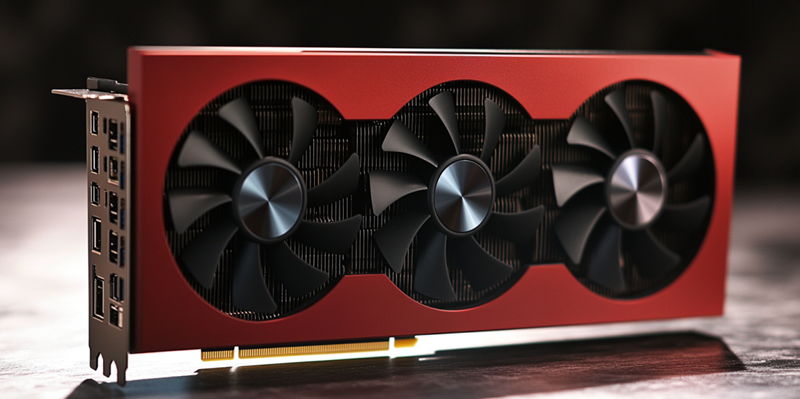
While it’s been a buzzing year filled with several product launches and significant developments in the tech industry, AMD has stayed characteristically mum on the release of its next generation of Radeon GPUs. This quiet period has sparked both curiosity and speculation among tech enthusiasts and industry insiders alike. However, inadvertent clues found in the ROCm (Radeon Open Compute) library code have provided a rare glimpse into AMD’s potential plans. References to “gfx12_rx8600” and “gfx12_rx8800 / Navi 44” suggest that the Radeon RX 8600 and RX 8800 series could be on AMD’s horizon and might be announced at CES 2025. Although details about these GPUs remain speculative, this leak has certainly set the tech world abuzz.
AMD’s GPU strategy appears to emphasize scalability and broad market appeal rather than directly competing in the highest echelons of the GPU market. This approach has been underscored by Jack Huynh, AMD’s senior vice president and general manager of the Computing and Graphics Business Group. Huynh has placed significant emphasis on attracting developers and fostering an environment that supports their needs over entering a head-to-head contest with Nvidia for the top-tier GPU accolades. The absence of any reference to an RX 8900 in the ROCm code further substantiates this narrative, suggesting that AMD may not be prioritizing the high-end GPU segment in the immediate future.
This doesn’t mean AMD has entirely abandoned its ambitions for the high-end GPU market. Instead, it appears to be taking a calculated pause, possibly to allow more time for refining advanced GPU technologies. This could eventually lead to the release of a competitive high-performance GPU, but without a rigid timeframe. In the meantime, the focus on Radeon RX 8600 and RX 8800 indicates AMD’s intent to capture a larger, possibly more mainstream, segment of the market with scalable solutions that cater to both gamers and developers. This market approach also aligns with AMD’s broader efforts to bolster its ecosystem and support long-term growth in versatile applications.
As we move closer to CES 2025, the anticipation surrounding AMD’s potential announcements is both palpable and growing. The references discovered in the ROCm library code have fueled prospects that the Radeon RX 8800 and RX 8600 are indeed coming soon. AMD’s strategic focus on scalable solutions and developer engagement, as opposed to direct competition for the top GPU spot, highlights their dynamic approach in an ever-evolving tech landscape. While we remain in the realm of speculation regarding exact specifications and performance metrics, it is clear that AMD holds promise for a broader market reach. Their strategy leaves room for exciting developments, potentially including a high-end GPU release, as they continue to navigate the complexities of the competitive GPU market.