

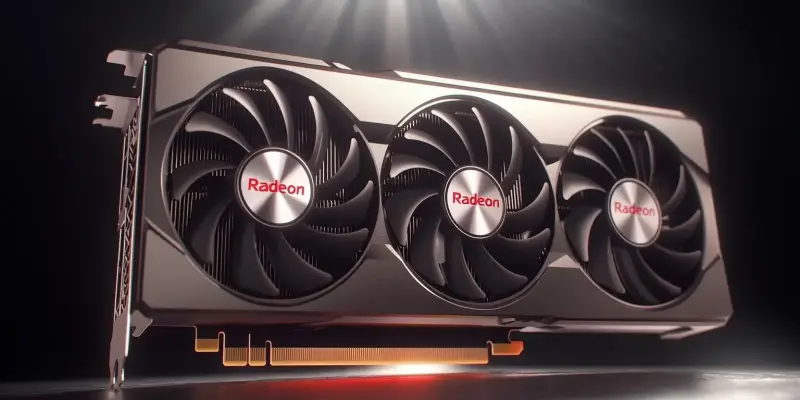
In a landscape where gamers and video editors are consistently seeking the next leap in technology to enhance their experience, AMD has set the stage with a promising new addition to their lineup. Announced at CES 2025, the Radeon RX 9070 XT and RX 9070 have created a buzz that suggests they could potentially redefine expectations in gaming and graphic processing. As more details come to light about their release on March 6, 2025, anticipation continues to build.
Specifications and Features
Impressive Hardware Configuration
The Radeon RX 9070 XT boasts several notable specifications aimed at providing powerhouse performance for gaming and graphic-intensive applications. It features an impressive boost clock speed of 2.97 GHz for the RX 9070 XT and 2.52 GHz for the RX 9070. This substantial processing power is paired with 16 GB of memory and a robust 256-bit memory interface, ensuring seamless performance even under high workloads. Another key aspect is the inclusion of 64 MB of Infinity Cache, designed to further enhance memory performance and reduce latency during demanding tasks.
Connectivity options for these new GPUs include DisplayPort 2.1a and HDMI 2.1b, which are standard for ensuring compatibility with the latest display technology. Power consumption is also noteworthy, with the RX 9070 XT drawing 304 W and the RX 9070 consuming 220 W. Additionally, the GPUs come equipped with 8-pin power connectors, which help in managing their high power requirements efficiently. Both models also showcase varying compute units—64 for the RX 9070 XT and 56 for the RX 9070, allowing for differentiated performance tailored to various user needs.
Advanced Architecture and Technologies
AMD has integrated the RDNA 4 architecture into both the Radeon RX 9070 XT and RX 9070, a move that promises enhanced performance and efficiency. This next-gen architecture brings improvements in graphical output, media capabilities, and machine learning processes. Notably, the FidelityFX Super Resolution 4 (FSR 4) will boost image quality and resolution, catering to gamers who strive for hyper-realistic visual experiences. This technology, in combination with enhanced memory management, aims to deliver smoother gameplay and elevate the overall user experience.
Another major improvement is the introduction of AI-enhanced technologies. These innovations focus on optimizing performance and rendering, making games more responsive and realistic. Coupled with Anti-Lag 2 technology, which significantly reduces latency, AMD aims to revolutionize the gaming experience. The inclusion of dedicated AI and RT accelerators in varying amounts between the models further highlights AMD’s focus on catering to high-end gaming and professional graphics applications.
Market Position and Competitive Outlook
Pricing and Availability
The official prices for the Radeon RX 9070 XT and RX 9070 have yet to be disclosed by AMD. However, market predictions suggest these models might be more affordably priced than NVIDIA’s competing GeForce RTX 5070 Ti, which could range between $650 to $700. This potential pricing strategy could attract budget-conscious gamers and creators seeking high performance without breaking the bank. AMD’s approach to making high-end graphical technology more accessible is likely to influence their market position positively.
Moreover, the anticipation leading up to the release date on March 6, 2025, has been palpable among tech enthusiasts. The anticipation isn’t unwarranted, given AMD’s consistent history of delivering robust and future-proof products. If these GPUs meet or exceed expected performance benchmarks, they could significantly impact market dynamics, enticing potential buyers away from competitors who have traditionally dominated the high-performance graphics card market.
Strategic Implications for AMD
The release of the Radeon RX 9070 XT and RX 9070 aligns with AMD’s strategic vision of expanding their Radeon RX 9000 series. By integrating advanced architectures, software-driven features, and impactful AI technologies, AMD is pushing the envelope in both gaming and professional graphic solutions. This strategy not only enhances their product portfolio but also establishes them as innovators in the arena of gaming graphics.
AMD’s decision to debut these GPUs at CES 2025 has already generated significant buzz and placed the company in the spotlight. This early attention is crucial in capturing the interest of tech enthusiasts and potential buyers. By addressing the needs of both casual and professional users through diversified product specifications and prices, AMD is broadening its reach. If successful, these GPUs could drive competitive advancements, compelling rivals to innovate further.
Conclusion: A Future in Focus
In a world where gamers and video editors are always on the lookout for the latest technology to boost their experiences, AMD has unveiled something that could revolutionize the industry. Revealed at CES 2025, the Radeon RX 9070 XT and RX 9070 are generating significant excitement and discussion. Their advanced features and capabilities have led to speculation that they could set new benchmarks in gaming and graphic processing. As we inch closer to their official release date on March 6, 2025, the excitement continues to grow. Fans and industry experts alike are eagerly awaiting hands-on experiences and real-world performance tests to see if these new GPUs live up to the hype. AMD’s history of innovation suggests that both the RX 9070 XT and the RX 9070 will deliver on their promises, potentially transforming user expectations and elevating gaming and video editing to unprecedented levels. As the countdown to March 6 begins, it is clear that AMD is poised to make a significant impact with these cutting-edge graphics cards.