

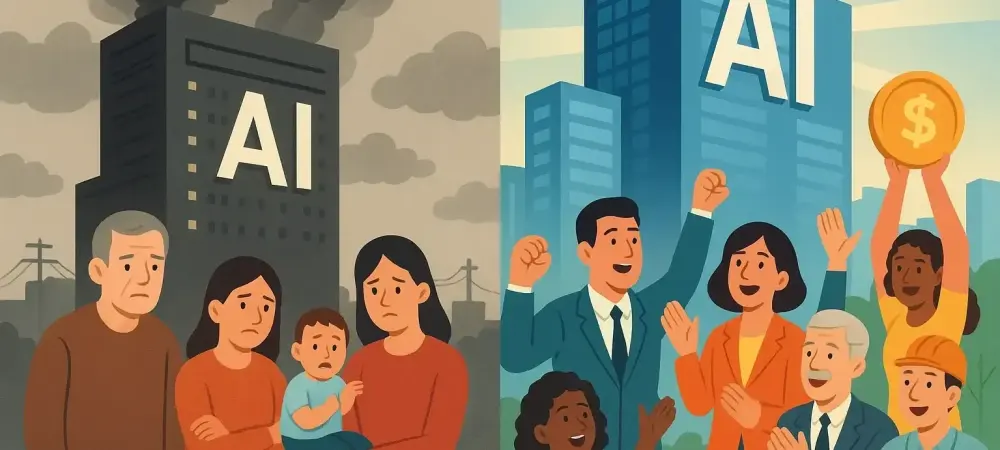
Massive server farms now contribute over fifty percent of the total property tax revenue in certain small towns, funding new hospitals and police departments. This fiscal reality stands in contrast to the growing wave of local opposition that has come to define the expansion of artificial intelligence infrastructure across the United States. While these facilities form the physical backbone of the digital economy, many residents view them as unwelcome neighbors that drain local resources without providing enough direct employment to justify their footprint. Polling consistently shows that a majority of citizens remain skeptical of new developments in their immediate vicinity, citing concerns over noise, traffic, and land use. This tension has forced a reckoning between the urgent technological need for computing power and the rights of communities to determine their own character. As developers seek more space, the conflict between national progress and local preservation intensifies, creating a complex landscape where economic benefits must be balanced against perceived burdens.
Regional Economic Prosperity: Maximizing Local Benefits
Small municipalities that have integrated these massive facilities into their local landscapes frequently witness a dramatic shift in their public service capabilities. The influx of capital allows for the modernization of schools and the construction of state-of-the-art libraries that were previously unaffordable for rural or struggling industrial areas. In regions where poverty rates were once persistently high, the tax revenue from tech giants provides a stable foundation for long-term growth. This revenue enables local governments to provide substantial bonuses to public sector employees, such as teachers and emergency responders, while simultaneously reducing the tax burden on individual homeowners. Unlike traditional manufacturing plants that may require extensive municipal services, data centers operate with minimal daily traffic and low demand for public safety interventions, making them high-yield, low-maintenance assets for the local treasury. The result is a revitalization that extends beyond the immediate site of the server farm.
Beyond the direct tax revenue, the economic ripple effect manifests in a surge of high-skill employment opportunities that sustain regional middle classes. The construction and maintenance of advanced liquid-cooling systems and complex electrical architectures have driven wages for specialized labor, such as master electricians and thermal engineers, into the six-figure range. This demand for expertise keeps talented young professionals in their home communities, reversing the brain drain that has plagued many American small towns for decades. Furthermore, several counties with high data center density have utilized the windfall to lower property tax rates for residents, effectively distributing the corporate profits back to the community. This fiscal relief serves as a powerful counter-argument to those who claim that server farms only benefit distant shareholders. By creating a cycle of investment and reinvestment, these facilities act as a catalyst for broader regional prosperity, supporting local businesses and boosting the overall quality of life.
Resource Management and Infrastructure: Navigating Modern Challenges
Environmental concerns often dominate public discourse surrounding new data center permits, specifically regarding the millions of gallons of water required to cool high-performance chips. However, the industry is rapidly transitioning away from traditional evaporative cooling methods in favor of sophisticated closed-loop systems. These advanced technologies recirculate water through sealed pipes, drastically reducing actual consumption and minimizing the impact on local aquifers. When compared to other established industries, the total water usage of the national data center fleet represents only a tiny fraction of what is consumed by industrial-scale agriculture or even recreational facilities like luxury golf courses. In many jurisdictions, a single large-scale corn farm consumes more water in a growing season than a mid-sized data center does in an entire year. This context is often lost in the heat of local debates, leading to a skewed perception of the actual environmental risks. As technology improves, the process becomes even more efficient.
The potential for rising electricity bills is another primary driver of local anxiety, as residents fear that the massive power requirements of AI training will push the grid to its breaking point. Evidence suggests, however, that price spikes are more frequently a symptom of antiquated regulatory frameworks and existing transmission bottlenecks rather than the facilities themselves. In states that have proactively managed their infrastructure and maintained a surplus of power, electricity rates have remained surprisingly stable despite the increased load. The friction occurs most frequently in regions where strict permitting processes and outdated zoning laws make it difficult to build the high-voltage transmission lines necessary to keep pace with modern demand. This tension has led to a wave of legislative pushback, with some states implementing moratoriums to appease voters. By modernizing the grid and streamlining the approval process for renewable energy projects, these regions can accommodate industrial growth without passing costs on to residential customers.
Local leaders who succeeded in this era established clear frameworks for resource management and grid priority. They prioritized the installation of closed-loop cooling systems which eliminated the need for heavy water consumption from municipal supplies. Furthermore, effective regional strategies focused on the creation of specialized vocational programs to train the local workforce for high-paying maintenance and engineering roles. Instead of viewing data centers as isolated tax engines, forward-thinking towns integrated them into a broader vision for energy-independent, tech-forward communities. These steps ensured that the digital boom provided lasting stability rather than a temporary influx of cash. By mandating that developers contribute to the expansion of renewable energy generation, communities effectively lowered their own long-term utility costs. This approach transformed the narrative from one of intrusion to one of partnership, proving that high-density computing could be a sustainable pillar of civic life.