

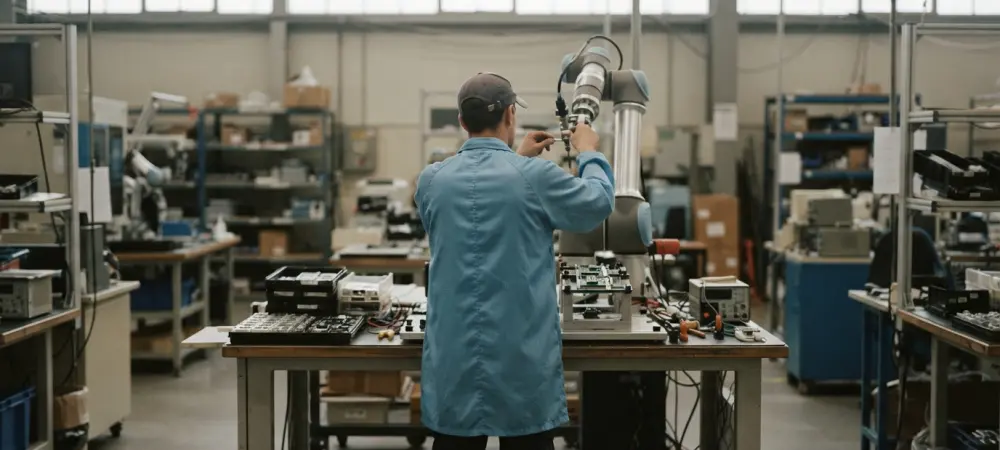
Manufacturing facilities in South Asia are now utilizing autonomous mobile robots to transport components across massive new complexes built for iPhone production. This shift signals a deep integration of automation into Apple’s corporate DNA. As manufacturing investments in the U.S. alone are projected to hit $84 billion by 2030, the tech giant is moving beyond experimental recycling arms into a cohesive robotic strategy. While China continues to lead in total installations, Apple is aggressively pivoting to ensure its supply chain remains resilient and technologically superior. By leveraging advanced machine learning and autonomous systems, the company is redefining the very foundations of product assembly. This transition is not merely about cost-cutting; it represents a fundamental change in how precision hardware is conceived and delivered to a global market that demands ever-increasing speed and reliability. By establishing these automated systems, Apple is securing its production future.
Advancing Industrial Infrastructure and Global Supply Chains
Apple is fundamentally redesigning its manufacturing footprint through a strategy of geographic diversification and high-tech integration. As production increasingly migrates to burgeoning hubs in India and Turkey, the company is implementing what experts call a “China Plus One” strategy. This involves building modern, automated factories from the ground up, rather than retrofitting older facilities. By installing sophisticated autonomous mobile robots and specialized machine vision systems at the inception of these sites, Apple reduces its historical reliance on massive manual labor forces while significantly increasing mechanical precision. These systems allow for a modular approach to assembly, where robotic units can be reprogrammed or relocated based on the specific requirements of new hardware designs. This geographic shift is coupled with a demand for extreme efficiency, ensuring that moving away from established hubs does not result in a loss of production speed or quality.
The success of this industrial pivot relies heavily on strategic partnerships with established robotics and infrastructure firms. Collaborative efforts with companies like Cognex and Schneider Electric provide the essential robotic backbone needed to support these sprawling production complexes. Cognex provides the advanced machine vision technology that allows robots to identify components with sub-millimeter accuracy, which is crucial for the intricate assembly of high-end electronics. Meanwhile, Schneider Electric contributes the sophisticated power management and home automation protocols that integrate factory-floor sensors with larger logistical networks. These alliances ensure that Apple’s facilities are not just automated in isolation but are part of a broader, interconnected ecosystem of smart manufacturing. This infrastructure allows for real-time data collection, enabling predictive maintenance that prevents costly downtime during the busiest production cycles.
Transitioning to Consumer Robotics and Workforce Integration
The technical expertise Apple cultivated through internal projects like the Daisy recycling robot is now being funneled into a far more ambitious venture: consumer-facing technology. While Daisy was a specialized tool designed to disassemble iPhones and recover precious materials, it served as a critical proof of concept for the company’s ability to handle hardware with robotic precision. Under the leadership of John Ternus, engineering teams are reportedly working toward a projected launch window between 2027 and 2028 for their first domestic robotic devices. This internal roadmap suggests a move to integrate robotics into the broader Apple ecosystem, potentially utilizing existing technologies like LiDAR and powerful M-series chips to give these machines unprecedented processing power. The shift signals a strategic intent to become a dominant player in the consumer robotics market, turning years of industrial experience into sleek, user-friendly appliances that function safely in homes.
The transition toward a fully automated ecosystem revealed that corporate innovation often outpaced global governance. During this era, Apple utilized its specialized Manufacturing Academies in regions like Turkey to bridge the widening skills gap, training its workforce to manage predictive maintenance and complex machine learning protocols. This approach ensured that the adoption of robotics did not lead to a complete decoupling of labor from production. Stakeholders recognized that the next logical step involved the creation of multinational agreements to harmonize robotics regulations across borders. Industry leaders suggested that businesses should have prioritized the development of “human-in-the-loop” systems to maintain safety while maximizing efficiency. Ultimately, the focus shifted toward ensuring that the benefits of robotics were distributed across the entire supply chain, supported by a renewed commitment to standardized software protocols and a focus on lifelong technical education for all manufacturing personnel.