

A Strategic Pivot: Apple’s Boldest Expansion into the Indian Market
The arrival of the latest product lineup confirms that Apple has finally decided to treat the Indian market as a primary theater of operations rather than a secondary sales destination. This transition from a niche luxury provider to a mass-market powerhouse is evident in the current hardware cycle, which prioritizes the diverse needs of South Asian consumers. By introducing devices that cater to various economic tiers, the company has signaled its intent to become a household name across the subcontinent.
Market analysts suggest that the current hardware refresh represents a fundamental shift in regional prioritization. The infrastructure for sales and support has matured significantly, allowing for simultaneous global launches that were previously unheard of in the region. This evolution demonstrates a long-term commitment to the Indian consumer, ensuring that the latest innovations are available without the traditional delays associated with emerging markets. The current ecosystem expansion features everything from the budget-conscious MacBook Neo to the high-octane M5 professional workstations. This range ensures that everyone from university students to high-level executives can find a device that fits their specific requirements. Such a broad strategy is designed to anchor users within the ecosystem early in their professional lives, fostering brand loyalty that could last for decades.
Breaking the Price Barrier: Redefining Accessibility and Premium Power
The iPhone 17e and MacBook Neo: Apple’s New Mid-Range Dominance
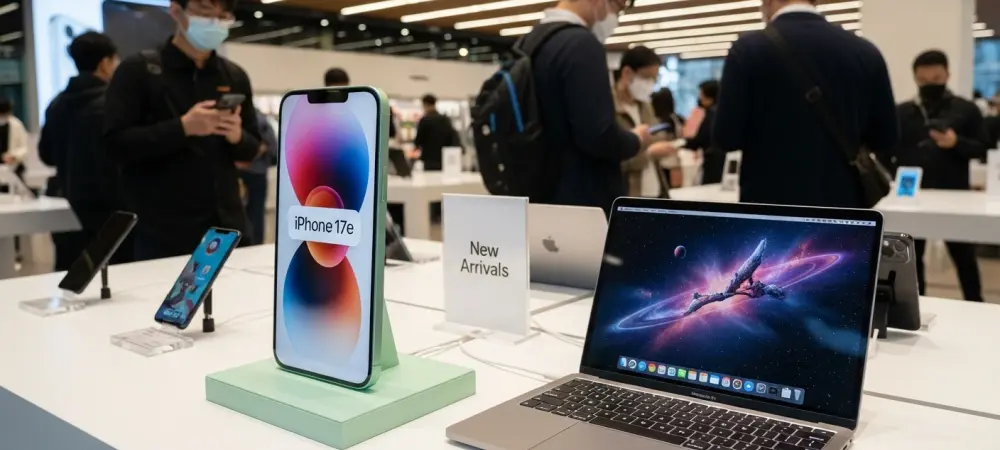
Early reviewers have noted that the disruption of the sub-70,000 rupee segment with the iPhone 17e creates a formidable challenge for mid-tier competitors. By offering high-performance, entry-level hardware at Rs. 64,900, the brand is successfully lowering the barrier to entry without sacrificing the core user experience. This pricing strategy targets the vast demographic of upwardly mobile professionals seeking reliable technology. The MacBook Neo, starting at Rs. 69,900, serves as a student-centric pillar in this new lineup. Localized incentives and education discounts further enhance the appeal of this laptop, making it a viable option for the next generation of tech-savvy learners. Industry observers suggest that this aggressive pricing is a calculated move to capture market share in a region where price sensitivity often dictates purchasing habits.
Navigating the trade-offs between affordability and luxury remains a delicate balance. While the hardware is more accessible, the company has maintained its premium allure by ensuring that the build quality and software integration remain top-tier. This approach allows the brand to compete directly with aggressive rivals while preserving the prestige that has always defined its global identity.
The M5 Architecture: Pushing the Limits of Professional Computing
The silicon leap to the M5, M5 Pro, and M5 Max chips has set a new standard for computing performance in India. These processors provide the necessary horsepower for the booming creative and tech sectors, enabling seamless mobile development and complex 4K cinematography. Professionals have expressed that the increased efficiency significantly reduces rendering times, which is crucial for high-stakes projects.
For those in specialized workflows, the investment in a top-tier MacBook Pro configuration can reach nearly Rs. 4,00,000. While the price is substantial, tech experts argue that the performance gains justify the cost for enterprise-level tasks. The ability to handle massive datasets and intensive graphical applications locally makes these machines indispensable for the modern Indian workforce.
Professional Visuals and the Studio Display XDR: Targeting the High-End Creator
The decision to bring nano-texture glass and advanced Studio Displays to Indian retail floors highlights a focus on the professional creative market. These peripherals are designed to anchor the hardware ecosystem within professional studios and corporate offices. By offering high-end visual solutions, the brand is catering to a growing demand for precision and color accuracy in digital production.
Some critics previously assumed that professional monitors were a niche market in the region. However, the rapid digitization of local industries has proven otherwise. High-end peripherals are increasingly seen as essential tools rather than luxury add-ons, reflecting the sophisticated needs of a workforce that is increasingly integrated into the global digital economy.
The Dual-Track Strategy: Balancing Luxury Status with Market Share
The simultaneous pursuit of budget-conscious students and price-insensitive executives showcases a sophisticated dual-track strategy. This methodology allows the company to maximize its market share without diluting its brand equity. By offering a spectrum of products, the brand addresses the economic diversity of the Indian population effectively. Immediate availability across both online and physical retail channels signals a highly matured supply chain. This logistics network ensures that consumer demand is met promptly, further solidifying the brand’s reputation for reliability. The seamless integration of manufacturing and distribution suggests that the regional footprint will only continue to grow in the coming years.
Maximizing Value: Strategic Purchasing for the 2026 Hardware Lineup
Identifying the “sweet spot” models is essential for users looking to optimize their investment. University students may find the MacBook Neo provides the best balance of cost and utility, while enterprise leaders will likely gravitate toward the M5 Max configurations. Understanding these personas helps consumers navigate the extensive new catalog to find the most appropriate hardware. Leveraging trade-in programs and education discounts can significantly improve the cost-to-performance ratio. Many buyers have found that these financial tools make even the higher-end models more attainable. Additionally, the focus on hardware longevity ensures that these devices maintain higher resale values compared to many competitors in the local market.
The current refresh suggests a long-term commitment to providing value through durability and consistent software updates. This approach not only benefits the initial buyer but also supports a healthy secondary market. As the ecosystem matures, the emphasis on quality and longevity continues to be a primary driver for consumer adoption across the country.
Conclusion: A New Era for Apple in the Subcontinent
The introduction of the iPhone 17e and MacBook Neo redefined the relationship between the brand and the Indian consumer. These products successfully integrated premium performance with a pricing structure that recognized the unique economic landscape of the region. This strategic shift provided a clear path for millions of users to join a unified digital ecosystem, accelerating the broader digital transformation of the country.
Local competitors faced a significantly altered landscape as consumer expectations for entry-level hardware were raised. The presence of high-end professional tools alongside accessible models created a holistic market presence that was previously missing. This launch proved that a diversified portfolio could simultaneously protect a luxury reputation while expanding a user base at an unprecedented scale. The 2026 hardware cycle stood as a definitive turning point for the global tech industry’s approach to South Asia. It demonstrated that prioritizing regional needs was not just a matter of marketing, but of fundamental product design and distribution strategy. These advancements ensured that the region remained a central pillar in the global strategy for high-performance computing and mobile technology.