

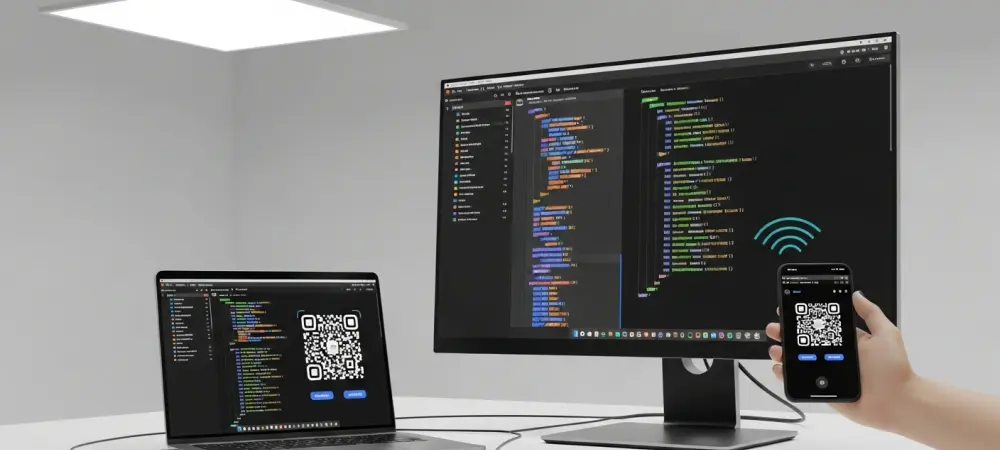
The traditional image of a developer tethered to a high-powered workstation is rapidly dissolving as mobile accessibility and artificial intelligence converge to redefine the modern engineering environment. Anthropic has officially unveiled Claude Code Remote Control, a feature that allows developers to manage local coding sessions from any mobile device or browser without sacrificing data privacy. Unlike competing solutions that migrate the entire development environment to the cloud, this update keeps the code, tools, and execution strictly on the user’s local machine. This launch marks a significant shift in how AI-assisted development is managed, offering a middle ground between total desk-bound local control and the flexibility of cloud-based agents. By providing a secure “window” into a running terminal session, Anthropic aims to solve the problem of monitoring long-running tasks without tethering the developer to a workstation.
A New Paradigm for Mobile Agent Supervision
The announcement comes at a time when the AI coding market is increasingly divided between cloud-heavy execution and local-first reliability. While other platforms have pushed for moving development environments into virtual machines on the cloud to enable parallel processing, Anthropic’s strategy honors the traditional developer preference for local filesystem access and custom toolchains. Historically, developers seeking mobile access had to rely on complex workarounds like SSH tunnels, tmux sessions, or proxies. Claude Code Remote Control replaces these fragile setups with a native, TLS-encrypted streaming connection that routes through the Anthropic API without requiring open inbound ports, effectively modernizing the way remote terminal management functions in the age of AI.
Furthermore, this shift reflects a broader trend toward decentralization in software development infrastructure. By allowing the local environment to remain the “source of truth,” Anthropic mitigates the latency and synchronization issues often associated with mirrored cloud environments. Developers no longer need to worry about whether their local configurations or specialized hardware drivers are compatible with a remote container. Instead, the mobile interface acts as a thin client, providing a high-fidelity view of the agent’s progress while the heavy lifting remains grounded in the user’s primary hardware.
The Shift Toward Local-First AI Architecture
Architecture and Data Privacy in High-Stakes Environments
The defining characteristic of Claude Code Remote Control is its commitment to data residency. In many enterprise settings, moving proprietary code to a third-party cloud for execution is a non-starter due to compliance and security protocols. Anthropic’s model ensures that while a developer might be steering the agent from a phone at a coffee shop, the actual source code never leaves the local office computer or laptop. The cloud serves only as a secure router for messages, not a storage or execution layer. This approach allows teams with strict security postures to adopt AI agents without undergoing the massive legal and technical hurdles associated with cloud-based code execution.
Moreover, the security model utilizes short-lived credentials and outbound-only connections to prevent unauthorized access. This design choice is particularly relevant for sectors like finance, defense, and healthcare, where even a temporary upload of source code to a remote server could trigger a compliance audit. By keeping the execution environment local, Anthropic effectively bridges the gap between the agility of modern AI tools and the rigid requirements of corporate data sovereignty.
Operational Workflow and Seamless Connectivity
From a technical standpoint, the feature is designed for high reliability and ease of use. By running a simple command—claude remote-control—the terminal generates a session URL and a QR code, which can be scanned to immediately sync the session with the Claude mobile app. The system handles common connectivity issues gracefully; if a laptop goes to sleep or a network drops, the session automatically reconnects once the machine is back online. This level of persistence is crucial for modern DevOps workflows where refactoring jobs or large-scale test suites might take substantial time to complete, allowing developers to step away while maintaining a constant pulse on the agent’s progress.
In addition to persistence, the tool promotes a more collaborative interaction between the human and the machine. Because the session is synced across devices, a developer can initiate a complex debugging sequence at their desk, head to a meeting, and provide clarifying instructions via their phone if the agent hits a roadblock. This continuity ensures that the momentum of a project is not lost during the inevitable transitions of a typical workday, making the AI a more integrated partner in the creative process.
Strategic Distinctions from Cloud Agent Competitors
While the local-first approach offers security, it does introduce a specific trade-off in terms of scale. Currently, Claude Code Remote Control supports a single-thread model, meaning a developer directs one agent at a time. This stands in contrast to cloud-native competitors that allow for running dozens of agents in parallel across multiple virtual machines. Furthermore, the feature is presently limited to Pro and Max plans, with Team and Enterprise access still pending. This highlights a strategic focus on individual power users and researchers before a broader rollout, suggesting that Anthropic is prioritizing the refinement of the user experience and security protocols before tackling the complexities of multi-user enterprise environments.
The competitive landscape is thus being carved into two distinct philosophies: the “infinite scale” cloud model and the “high-security” local model. For independent developers or those working on highly specialized local stacks, the single-thread limitation is often outweighed by the convenience of zero-configuration remote access. However, as the platform matures, the market will likely demand more robust multi-agent orchestration within this local-first framework to compete with the sheer throughput of cloud-native alternatives.
Maintaining Local Control in a Cloud-Centric Market
As AI coding tools transition from “useful assistants” to “core infrastructure,” the industry is likely to see a convergence of local and cloud methodologies. We can expect future iterations to bridge the gap between these models, potentially offering “hybrid” environments where local agents can offload specific, non-sensitive tasks to the cloud while keeping the core codebase local. Additionally, the rapid growth of the Model Context Protocol (MCP) suggests that these remote-controlled agents will soon have even deeper integrations with local databases and specialized hardware. As the run rate for these tools reaches into the billions, the competition will move beyond just “who has the best model” to “who has the most seamless integration into the developer’s existing life.”
Strategic Insights for Modern Developers
For professionals looking to integrate this technology, the primary recommendation was to use Remote Control for tasks that required persistent supervision but not constant manual input. Best practices included starting heavy refactoring or documentation tasks at the desk and then switching to the mobile interface for oversight and minor adjustments. It was also vital to ensure that the local machine’s power settings were configured to allow the session to remain active during long tasks. For organizations with high security requirements, this tool provided a blueprint for how to adopt AI agents without violating data sovereignty, making it an ideal choice for internal projects that were restricted from cloud-based execution.
The Long-Term Impact of Location-Independent Coding
Anthropic’s launch of Claude Code Remote Control represented a vital evolution in the DevOps lifecycle, shortening the gap between a developer’s intent and the agent’s execution. By allowing local agents to be “put in your pocket,” Anthropic addressed the physical limitations of the terminal while respecting the digital boundaries of the enterprise. This innovation signaled a future where the physical location of the developer became irrelevant to the progress of the codebase. Ultimately, the success of this local-first model reinforced the idea that in the world of AI development, control and flexibility were no longer mutually exclusive, but were instead the twin pillars of the next generation of software engineering. This shift paved the way for more autonomous, yet strictly governed, development cycles that prioritized both security and human mobility.